THE CLASSIC COLLECTION✦SocialismCLASSIC FREE BOOKS
Socialism
John Stuart Mill
THE CLASSIC COLLECTION · 1873
"Autobiography" by John Stuart Mill is a personal account written in the mid-19th century that reflects on the life and philosophical development of one of the greatest thinkers of the time. The narrative begins with his unconventional early education under the rigorous guidance of his father, James Mill, and explores the profound intellectual influences that shaped his views on politics, ethics, and society. Mill emphasizes the remarkable depth of learning he experienced during his formative years, which often included studying classical texts in Greek and Latin as well as engaging in discussions on topics ranging from history to mathematics. The opening of the autobiography details Mill's childhood and educational experiences from birth to around age fourteen. He recounts the heavy emphasis his father placed on rigorous intellectual training and the remarkable curriculum that he was subjected to, which included Greek at a very young age and a wide range of historical literature. Mill also reflects on the moral and intellectual influences of his father's philosophy, particularly his rejection of conventional religious belief and advocacy for utilitarian principles. This early exposure, coupled with enriching conversations with influential figures such as Jeremy Bentham and David Ricardo, ultimately fostered Mill's own philosophical outlook and commitment to societal reform. Each chapter of Mill's life hints at the broader social and political context of his work, making it clear that his theoretical inquiries are deeply connected to his lived experiences and the vibrant discussions occurring in his intellectual milieu.
Introduction adapted from the source catalogue; source summaries may be automatically generated.
Free to read · English · 75,090 words · No account needed
MAKE TIME FOR A GOOD BOOK
On by default. Untick to stop anonymous reading totals. Each page counts after 10 seconds in view. How this works.
Anonymous counting is on unless you have switched it off.
My father's tone of thought and feeling, I now felt myself at a great distance from: greater, indeed, than a full and calm explanation and reconsideration on both sides, might have shown to exist in reality. But my father was not one with whom calm and full explanations on fundamental points of doctrine could be expected, at least with one whom he might consider as, in some sort, a deserter from his standard. Fortunately we were almost always in strong agreement on the political questions of the day, which engrossed a large part of his interest and of his conversation. On those matters of opinion on which we differed, we talked little. He knew that the habit of thinking for myself, which his mode of education had fostered, sometimes led me to opinions different from his, and he perceived from time to time that I did not always tell him how different. I expected no good, but only pain to both of us, from discussing our differences: and I never expressed them but when he gave utterance to some opinion or feeling repugnant to mine, in a manner which would have made it disingenuousness on my part to remain silent.
It remains to speak of what I wrote during these years, which, independently of my contributions to newspapers, was considerable. In 1830 and 1831 I wrote the five Essays since published under the title of Essays on some Unsettled Questions of political Economy, almost as they now stand, except that in 1833 I partially rewrote the fifth Essay. They were written with no immediate purpose of publication; and when, some years later, I offered them to a publisher, he declined them. They were only printed in 1844, after the success of the System of Logic. I also resumed my speculations on this last subject, and puzzled myself, like others before me, with the great paradox of the discovery of new truths by general reasoning. As to the fact, there could be no doubt. As little could it be doubted, that all reasoning is resolvable into syllogisms, and that in every syllogism the conclusion is actually contained and implied in the premises. How, being so contained and implied, it could be new truth, and how the theorems of geometry, so different in appearance from the definitions and axioms, could be all contained in these, was a difficulty which no, one, I thought, had sufficiently felt, and which, at all events, no one had succeeded in clearing up. The explanations offered by Whately and others, though they might give a temporary satisfaction, always, in my mind, left a mist still hanging over the subject. At last, when reading a second or third time the chapters on Reasoning in the second volume of Dugald Stewart, interrogating myself on every point, and following out, as far as I knew how, every topic of thought which the book suggested, I came upon an idea of his respecting the use of axioms in ratiocination, which I did not remember to have before noticed, but which now, in meditating on it, seemed to me not only true of axioms, but of all general propositions whatever, and to be the key of the whole perplexity. From this germ grew the theory of the Syllogism propounded in the Second Book of the Logic; which I immediately fixed by writing it out. And now, with greatly increased hope of being able to produce a work on Logic, of some originality and value, I proceeded to write the First Book, from the rough and imperfect draft I had already made. What I now wrote became the basis of that part of the subsequent Treatise; except that it did not contain the Theory of Kinds, which was a later addition, suggested by otherwise inextricable difficulties which met me in my first attempt to work out the subject of some of the concluding chapters of the Third Book. At the point which I had now reached I made a halt, which lasted five years. I had come to the end of my tether; I could make nothing satisfactory of Induction, at this time. I continued to read any book which seemed to promise light on the subject, and appropriated, as well as I could, the results; but for a long time I found nothing which seemed to open to me any very important vein of meditation.
Your reading position is saved on this browser. Take it to another device with a library code. Reading pages adapt to text, rather than matching a printed edition.
John Stuart Mill
John Stuart Mill
John Stuart Mill
John Stuart Mill
BEHIND THE BOOK
This eBook is for the use of anyone anywhere in the United States and most other parts of the world at no cost and with almost no restrictions whatsoever. You may copy it, give it away or re-use it under the terms of the Project Gutenberg License included with this eBook or online at www.gutenberg.org. If you are not located in the United States, you will have to check the laws of the country where you are located before using this eBook. Read the source licence.
The original source file, including credits and licence, is retained by this library. Request an original-format copy at no charge. Please include the book title and Project Gutenberg identifier #10378.
KEEP YOUR CURIOSITY GOING

David Patterson (Spirit) Hatch
Coulson Kernahan
John L. Ransom

Ralph Waldo Emerson
Frances Wright
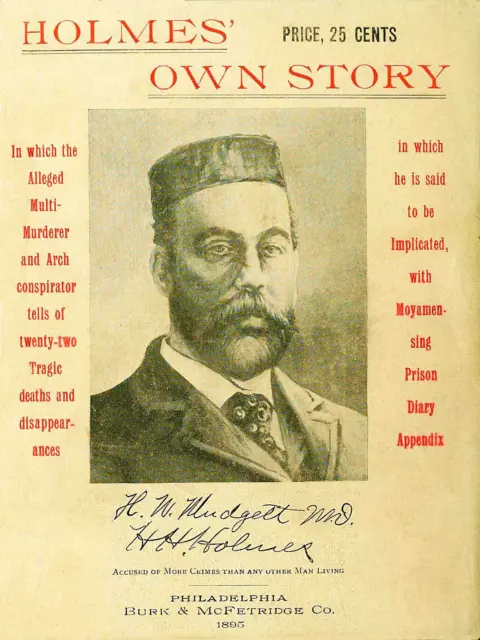
Herman W. Mudgett