THE CLASSIC COLLECTION✦SocialismCLASSIC FREE BOOKS
Socialism
John Stuart Mill
THE CLASSIC COLLECTION · 1873
"Autobiography" by John Stuart Mill is a personal account written in the mid-19th century that reflects on the life and philosophical development of one of the greatest thinkers of the time. The narrative begins with his unconventional early education under the rigorous guidance of his father, James Mill, and explores the profound intellectual influences that shaped his views on politics, ethics, and society. Mill emphasizes the remarkable depth of learning he experienced during his formative years, which often included studying classical texts in Greek and Latin as well as engaging in discussions on topics ranging from history to mathematics. The opening of the autobiography details Mill's childhood and educational experiences from birth to around age fourteen. He recounts the heavy emphasis his father placed on rigorous intellectual training and the remarkable curriculum that he was subjected to, which included Greek at a very young age and a wide range of historical literature. Mill also reflects on the moral and intellectual influences of his father's philosophy, particularly his rejection of conventional religious belief and advocacy for utilitarian principles. This early exposure, coupled with enriching conversations with influential figures such as Jeremy Bentham and David Ricardo, ultimately fostered Mill's own philosophical outlook and commitment to societal reform. Each chapter of Mill's life hints at the broader social and political context of his work, making it clear that his theoretical inquiries are deeply connected to his lived experiences and the vibrant discussions occurring in his intellectual milieu.
Introduction adapted from the source catalogue; source summaries may be automatically generated.
Free to read · English · 75,090 words · No account needed
MAKE TIME FOR A GOOD BOOK
On by default. Untick to stop anonymous reading totals. Each page counts after 10 seconds in view. How this works.
Anonymous counting is on unless you have switched it off.
The great interest of these debates predisposed some of those who took part in them, to catch at a suggestion thrown out by McCulloch, the political economist, that a Society was wanted in London similar to the Speculative Society at Edinburgh, in which Brougham, Horner, and others first cultivated public speaking. Our experience at the Co-operative Society seemed to give cause for being sanguine as to the sort of men who might be brought together in London for such a purpose. McCulloch mentioned the matter to several young men of influence, to whom he was then giving private lessons in political economy. Some of these entered warmly into the project, particularly George Villiers, after Earl of Clarendon. He and his brothers, Hyde and Charles, Romilly, Charles Austin and I, with some others, met and agreed on a plan. We determined to meet once a fortnight from November to June, at the Freemasons' Tavern, and we had soon a fine list of members, containing, along with several members of Parliament, nearly all the most noted speakers of the Cambridge Union and of the Oxford United Debating Society. It is curiously illustrative of the tendencies of the time, that our principal difficulty in recruiting for the Society was to find a sufficient number of Tory speakers. Almost all whom we could press into the service were Liberals, of different orders and degrees. Besides those already named, we had Macaulay, Thirlwall, Praed, Lord Howick, Samuel Wilberforce (afterwards Bishop of Oxford), Charles Poulett Thomson (afterwards Lord Sydenham), Edward and Henry Lytton Bulwer, Fonblanque, and many others whom I cannot now recollect, but who made themselves afterwards more or less conspicuous in public or literary life. Nothing could seem more promising. But when the time for action drew near, and it was necessary to fix on a President, and find somebody to open the first debate, none of our celebrities would consent to perform either office. Of the many who were pressed on the subject, the only one who could be prevailed on was a man of whom I knew very little, but who had taken high honours at Oxford and was said to have acquired a great oratorical reputation there; who some time afterwards became a Tory member of Parliament. He accordingly was fixed on, both for filling the President's chair and for making the first speech. The important day arrived; the benches were crowded; all our great speakers were present, to judge of, but not to help our efforts. The Oxford orator's speech was a complete failure. This threw a damp on the whole concern: the speakers who followed were few, and none of them did their best: the affair was a complete fiasco; and the oratorical celebrities we had counted on went away never to return, giving to me at least a lesson in knowledge of the world. This unexpected breakdown altered my whole relation to the project. I had not anticipated taking a prominent part, or speaking much or often, particularly at first, but I now saw that the success of the scheme depended on the new men, and I put my shoulder to the wheel. I opened the second question, and from that time spoke in nearly every debate. It was very uphill work for some time. The three Villiers and Romilly stuck to us for some time longer, but the patience of all the founders of the Society was at last exhausted, except me and Roebuck. In the season following, 1826-7, things began to mend. We had acquired two excellent Tory speakers, Hayward and Shee (afterwards Sergeant Shee): the Radical side was reinforced by Charles Buller, Cockburn, and others of the second generation of Cambridge Benthamities; and with their and other occasional aid, and the two Tories as well as Roebuck and me for regular speakers, almost every debate was a bataille rangée between the "philosophic Radicals" and the Tory lawyers; until our conflicts were talked about, and several persons of note and consideration came to hear us. This happened still more in the subsequent seasons, 1828 and 1829, when the Coleridgians, in the persons of Maurice and Sterling, made their appearance in the Society as a second Liberal and even Radical party, on totally different grounds from Benthamism and vehemently opposed to it; bringing into these discussions the general doctrines and modes of thought of the European reaction against the philosophy of the eighteenth century; and adding a third and very important belligerent party to our contests, which were now no bad exponent of the movement of opinion among the most cultivated part of the new generation. Our debates were very different from those of common debating societies, for they habitually consisted of the strongest arguments and most philosophic principles which either side was able to produce, thrown often into close and serré confutations of one another. The practice was necessarily very useful to us, and eminently so to me. I never, indeed, acquired real fluency, and had always a bad and ungraceful delivery; but I could make myself listened to: and as I always wrote my speeches when, from the feelings involved, or the nature of the ideas to be developed, expression seemed important, I greatly increased my power of effective writing; acquiring not only an ear for smoothness and rhythm, but a practical sense for telling sentences, and an immediate criterion of their telling property, by their effect on a mixed audience.
Your reading position is saved on this browser. Take it to another device with a library code. Reading pages adapt to text, rather than matching a printed edition.
John Stuart Mill
John Stuart Mill
John Stuart Mill
John Stuart Mill
BEHIND THE BOOK
This eBook is for the use of anyone anywhere in the United States and most other parts of the world at no cost and with almost no restrictions whatsoever. You may copy it, give it away or re-use it under the terms of the Project Gutenberg License included with this eBook or online at www.gutenberg.org. If you are not located in the United States, you will have to check the laws of the country where you are located before using this eBook. Read the source licence.
The original source file, including credits and licence, is retained by this library. Request an original-format copy at no charge. Please include the book title and Project Gutenberg identifier #10378.
KEEP YOUR CURIOSITY GOING

David Patterson (Spirit) Hatch
Coulson Kernahan
John L. Ransom

Ralph Waldo Emerson
Frances Wright
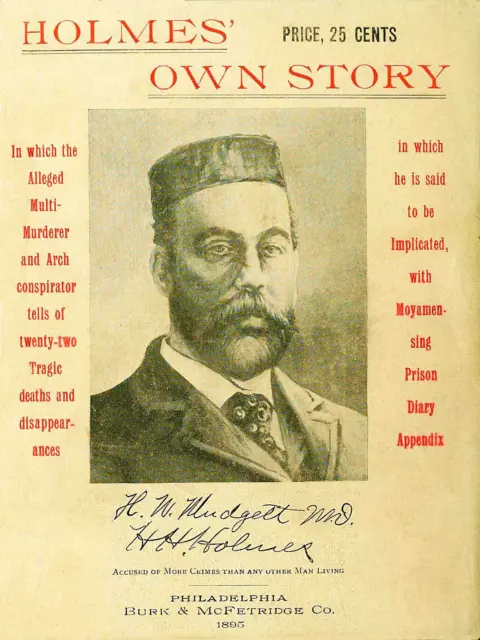
Herman W. Mudgett