THE CLASSIC COLLECTION✦SocialismCLASSIC FREE BOOKS
Socialism
John Stuart Mill
THE CLASSIC COLLECTION · 1873
"Autobiography" by John Stuart Mill is a personal account written in the mid-19th century that reflects on the life and philosophical development of one of the greatest thinkers of the time. The narrative begins with his unconventional early education under the rigorous guidance of his father, James Mill, and explores the profound intellectual influences that shaped his views on politics, ethics, and society. Mill emphasizes the remarkable depth of learning he experienced during his formative years, which often included studying classical texts in Greek and Latin as well as engaging in discussions on topics ranging from history to mathematics. The opening of the autobiography details Mill's childhood and educational experiences from birth to around age fourteen. He recounts the heavy emphasis his father placed on rigorous intellectual training and the remarkable curriculum that he was subjected to, which included Greek at a very young age and a wide range of historical literature. Mill also reflects on the moral and intellectual influences of his father's philosophy, particularly his rejection of conventional religious belief and advocacy for utilitarian principles. This early exposure, coupled with enriching conversations with influential figures such as Jeremy Bentham and David Ricardo, ultimately fostered Mill's own philosophical outlook and commitment to societal reform. Each chapter of Mill's life hints at the broader social and political context of his work, making it clear that his theoretical inquiries are deeply connected to his lived experiences and the vibrant discussions occurring in his intellectual milieu.
Introduction adapted from the source catalogue; source summaries may be automatically generated.
Free to read · English · 75,090 words · No account needed
MAKE TIME FOR A GOOD BOOK
On by default. Untick to stop anonymous reading totals. Each page counts after 10 seconds in view. How this works.
Anonymous counting is on unless you have switched it off.
Meanwhile, however, the Review made considerable noise in the world, and gave a recognised status, in the arena of opinion and discussion, to the Benthamic type of Radicalism, out of all proportion to the number of its adherents, and to the personal merits and abilities, at that time, of most of those who could be reckoned among them. It was a time, as is known, of rapidly rising Liberalism. When the fears and animosities accompanying the war with France had been brought to an end, and people had once more a place in their thoughts for home politics, the tide began to set towards reform. The renewed oppression of the Continent by the old reigning families, the countenance apparently given by the English Government to the conspiracy against liberty called the Holy Alliance, and the enormous weight of the national debt and taxation occasioned by so long and costly a war, rendered the government and parliament very unpopular. Radicalism, under the leadership of the Burdetts and Cobbetts, had assumed a character and importance which seriously alarmed the Administration: and their alarm had scarcely been temporarily assuaged by the celebrated Six Acts, when the trial of Queen Caroline roused a still wider and deeper feeling of hatred. Though the outward signs of this hatred passed away with its exciting cause, there arose on all sides a spirit which had never shown itself before, of opposition to abuses in detail. Mr. Hume's persevering scrutiny of the public expenditure, forcing the House of Commons to a division on every objectionable item in the estimates, had begun to tell with great force on public opinion, and had extorted many minor retrenchments from an unwilling administration. Political economy had asserted itself with great vigour in public affairs, by the petition of the merchants of London for free trade, drawn up in 1820 by Mr. Tooke and presented by Mr. Alexander Baring; and by the noble exertions of Ricardo during the few years of his parliamentary life. His writings, following up the impulse given by the Bullion controversy, and followed up in their turn by the expositions and comments of my father and McCulloch (whose writings in the Edinburgh Review during those years were most valuable), had drawn general attention to the subject, making at least partial converts in the Cabinet itself; and Huskisson, supported by Canning, had commenced that gradual demolition of the protective system, which one of their colleagues virtually completed in 1846, though the last vestiges were only swept away by Mr. Gladstone in 1860. Mr. Peel, then Home Secretary, was entering cautiously into the untrodden and peculiarly Benthamic path of Law Reform. At this period, when Liberalism seemed to be becoming the tone of the time, when improvement of institutions was preached from the highest places, and a complete change of the constitution of Parliament was loudly demanded in the lowest, it is not strange that attention should have been roused by the regular appearance in controversy of what seemed a new school of writers, claiming to be the legislators and theorists of this new tendency. The air of strong conviction with which they wrote, when scarcely anyone else seemed to have an equally strong faith in as definite a creed; the boldness with which they tilted against the very front of both the existing political parties; their uncompromising profession of opposition to many of the generally received opinions, and the suspicion they lay under of holding others still more heterodox than they professed; the talent and verve of at least my father's articles, and the appearance of a corps behind him sufficient to carry on a Review; and finally, the fact that the Review was bought and read, made the so-called Bentham school in philosophy and politics fill a greater place in the public mind than it had held before, or has ever again held since other equally earnest schools of thought have arisen in England. As I was in the headquarters of it, knew of what it was composed, and as one of the most active of its very small number, might say without undue assumption, quorum pars magna fui, it belongs to me more than to most others, to give some account of it.
Your reading position is saved on this browser. Take it to another device with a library code. Reading pages adapt to text, rather than matching a printed edition.
John Stuart Mill
John Stuart Mill
John Stuart Mill
John Stuart Mill
BEHIND THE BOOK
This eBook is for the use of anyone anywhere in the United States and most other parts of the world at no cost and with almost no restrictions whatsoever. You may copy it, give it away or re-use it under the terms of the Project Gutenberg License included with this eBook or online at www.gutenberg.org. If you are not located in the United States, you will have to check the laws of the country where you are located before using this eBook. Read the source licence.
The original source file, including credits and licence, is retained by this library. Request an original-format copy at no charge. Please include the book title and Project Gutenberg identifier #10378.
KEEP YOUR CURIOSITY GOING

David Patterson (Spirit) Hatch
Coulson Kernahan
John L. Ransom

Ralph Waldo Emerson
Frances Wright
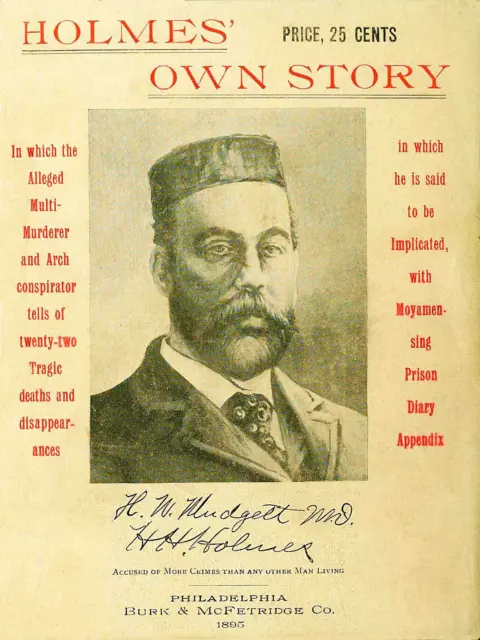
Herman W. Mudgett