THE CLASSIC COLLECTION✦SocialismCLASSIC FREE BOOKS
Socialism
John Stuart Mill
THE CLASSIC COLLECTION · 1873
"Autobiography" by John Stuart Mill is a personal account written in the mid-19th century that reflects on the life and philosophical development of one of the greatest thinkers of the time. The narrative begins with his unconventional early education under the rigorous guidance of his father, James Mill, and explores the profound intellectual influences that shaped his views on politics, ethics, and society. Mill emphasizes the remarkable depth of learning he experienced during his formative years, which often included studying classical texts in Greek and Latin as well as engaging in discussions on topics ranging from history to mathematics. The opening of the autobiography details Mill's childhood and educational experiences from birth to around age fourteen. He recounts the heavy emphasis his father placed on rigorous intellectual training and the remarkable curriculum that he was subjected to, which included Greek at a very young age and a wide range of historical literature. Mill also reflects on the moral and intellectual influences of his father's philosophy, particularly his rejection of conventional religious belief and advocacy for utilitarian principles. This early exposure, coupled with enriching conversations with influential figures such as Jeremy Bentham and David Ricardo, ultimately fostered Mill's own philosophical outlook and commitment to societal reform. Each chapter of Mill's life hints at the broader social and political context of his work, making it clear that his theoretical inquiries are deeply connected to his lived experiences and the vibrant discussions occurring in his intellectual milieu.
Introduction adapted from the source catalogue; source summaries may be automatically generated.
Free to read · English · 75,090 words · No account needed
MAKE TIME FOR A GOOD BOOK
On by default. Untick to stop anonymous reading totals. Each page counts after 10 seconds in view. How this works.
Anonymous counting is on unless you have switched it off.
In May, 1823, my professional occupation and status for the next thirty-five years of my life, were decided by my father's obtaining for me an appointment from the East India Company, in the office of the Examiner of India Correspondence, immediately under himself. I was appointed in the usual manner, at the bottom of the list of clerks, to rise, at least in the first instance, by seniority; but with the understanding that I should be employed from the beginning in preparing drafts of despatches, and be thus trained up as a successor to those who then filled the higher departments of the office. My drafts of course required, for some time, much revision from my immediate superiors, but I soon became well acquainted with the business, and by my father's instructions and the general growth of my own powers, I was in a few years qualified to be, and practically was, the chief conductor of the correspondence with India in one of the leading departments, that of the Native States. This continued to be my official duty until I was appointed Examiner, only two years before the time when the abolition of the East India Company as a political body determined my retirement. I do not know any one of the occupations by which a subsistence can now be gained, more suitable than such as this to anyone who, not being in independent circumstances, desires to devote a part of the twenty-four hours to private intellectual pursuits. Writing for the press cannot be recommended as a permanent resource to anyone qualified to accomplish anything in the higher departments of literature or thought: not only on account of the uncertainty of this means of livelihood, especially if the writer has a conscience, and will not consent to serve any opinions except his own; but also because the writings by which one can live are not the writings which themselves live, and are never those in which the writer does his best. Books destined to form future thinkers take too much time to write, and when written come, in general, too slowly into notice and repute, to be relied on for subsistence. Those who have to support themselves by their pen must depend on literary drudgery, or at best on writings addressed to the multitude; and can employ in the pursuits of their own choice, only such time as they can spare from those of necessity; which is generally less than the leisure allowed by office occupations, while the effect on the mind is far more enervating and fatiguing. For my own part I have, through life, found office duties an actual rest from the other mental occupations which I have carried on simultaneously with them. They were sufficiently intellectual not to be a distasteful drudgery, without being such as to cause any strain upon the mental powers of a person used to abstract thought, or to the labour of careful literary composition. The drawbacks, for every mode of life has its drawbacks, were not, however, unfelt by me. I cared little for the loss of the chances of riches and honours held out by some of the professions, particularly the bar, which had been, as I have already said, the profession thought of for me. But I was not indifferent to exclusion from Parliament, and public life: and I felt very sensibly the more immediate unpleasantness of confinement to London; the holiday allowed by India House practice not exceeding a month in the year, while my taste was strong for a country life, and my sojourn in France had left behind it an ardent desire of travelling. But though these tastes could not be freely indulged, they were at no time entirely sacrificed. I passed most Sundays, throughout the year, in the country, taking long rural walks on that day even when residing in London. The month's holiday was, for a few years, passed at my father's house in the country; afterwards a part or the whole was spent in tours, chiefly pedestrian, with some one or more of the young men who were my chosen companions; and, at a later period, in longer journeys or excursions, alone or with other friends. France, Belgium, and Rhenish Germany were within easy reach of the annual holiday: and two longer absences, one of three, the other of six months, under medical advice, added Switzerland, the Tyrol, and Italy to my list. Fortunately, also, both these journeys occurred rather early, so as to give the benefit and charm of the remembrance to a large portion of life.
Your reading position is saved on this browser. Take it to another device with a library code. Reading pages adapt to text, rather than matching a printed edition.
John Stuart Mill
John Stuart Mill
John Stuart Mill
John Stuart Mill
BEHIND THE BOOK
This eBook is for the use of anyone anywhere in the United States and most other parts of the world at no cost and with almost no restrictions whatsoever. You may copy it, give it away or re-use it under the terms of the Project Gutenberg License included with this eBook or online at www.gutenberg.org. If you are not located in the United States, you will have to check the laws of the country where you are located before using this eBook. Read the source licence.
The original source file, including credits and licence, is retained by this library. Request an original-format copy at no charge. Please include the book title and Project Gutenberg identifier #10378.
KEEP YOUR CURIOSITY GOING

David Patterson (Spirit) Hatch
Coulson Kernahan
John L. Ransom

Ralph Waldo Emerson
Frances Wright
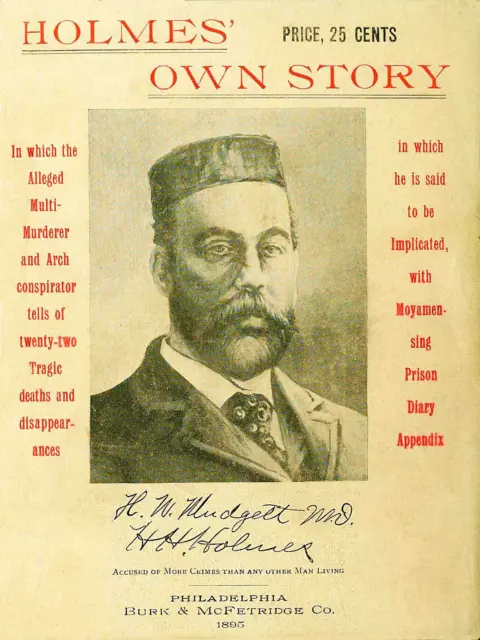
Herman W. Mudgett