THE CLASSIC COLLECTION✦SocialismCLASSIC FREE BOOKS
Socialism
John Stuart Mill
THE CLASSIC COLLECTION · 1873
"Autobiography" by John Stuart Mill is a personal account written in the mid-19th century that reflects on the life and philosophical development of one of the greatest thinkers of the time. The narrative begins with his unconventional early education under the rigorous guidance of his father, James Mill, and explores the profound intellectual influences that shaped his views on politics, ethics, and society. Mill emphasizes the remarkable depth of learning he experienced during his formative years, which often included studying classical texts in Greek and Latin as well as engaging in discussions on topics ranging from history to mathematics. The opening of the autobiography details Mill's childhood and educational experiences from birth to around age fourteen. He recounts the heavy emphasis his father placed on rigorous intellectual training and the remarkable curriculum that he was subjected to, which included Greek at a very young age and a wide range of historical literature. Mill also reflects on the moral and intellectual influences of his father's philosophy, particularly his rejection of conventional religious belief and advocacy for utilitarian principles. This early exposure, coupled with enriching conversations with influential figures such as Jeremy Bentham and David Ricardo, ultimately fostered Mill's own philosophical outlook and commitment to societal reform. Each chapter of Mill's life hints at the broader social and political context of his work, making it clear that his theoretical inquiries are deeply connected to his lived experiences and the vibrant discussions occurring in his intellectual milieu.
Introduction adapted from the source catalogue; source summaries may be automatically generated.
Free to read · English · 75,090 words · No account needed
MAKE TIME FOR A GOOD BOOK
On by default. Untick to stop anonymous reading totals. Each page counts after 10 seconds in view. How this works.
Anonymous counting is on unless you have switched it off.
His younger brother, Charles Austin, of whom at this time and for the next year or two I saw much, had also a great effect on me, though of a very different description. He was but a few years older than myself, and had then just left the University, where he had shone with great éclat as a man of intellect and a brilliant orator and converser. The effect he produced on his Cambridge contemporaries deserves to be accounted an historical event; for to it may in part be traced the tendency towards Liberalism in general, and the Benthamic and politico-economic form of it in particular, which showed itself in a portion of the more active-minded young men of the higher classes from this time to 1830. The Union Debating Society, at that time at the height of its reputation, was an arena where what were then thought extreme opinions, in politics and philosophy, were weekly asserted, face to face with their opposites, before audiences consisting of the élite of the Cambridge youth: and though many persons afterwards of more or less note (of whom Lord Macaulay is the most celebrated) gained their first oratorical laurels in those debates, the really influential mind among these intellectual gladiators was Charles Austin. He continued, after leaving the University, to be, by his conversation and personal ascendency, a leader among the same class of young men who had been his associates there; and he attached me among others to his car. Through him I became acquainted with Macaulay, Hyde and Charles Villiers, Strutt (now Lord Belper), Romilly (now Lord Romilly and Master of the Rolls), and various others who subsequently figured in literature or politics, and among whom I heard discussions on many topics, as yet to a certain degree new to me. The influence of Charles Austin over me differed from that of the persons I have hitherto mentioned, in being not the influence of a man over a boy, but that of an elder contemporary. It was through him that I first felt myself, not a pupil under teachers, but a man among men. He was the first person of intellect whom I met on a ground of equality, though as yet much his inferior on that common ground. He was a man who never failed to impress greatly those with whom he came in contact, even when their opinions were the very reverse of his. The impression he gave was that of boundless strength, together with talents which, combined with such apparent force of will and character, seemed capable of dominating the world. Those who knew him, whether friendly to him or not, always anticipated that he would play a conspicuous part in public life. It is seldom that men produce so great an immediate effect by speech, unless they, in some degree, lay themselves out for it; and he did this in no ordinary degree. He loved to strike, and even to startle. He knew that decision is the greatest element of effect, and he uttered his opinions with all the decision he could throw into them, never so well pleased as when he astonished anyone by their audacity. Very unlike his brother, who made war against the narrower interpretations and applications of the principles they both professed, he, on the contrary, presented the Benthamic doctrines in the most startling form of which they were susceptible, exaggerating everything in them which tended to consequences offensive to anyone's preconceived feelings. All which, he defended with such verve and vivacity, and carried off by a manner so agreeable as well as forcible, that he always either came off victor, or divided the honours of the field. It is my belief that much of the notion popularly entertained of the tenets and sentiments of what are called Benthamites or Utilitarians had its origin in paradoxes thrown out by Charles Austin. It must be said, however, that his example was followed, haud passibus aequis, by younger proselytes, and that to outrer whatever was by anybody considered offensive in the doctrines and maxims of Benthamism, became at one time the badge of a small coterie of youths. All of these who had anything in them, myself among others, quickly outgrew this boyish vanity; and those who had not, became tired of differing from other people, and gave up both the good and the bad part of the heterodox opinions they had for some time professed.
Your reading position is saved on this browser. Take it to another device with a library code. Reading pages adapt to text, rather than matching a printed edition.
John Stuart Mill
John Stuart Mill
John Stuart Mill
John Stuart Mill
BEHIND THE BOOK
This eBook is for the use of anyone anywhere in the United States and most other parts of the world at no cost and with almost no restrictions whatsoever. You may copy it, give it away or re-use it under the terms of the Project Gutenberg License included with this eBook or online at www.gutenberg.org. If you are not located in the United States, you will have to check the laws of the country where you are located before using this eBook. Read the source licence.
The original source file, including credits and licence, is retained by this library. Request an original-format copy at no charge. Please include the book title and Project Gutenberg identifier #10378.
KEEP YOUR CURIOSITY GOING

David Patterson (Spirit) Hatch
Coulson Kernahan
John L. Ransom

Ralph Waldo Emerson
Frances Wright
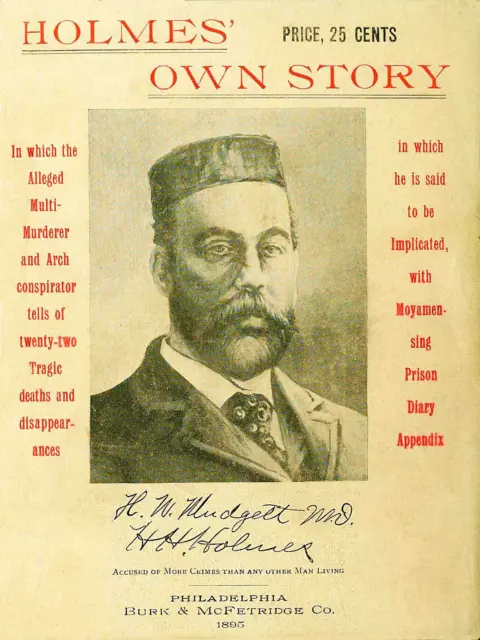
Herman W. Mudgett