READ · DISCOVER · ENJOYClassic literature · Always free
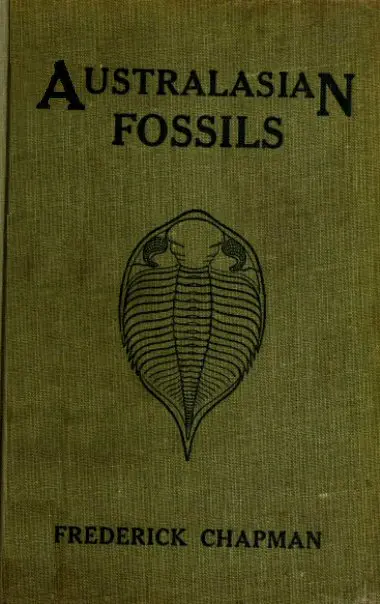
Australasian Fossils: A Students’ Manual of Palaeontology — digital edition cover

THE CLASSIC COLLECTION · 1914

Australasian Fossils: A Students’ Manual of Palaeontology

"Australasian Fossils: A Students' Manual of Palaeontology" by Frederick Chapman is a scientific publication written in the early 20th century. This manual aims to fill the gap in literature on fossils discovered in the Southern Hemisphere, specifically in Australasia, offering students an accessible overview of palaeontology. The book discusses a variety of topics, including fossil classification, geological epochs, and methods for finding and preserving fossils, catering to the needs of natural history and palaeontology students. The opening portion of the manual introduces its context and purpose, emphasizing the scarcity of resources concerning region-specific fossils in existing geological literature. It articulates the importance of studying fossils for understanding Earth's history, evolution, and the distribution of ancient life forms. Chapman underscores the manual’s intent to provide a foundational framework for students, alongside practical advice for fossil collectors, encouraging exploration and a deeper appreciation for the field of palaeontology.

Introduction adapted from the source catalogue; source summaries may be automatically generated.

Start reading ↓

Free to read · English · 61,198 words · No account needed

MAKE TIME FOR A GOOD BOOK

Australasian Fossils: A Students’ Manual of Palaeontology

On by default. Untick to stop anonymous reading totals. Each page counts after 10 seconds in view. How this works.

Anonymous counting is on unless you have switched it off.

Australasian Fossils: A Students’ Manual of Palaeontology

Maccoyella, 183, 184
Macrocephalites, 209
Macrocheilus, 196
Macrocypris, 236, 240
Macropora, 158
Macropus, 289, 295
Macrotaeniopteris, 88
Mactra, 177, 185, 188
Madrepore limestone, 73
Magasella, 166, 168
Magellania, 166, 167, 168
Magnolia, 91
Maiden-hair tree, 89
Mail-shells, 189
MAMMALIA, early types, 285
Mammals, fossil, 51
Manatees and dugongs, 298
Marginella, 198, 199
Marginulina, 98
Marsupial lion, 293
Marsupial, oldest known Australian, 294
Marsupials, 287
" Pleistocene and living, 295
Martiniopsis, 164
Mastodonsaurus, 274
Material for fossil collecting, 315
Megalania, 280
Megalosaurus, 277
Melania, 203
Melosira, 92
Membranipora, 157, 158
Meretrix, 177, 185, 187
Mesoblastus, 139
Mesostigmodera, 250
Mesozoic strata, 46
Metablastus, 139
Metasqualodon, 295, 296
METAZOA, 95
Micraster, 146
Microdiscus, 227
Mikrogromia, 95
Millepora, 119
Milleporids, 119
Miliolina, 96, 100, 101
Miocene bird, New Zealand, 280
" leaf-beds, 90
Miolania, 279
Mitra, 198, 199, 204
Moa-birds, 281-285, 299
Modiola, 183, 186
Modiolaria, 186
Modiolopsis, 177
MOLLUSCA, characters of, 38, 56, 174
MOLLUSCOIDEA, characters of, 38, 57, 154
Monactinellid sponges, 109, 110
Monogenerina, 97
Monograptus, 124, 128
Monostychia, 146
Monotis, 182
MONOTREMATA, 286
Monticulipora, 155
Monticuliporoids, 117
Montlivaltia, 118
Moor-hen, 283
Mopsea, 119
Morio, 198, 200
Mound-builders, 283
Mourlonia, 196
Mud-fish, 265, 267
Muds, 69
Mudstone, 70
MULTITUBERCULATA, 286
Murchisonia, 104, 195, 196
Murex, 198, 199, 200
Myodora, 185, 187
Myriolepis, 262, 263
Mytilarca, 177
Mytilus, 182, 183, 187, 188

Naming of animals, 34
Nassa, 191, 198, 204
Natica, 191, 197, 198, 200, 201
Native cat, 287, 295
" dog, 298
" honeysuckle, 91, 92
NAUTILOIDEA, 204
Nautilus, 204, 207, 209, 210
Navicula, 92
Nebalia, 244
Necrastur, 283
Neoceratodus, 267
Newer Pliocene seal, 299
Newtoniella, 198
New Zealand fossiliferous strata, 49
Niso, 194, 198
Nodosaria, 98, 100
Nonionina, 96
Normanites, 209
Notasaphus, 227
Notidanus, 268, 269, 270, 271
Notochelone, 53, 277
Notophyllia, 118
Nototherium, 293
Nubecularia, 97, 98
Nucleospira, 160
Nucula, 175, 177, 178, 183, 184, 185
Nuculites, 177, 178
Nullipore limestone, 75
Nummulites, 65, 99
Nummulitic limestone, 73
Nyroca, 283

OCTOPODA, 205
Octopus, 205
Odontaspis, 269, 270, 271
ODONTOCETI, 295
Odontopleura, 229, 231
Odostomia, 198, 200
Oenonites, 153
Olenellus, 226, 227
Oliva, 204
Ommatocarcinus, 247
Omphalotrochus, 194
Oolitic ironstone, 81
Ophileta, 192, 193
OPHIUROIDEA, 141
Orbiculoidea, 160
Orbitoides, 99
Ordovician bivalve, 177
" brachiopods, 159
" cephalopods, 205
" corals, 113
" crinoids, 135
" gasteropods, 193
" Phyllocarida, 244
" Radiolaria, 102
" sponges, 108
" trilobites, 227
Ornithorhynchus, 286, 287
Orthis, 159, 160, 161, 162
" limestone, 74
Orthoceras, 204, 205, 206, 207, 208
Orthonota, 177
Orthothetes, 162
OSTRACODA, features of carapace, 234
" habits of, 234
" structure of, 233
Ostrea, 182, 184, 187
Otaria, 299
Oxyrhina, 269, 270, 271
OXYSTOMATA, 247
Oxytelus, 250

Pachydomus, 181
Pachyornis, 282, 283
Pachypora, 73, 116
Palaeaster, 140, 141
Palaeeudyptes, 280, 281
Palaeohatteria, 276
Palaeolycus, 250
Palaeoneilo, 177, 178
Palaeoniscus, 261, 263, 274
Palaeopelargus, 283
Palaeozoic chitons, 189
" Cladophora, 122
" Cryptostomata, 156
" errant worms, 153
" strata, 47
" Trepostomata, 155
Palissya, 89, 164
Pallymnarchus, 279
Palorchestes, 290
Panda, 203
Panenka, 177
Paracyainus, 118
Paracyclas, 177, 179
Paradoxechinus, 145
Paradoxorhyncha, 239
Parasqualodon, 295, 296
Pareiasaurus, 276
Patella, 190, 191
Pecten, 175, 182, 183, 184, 185, 186, 187, 188
PELECYPODA, characters of, 174
" hinge structure of, 175
Pelican, 283
Pelicanus, 283
Pelosina, 97
?Peltopleurus, 262
Pentacrinus, 137, 138
Pentagonaster, 141
Pentamerus, 160, 162
Penteune, 91
Peragale, 289
Perameles, 289, 295
Perisphinctes, 209
Permian and Triassic reptiles, 276
Perna, 187
Peronella, 148
Persoonia, 90
Petaurus, 295
Petraia, 113
Phacops, 229, 230, 231
Phalanger, 295
Phanerotrema, 194
Phascolomys, 289, 295
Phascolonus, 289
Phialocrinus, 137
Phillipsia, 232
Phoenicopsis, 88
Pholas, 177
Pholidophorus, 262, 263
Phos, 198
Phragmoceras, 207
Phryganea, 75
PHYLACTOLAEMATA, 155
PHYLLOCARIDA, structure of, 243
Phyllocladus, 90
Phyllograptus, 123, 126
PHYLLOPODA, 233
Phyllotheca, 274
Physa, 191
Physonemus, 261
Pigeon, 283
Pinna, 186
PINNIPEDIA, 299
Pisania, 202
?Pisocrinus, 136
Placopsilina, 97
Placotrochus, 118
Placunanomia, 184, 187
Plagiarca, 184
Plagiaulax, 286
Planorbis, 191
Plants, fossil, 66
Plant series, characters of, 39
Platalea, 283
Platyceps, 273
Platyceras, 192, 194, 195, 196
Platycoila, 91
Platycrinus, 137
Platyschisma, 196
Platysomus, 263
Plaxiphora, 190
Plectroninia, 112
Pleioclinis, 91
Pleistocene birds, New Zealand, 283
" bivalves, 188
" carinate birds, 283
" diprotodonts, 289
" fish, 272
" Foraminifera, 101
" gasteropods, 202
" lobster, 248
" plants, 91
" seal, 299
Plerophyllum, 117
Plesiastraea, 119
Plesiolampas, 148
Plesiosaurus, 279
Pleuracanthus, 263
Pleurodictyum, 114
Pleuromya, 183
?Pleurostomella, 98
Pleurotoma, 198, 199, 202
Pleurotomaria, 194, 196, 197, 200, 202
Plicatula, 186
Pliocene moa, New Zealand, 281
Pliosaurus, 278
Plotus, 283
Podocarpus, 90
Poecilodus, 262
?Pollicipes, 243
POLYCHAETA, 152, 154
Polycotylus, 279
Polymastodon, 286
Polymorphina, 98, 100
POLYPLACOPHORA, 189
Polypora, 157
POLYPROTODONTIA, 287
Polystomella, 101
POLYZOA, characters of, 59, 155
" subdivisons of, 155
Polyzoal limestone, 74
Porcellia, 196
Porcupine fish, 270, 271
Porina, 158
Porphyrio, 283
Portheus, 268
Poteriocrinus, 137
Prehensile Rat-kangaroo, 295
Preservation of fossils, 319
Primitia, 236, 237
Pristisomus, 262
Procoptodon, 290
Productus, 162, 163, 164
Proechidna, 287
Proetus, 229, 232
Progura, 283
Prosopon, 246
Protaster, 142
Protocardium, 185
Protopharetra, 113
Protoretepora, 157
Protospongia, 107,108
PROTOZOA, characters of, 36, 65, 95
Psammechinus, 145
Pseudamaura, 197
Psilichthys, 264
PTERIDOPHYTA, characters of, 40
PTERIDOSPERMEAE, characters of, 40
Pterinea, 178, 179
Pteris (Pteridium), 91
PTEROPODA, 190, 192, 193, 194
Pterygotus, 248, 249
Ptilograptus, 122
Ptychoparia, 226, 227
Pugnellus, 184
Pulvinulina, 98
Purbeck marble, 74
Purisiphonia, 110
Purpura, 191

Your reading position is saved on this browser. Take it to another device with a library code. Reading pages adapt to text, rather than matching a printed edition.

BEHIND THE WORDS

About Frederick Chapman

Frederick Chapman (1864–1943). Explore Australasian Fossils: A Students’ Manual of Palaeontology in this collection. These books span science & nature.

Explore this author’s books →

THE READERS’ VERDICT

How did this story stay with you?

Not rated yet
Your rating for Australasian Fossils: A Students’ Manual of Palaeontology

Be the first to share your verdict.

One rating per browser, which you can change or remove. A necessary browser identifier remembers your vote. How ratings work

A GOOD STORY DESERVES COMPANY

Pass this book along.

A great read is even better when it’s shared.

SEND A LITTLE INSPIRATION

Share this book

BEHIND THE BOOK

Edition & source details.

Title
Australasian Fossils: A Students’ Manual of Palaeontology
Author
Frederick Chapman
First publication (Open Library catalogue match)
1914
Digital edition publisher
Project Gutenberg
Gutenberg release date
2019-03-16
Language
English
Source edition imprint
Not stated in source catalogue
Source identifier
Project Gutenberg #59074
Contributors
Ernest Willington Skeats (aui)

Public-domain source & licence

This eBook is for the use of anyone anywhere in the United States and most other parts of the world at no cost and with almost no restrictions whatsoever. You may copy it, give it away or re-use it under the terms of the Project Gutenberg License included with this eBook or online at www.gutenberg.org. If you are not located in the United States, you will have to check the laws of the country where you are located before using this eBook. Read the source licence.

Full source licence and obtaining an original copy

The original source file, including credits and licence, is retained by this library. Request an original-format copy at no charge. Please include the book title and Project Gutenberg identifier #59074.

the full Project Gutenberg License must appear
prominently whenever any copy of a Project Gutenberg work (any work
on which the phrase “Project Gutenberg” appears, or with which the
phrase “Project Gutenberg” is associated) is accessed, displayed,
performed, viewed, copied or distributed:

This eBook is for the use of anyone anywhere in the United States and most
other parts of the world at no cost and with almost no restrictions
whatsoever. You may copy it, give it away or re-use it under the terms
of the Project Gutenberg™ License included with this eBook or online
at www.gutenberg.org. If you
are not located in the United States, you will have to check the laws
of the country where you are located before using this eBook.

1.E.2. If an individual Project Gutenberg electronic work is
derived from texts not protected by U.S. copyright law (does not
contain a notice indicating that it is posted with permission of the
copyright holder), the work can be copied and distributed to anyone in
the United States without paying any fees or charges. If you are
redistributing or providing access to a work with the phrase “Project
Gutenberg” associated with or appearing on the work, you must comply
either with the requirements of paragraphs 1.E.1 through 1.E.7 or
obtain permission for the use of the work and the Project Gutenberg
trademark as set forth in paragraphs 1.E.8 or 1.E.9.

1.E.3. If an individual Project Gutenberg electronic work is posted
with the permission of the copyright holder, your use and distribution
must comply with both paragraphs 1.E.1 through 1.E.7 and any
additional terms imposed by the copyright holder. Additional terms
will be linked to the Project Gutenberg License for all works
posted with the permission of the copyright holder found at the
beginning of this work.

1.E.4. Do not unlink or detach or remove the full Project Gutenberg
License terms from this work, or any files containing a part of this
work or any other work associated with Project Gutenberg.

1.E.5. Do not copy, display, perform, distribute or redistribute this
electronic work, or any part of this electronic work, without
prominently displaying the sentence set forth in paragraph 1.E.1 with
active links or immediate access to the full terms of the Project
Gutenberg License.

1.E.6. You may convert to and distribute this work in any binary,
compressed, marked up, nonproprietary or proprietary form, including
any word processing or hypertext form. However, if you provide access
to or distribute copies of a Project Gutenberg work in a format
other than “Plain Vanilla ASCII” or other format used in the official
version posted on the official Project Gutenberg website
(www.gutenberg.org), you must, at no additional cost, fee or expense
to the user, provide a copy, a means of exporting a copy, or a means
of obtaining a copy upon request, of the work in its original “Plain
Vanilla ASCII” or other form. Any alternate format must include the
full Project Gutenberg License as specified in paragraph 1.E.1.

1.E.7. Do not charge a fee for access to, viewing, displaying,
performing, copying or distributing any Project Gutenberg works
unless you comply with paragraph 1.E.8 or 1.E.9.

1.E.8. You may charge a reasonable fee for copies of or providing
access to or distributing Project Gutenberg electronic works
provided that:

• You pay a royalty fee of 20% of the gross profits you derive from
the use of Project Gutenberg works calculated using the method
you already use to calculate your applicable taxes. The fee is owed
to the owner of the Project Gutenberg trademark, but he has
agreed to donate royalties under this paragraph to the Project
Gutenberg Literary Archive Foundation. Royalty payments must be paid
within 60 days following each date on which you prepare (or are
legally required to prepare) your periodic tax returns. Royalty
payments should be clearly marked as such and sent to the Project
Gutenberg Literary Archive Foundation at the address specified in
Section 4, “Information about donations to the Project Gutenberg
Literary Archive Foundation.”

• You provide a full refund of any money paid by a user who notifies
you in writing (or by e-mail) within 30 days of receipt that s/he
does not agree to the terms of the full Project Gutenberg™
License. You must require such a user to return or destroy all
copies of the works possessed in a physical medium and discontinue
all use of and all access to other copies of Project Gutenberg™
works.

• You provide, in accordance with paragraph 1.F.3, a full refund of
any money paid for a work or a replacement copy, if a defect in the
electronic work is discovered and reported to you within 90 days of
receipt of the work.

• You comply with all other terms of this agreement for free
distribution of Project Gutenberg™ works.


1.E.9. If you wish to charge a fee or distribute a Project
Gutenberg™ electronic work or group of works on different terms than
are set forth in this agreement, you must obtain permission in writing
from the Project Gutenberg Literary Archive Foundation, the manager of
the Project Gutenberg™ trademark. Contact the Foundation as set
forth in Section 3 below.

1.F.

1.F.1. Project Gutenberg volunteers and employees expend considerable
effort to identify, do copyright research on, transcribe and proofread
works not protected by U.S. copyright law in creating the Project
Gutenberg™ collection. Despite these efforts, Project Gutenberg™
electronic works, and the medium on which they may be stored, may
contain “Defects,” such as, but not limited to, incomplete, inaccurate
or corrupt data, transcription errors, a copyright or other
intellectual property infringement, a defective or damaged disk or
other medium, a computer virus, or computer codes that damage or
cannot be read by your equipment.

1.F.2. LIMITED WARRANTY, DISCLAIMER OF DAMAGES - Except for the “Right
of Replacement or Refund” described in paragraph 1.F.3, the Project
Gutenberg Literary Archive Foundation, the owner of the Project
Gutenberg™ trademark, and any other party distributing a Project
Gutenberg™ electronic work under this agreement, disclaim all
liability to you for damages, costs and expenses, including legal
fees. YOU AGREE THAT YOU HAVE NO REMEDIES FOR NEGLIGENCE, STRICT
LIABILITY, BREACH OF WARRANTY OR BREACH OF CONTRACT EXCEPT THOSE
PROVIDED IN PARAGRAPH 1.F.3. YOU AGREE THAT THE FOUNDATION, THE
TRADEMARK OWNER, AND ANY DISTRIBUTOR UNDER THIS AGREEMENT WILL NOT BE
LIABLE TO YOU FOR ACTUAL, DIRECT, INDIRECT, CONSEQUENTIAL, PUNITIVE OR
INCIDENTAL DAMAGES EVEN IF YOU GIVE NOTICE OF THE POSSIBILITY OF SUCH
DAMAGE.

1.F.3. LIMITED RIGHT OF REPLACEMENT OR REFUND - If you discover a
defect in this electronic work within 90 days of receiving it, you can
receive a refund of the money (if any) you paid for it by sending a
written explanation to the person you received the work from. If you
received the work on a physical medium, you must return the medium
with your written explanation. The person or entity that provided you
with the defective work may elect to provide a replacement copy in
lieu of a refund. If you received the work electronically, the person
or entity providing it to you may choose to give you a second
opportunity to receive the work electronically in lieu of a refund. If
the second copy is also defective, you may demand a refund in writing
without further opportunities to fix the problem.

1.F.4. Except for the limited right of replacement or refund set forth
in paragraph 1.F.3, this work is provided to you ‘AS-IS’, WITH NO
OTHER WARRANTIES OF ANY KIND, EXPRESS OR IMPLIED, INCLUDING BUT NOT
LIMITED TO WARRANTIES OF MERCHANTABILITY OR FITNESS FOR ANY PURPOSE.

1.F.5. Some states do not allow disclaimers of certain implied
warranties or the exclusion or limitation of certain types of
damages. If any disclaimer or limitation set forth in this agreement
violates the law of the state applicable to this agreement, the
agreement shall be interpreted to make the maximum disclaimer or
limitation permitted by the applicable state law. The invalidity or
unenforceability of any provision of this agreement shall not void the
remaining provisions.

1.F.6. INDEMNITY - You agree to indemnify and hold the Foundation, the
trademark owner, any agent or employee of the Foundation, anyone
providing copies of Project Gutenberg™ electronic works in
accordance with this agreement, and any volunteers associated with the
production, promotion and distribution of Project Gutenberg™
electronic works, harmless from all liability, costs and expenses,
including legal fees, that arise directly or indirectly from any of
the following which you do or cause to occur: (a) distribution of this
or any Project Gutenberg work, (b) alteration, modification, or
additions or deletions to any Project Gutenberg work, and (c) any
Defect you cause.

Section 2. Information about the Mission of Project Gutenberg

Project Gutenberg is synonymous with the free distribution of
electronic works in formats readable by the widest variety of
computers including obsolete, old, middle-aged and new computers. It
exists because of the efforts of hundreds of volunteers and donations
from people in all walks of life.

Volunteers and financial support to provide volunteers with the
assistance they need are critical to reaching Project Gutenberg’s
goals and ensuring that the Project Gutenberg collection will
remain freely available for generations to come. In 2001, the Project
Gutenberg Literary Archive Foundation was created to provide a secure
and permanent future for Project Gutenberg and future
generations. To learn more about the Project Gutenberg Literary
Archive Foundation and how your efforts and donations can help, see
Sections 3 and 4 and the Foundation information page at www.gutenberg.org.

Section 3. Information about the Project Gutenberg Literary Archive Foundation

The Project Gutenberg Literary Archive Foundation is a non-profit
501(c)(3) educational corporation organized under the laws of the
state of Mississippi and granted tax exempt status by the Internal
Revenue Service. The Foundation’s EIN or federal tax identification
number is 64-6221541. Contributions to the Project Gutenberg Literary
Archive Foundation are tax deductible to the full extent permitted by
U.S. federal laws and your state’s laws.

The Foundation’s business office is located at 41 Watchung Plaza #516,
Montclair NJ 07042, USA, +1 (862) 621-9288. Email contact links and up
to date contact information can be found at the Foundation’s website
and official page at www.gutenberg.org/contact

Section 4. Information about Donations to the Project Gutenberg
Literary Archive Foundation

Project Gutenberg™ depends upon and cannot survive without widespread
public support and donations to carry out its mission of
increasing the number of public domain and licensed works that can be
freely distributed in machine-readable form accessible by the widest
array of equipment including outdated equipment. Many small donations
($1 to $5,000) are particularly important to maintaining tax exempt
status with the IRS.

The Foundation is committed to complying with the laws regulating
charities and charitable donations in all 50 states of the United
States. Compliance requirements are not uniform and it takes a
considerable effort, much paperwork and many fees to meet and keep up
with these requirements. We do not solicit donations in locations
where we have not received written confirmation of compliance. To SEND
DONATIONS or determine the status of compliance for any particular state
visit www.gutenberg.org/donate.

While we cannot and do not solicit contributions from states where we
have not met the solicitation requirements, we know of no prohibition
against accepting unsolicited donations from donors in such states who
approach us with offers to donate.

International donations are gratefully accepted, but we cannot make
any statements concerning tax treatment of donations received from
outside the United States. U.S. laws alone swamp our small staff.

Please check the Project Gutenberg web pages for current donation
methods and addresses. Donations are accepted in a number of other
ways including checks, online payments and credit card donations. To
donate, please visit: www.gutenberg.org/donate.

Section 5. General Information About Project Gutenberg electronic works

Professor Michael S. Hart was the originator of the Project
Gutenberg concept of a library of electronic works that could be
freely shared with anyone. For forty years, he produced and
distributed Project Gutenberg eBooks with only a loose network of
volunteer support.

Project Gutenberg eBooks are often created from several printed
editions, all of which are confirmed as not protected by copyright in
the U.S. unless a copyright notice is included. Thus, we do not
necessarily keep eBooks in compliance with any particular paper
edition.

Most people start at our website which has the main PG search
facility: www.gutenberg.org.

This website includes information about Project Gutenberg,
including how to make donations to the Project Gutenberg Literary
Archive Foundation, how to help produce our new eBooks, and how to
subscribe to our email newsletter to hear about new eBooks.


KEEP YOUR CURIOSITY GOING

Your next chapter awaits.

Your privacy choices

Reading is always free. You can change these settings at any time.

Book banners link to our books on simonward.net. They do not use advertising cookies or tracking.

Privacy & cookie policy · Reading data and privacy controls