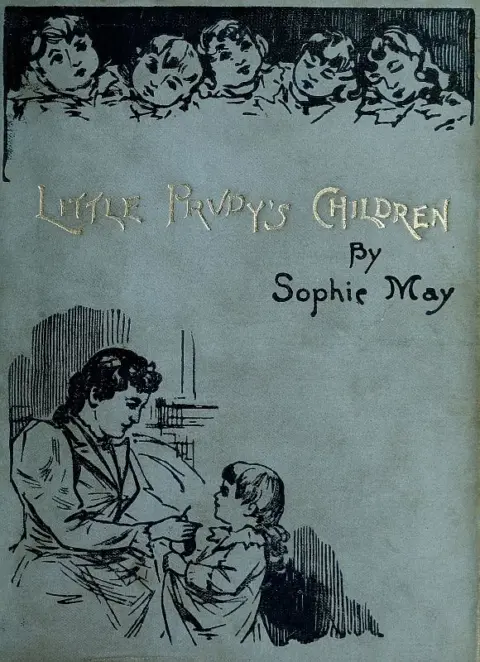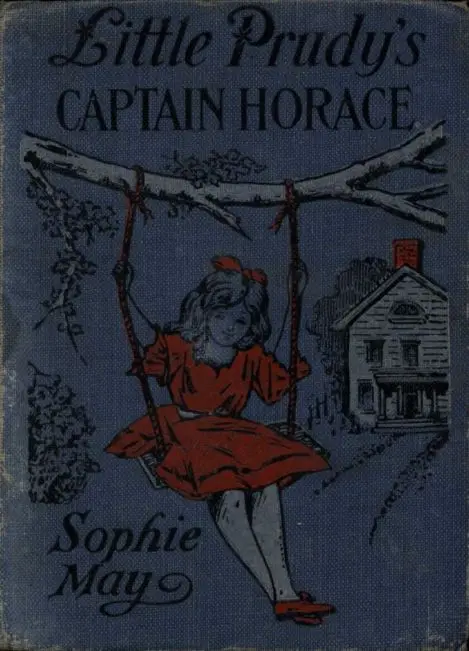
Little Prudy’s Captain Horace
Sophie May
THE CLASSIC COLLECTION · 1872
"Aunt Madge's Story" by Sophie May is a children's novel written in the late 19th century. The book recounts the adventures and misadventures of young Margaret Parlin, affectionately known as "Madge," as she reflects on her childhood experiences, exploring themes of imagination, mischief, and the journey toward understanding truth and honesty. The narrative is playful and relatable, capturing the lively spirit of childhood through Madge's whimsical tales and interactions with her family and friends. The opening of the story introduces us to Madge, who is engaging with her audience of children, setting the tone for a captivating series of anecdotes about her early years. We learn about her vibrant personality—restless and imaginative—often getting into trouble for her knack for storytelling and playful mischief. From her adventures of being mistaken for a boy to her encounters with imaginative characters and the consequences of her fibs, the beginning paints a vivid picture of Madge's world while establishing the underlying moral lessons she grapples with. This engaging mix of humor and life lessons makes for an appealing read for young audiences and provides a glimpse into the complexities of growing up.
Introduction adapted from the source catalogue; source summaries may be automatically generated.
Free to read · English · 28,354 words · No account needed
MAKE TIME FOR A GOOD BOOK
On by default. Untick to stop anonymous reading totals. Each page counts after 10 seconds in view. How this works.
Anonymous counting is on unless you have switched it off.
It happened that she was a cross baby. It did not take her long to forget all about heaven. She liked to pull hair, and she liked to scratch faces; and no matter how much you trotted her up and down, she just opened her toothless mouth and cried.
"She's a wicked, awful baby!" exclaimed I, scowling at her till my
eyes ached.
"Div her a pill, I would," said Ned, laughing. He could laugh, for he didn't have to sit and hold her, as I did.
"Poor little thing isn't well," said mother.
"I don't 'spect she knows whether's she's well or not," returned I, in
disgust. "She just hates everybody, and that's what she's crying
about."
"You grieve me, Madge. I thought you loved this dear sister."
"Well, I did; but I don't love her any more, and I don't ever want to rock a baby that hates me so hard she can't keep her mouth shut."
"You don't mean you are not glad God sent her? O, Madge!"
"Yes'm, that's what I mean. I'm real sorry he sent her, and I wish
he'd take her back again."
Hasty, bitter speech! Even a child knows better than to talk so recklessly. Next day, and for many days, those words came back to my heart like sharp knives. Little sister was very ill, and I knew by the looks of people's faces that they thought she would cross the dark river, on the other side of which stand the pearly gates. Mother saw me roving about the house, crying in corners, and sent me away to the Allens to stay all night. When I got there, Madam Allen took me right up in her motherly arms, and tried to soothe me; but I refused to be comforted.
"I thought baby looked a little better this morning," said she.
I shook my head.
"Has baby grown any worse?"
"No'm."
"Then why do you shake your head?"
"'Cause," sobbed I, "'cause--"
And then, hiding behind her turban, I whispered,--
"O, if you tell God you want anything, is that a prayer?"
"Yes, dear, if you tell him you want little sister to get well, that
is a prayer."
I moaned still more bitterly at these words, and slid out of her lap.
"Why, what is it, darling?"
"I can't tell you," said I; "I can't, I can't. There isn't anybody in this world I can tell but just Fel."
Then Madam Allen went out of the room, and left us two little girls
alone.
"O, Fel," said I, as soon as my sobs would let me speak, "I said I wished God would take my little sister back again."
Your reading position is saved on this browser. Take it to another device with a library code. Reading pages adapt to text, rather than matching a printed edition.
BEHIND THE BOOK
This eBook is for the use of anyone anywhere in the United States and most other parts of the world at no cost and with almost no restrictions whatsoever. You may copy it, give it away or re-use it under the terms of the Project Gutenberg License included with this eBook or online at www.gutenberg.org. If you are not located in the United States, you will have to check the laws of the country where you are located before using this eBook. Read the source licence.
The original source file, including credits and licence, is retained by this library. Request an original-format copy at no charge. Please include the book title and Project Gutenberg identifier #25356.
KEEP YOUR CURIOSITY GOING
Coulson Kernahan

Maurice Baring
Frances Wright
Cécile Tormay

Frederic Jesup Stimson

W. H. P. (William Henry Pope) Jarvis