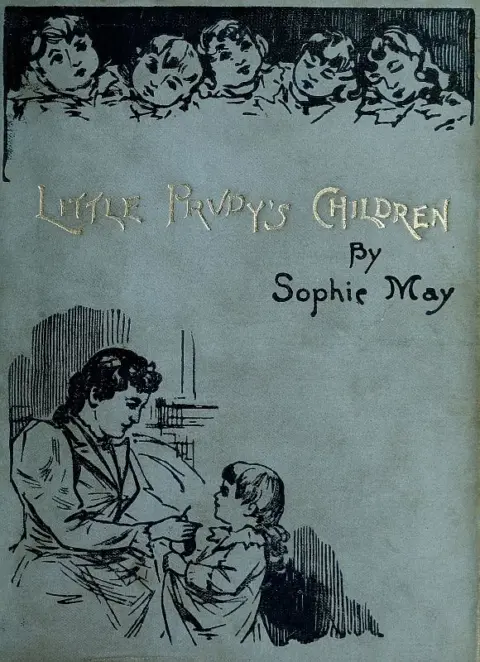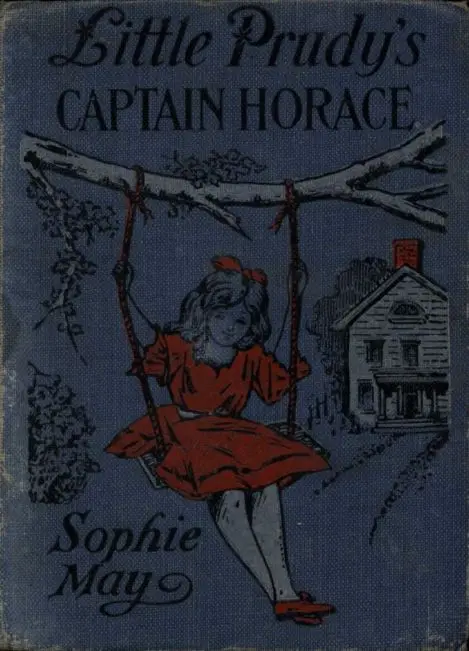
Little Prudy’s Captain Horace
Sophie May
THE CLASSIC COLLECTION · 1872
"Aunt Madge's Story" by Sophie May is a children's novel written in the late 19th century. The book recounts the adventures and misadventures of young Margaret Parlin, affectionately known as "Madge," as she reflects on her childhood experiences, exploring themes of imagination, mischief, and the journey toward understanding truth and honesty. The narrative is playful and relatable, capturing the lively spirit of childhood through Madge's whimsical tales and interactions with her family and friends. The opening of the story introduces us to Madge, who is engaging with her audience of children, setting the tone for a captivating series of anecdotes about her early years. We learn about her vibrant personality—restless and imaginative—often getting into trouble for her knack for storytelling and playful mischief. From her adventures of being mistaken for a boy to her encounters with imaginative characters and the consequences of her fibs, the beginning paints a vivid picture of Madge's world while establishing the underlying moral lessons she grapples with. This engaging mix of humor and life lessons makes for an appealing read for young audiences and provides a glimpse into the complexities of growing up.
Introduction adapted from the source catalogue; source summaries may be automatically generated.
Free to read · English · 28,354 words · No account needed
MAKE TIME FOR A GOOD BOOK
On by default. Untick to stop anonymous reading totals. Each page counts after 10 seconds in view. How this works.
Anonymous counting is on unless you have switched it off.
"No; but there's something I have got, though, better than that. Good to eat, too. And I'll tell you what; if you'll ask me to your party, I'll bring you some in a covered dish."
"What is it, Lize? Ice cream?"
For her face was wondrous sweet.
"Ice cream! How'd you s'pose I kep' that froze? No!" and the bewitching sparkle of her eye called up luscious ideas. I could almost see apricot preserves, pine apples, and honey-heart cherries floating in the air. But why was it a covered dish? "Somethin' nuff sight better 'n ice cream, but I shan't tell what."
"O, I wish you'd bring it to me in the covered dish, 'thout any party, for my mother won't let me have one, Lize, now truly."
"Then you can't have the--what I was goin' to bring," said Lize Jane,
firmly.
"That's too bad," I cried; but it was of no use talking; she couldn't be moved any more than the gravel walk, or the asparagus bed.
"Your mother ain't much sick, is she?"
"Not now," replied I; "her strength is better."
"Well, then, why don't you ask some girls to come, and she'll get 'em some supper; see if she don't."
I was so shocked that I almost fell into a currant bush.
"Lize Jane Bean, what you talking about?"
"Why, you said your mother warn't sick."
"No, her strength is better, but she don't 'low me to do things, Lize Jane Bean, 'thout--'thout she lets me."
"Of course not; but I guess she don't know you want a party so dreadful bad, Maggie, or she would let you. I don't believe your mother is ugly."
"But she never said I might have a party, though."
"No, for she don't think about it. She ain't a bad woman, your mother ain't, only she don't think. Your mother don't mean to be ugly."
Lize Jane spoke in a large-hearted way, at the same time stripping currant-stems very industriously. "She'd feel glad afterwards, s'posing you did have a party, I'll bet."
"O, Lize Jane, what a girl! 's if I'd do it 'thout my mother said I
might."
"O, I didn't mean a real big party; did you s'pose I did? I didn't know but you could ask me and some of the girls to supper, and not call it a party. We'd play ou' doors."
"O, I didn't know that's what you meant. But I
can't,--'cause,--'cause."--
"Well, you needn't, if you don't want to; but I didn't know but you'd like to see that--what I's going to bring."
Your reading position is saved on this browser. Take it to another device with a library code. Reading pages adapt to text, rather than matching a printed edition.
BEHIND THE BOOK
This eBook is for the use of anyone anywhere in the United States and most other parts of the world at no cost and with almost no restrictions whatsoever. You may copy it, give it away or re-use it under the terms of the Project Gutenberg License included with this eBook or online at www.gutenberg.org. If you are not located in the United States, you will have to check the laws of the country where you are located before using this eBook. Read the source licence.
The original source file, including credits and licence, is retained by this library. Request an original-format copy at no charge. Please include the book title and Project Gutenberg identifier #25356.
KEEP YOUR CURIOSITY GOING
Coulson Kernahan

Maurice Baring
Frances Wright
Cécile Tormay

Frederic Jesup Stimson

W. H. P. (William Henry Pope) Jarvis