THE CLASSIC COLLECTION✦An outlaw’s diary: the CommuneCLASSIC FREE BOOKS
An outlaw’s diary: the Commune
Cécile Tormay
THE CLASSIC COLLECTION · 1905
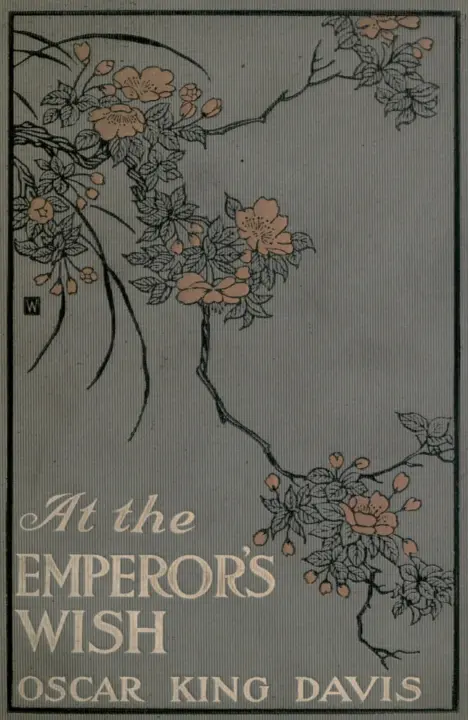
"At the Emperor's Wish: A Tale of the New Japan" by Oscar K. Davis is a historical novel that was written in the early 20th century. Set in a transforming Japan, it explores themes of loyalty, duty, and social change through the lives of its characters, particularly focusing on Kudo Jukichi, a former Samurai grappling with the loss of his status in a rapidly modernizing society, and Kutami Chobei, a commoner who rises from his past as an Eta. The novel contrasts their experiences amid the shifting social landscape following the Meiji Restoration. The opening of the book introduces Kudo Jukichi, an aging Samurai reflecting on his past glories and the changes that have stripped him of his former status and privileges. Living in modest circumstances, he clings to a deep loyalty to the Emperor even while lamenting the loss of the Samurai class. Nearby, Kutami Chobei, an Eta turned commoner, thrives in the new order, demonstrating the upheaval in class structure and societal expectations. There is a budding friendship between their children, Soichi and O-Mitsu, which hints at a future that could break down traditional barriers. The narrative sets the stage for an exploration of themes like honor, sacrifice, and societal evolution against the backdrop of Japan's modernization.
Introduction adapted from the source catalogue; source summaries may be automatically generated.
Free to read · English · 28,690 words · No account needed
MAKE TIME FOR A GOOD BOOK
On by default. Untick to stop anonymous reading totals. Each page counts after 10 seconds in view. How this works.
Anonymous counting is on unless you have switched it off.
There was plenty of work at the new bank, and Kutami divided his time between it and his old affairs. In the street one morning as he was going to the bank he came upon Chukei, the nakodo, of whom he had not a thought since that day he saw him at Kudo-san’s gate.
“Good morning, Chukei-san,” he said; “what young people are you trying to make happy now?”
“Not your son, surely,” answered the middleman, instantly scenting the possibility of a fortunate stroke, and bowing very low to make a good impression.
“Ho, ho!” cried Chobei, with a hearty laugh. “You are quite right. Surely not my son. He has no thought of marrying yet.”
“Be not oversure,” replied the nakodo. “One never can tell what is in the minds of these likely young fellows.”
“That is so,” returned the banker; “but I think I know my son quite well enough. I saw you coming from Kudo-san’s house a while ago. That must have been a proposal for his pretty daughter?” He chucked at his shrewdness in guessing.
Chukei was not much inclined to discuss his clients’ affairs, but he was tempted by the hope of gaining a new one, and besides, he loved a bit of gossip.
“Yes,” he answered grinning sheepishly, “and a very good proposal it was,
too.”
“Indeed,” said Chobei, with neighborly interest. “I had not heard of the
wedding.”
“No, and you will not,” replied the matchmaker, a little sourly, for it always angered him to think of the good business he had lost because of O-Mitsu’s refusal. “My proposal was not accepted.”
“Dear me!” exclaimed Kutami; “that is very strange. Who was the man?”
“Yamamoto-san, the silk merchant,” responded the nakodo. “His son is one of the finest young men in the city.”
“Yes, indeed,” said the banker, “I should think any man would be glad to have his daughter make such a fortunate marriage. What did Kudo-san say?”
“That was the greatest surprise,” answered old Chukei. “He said his daughter did not wish to marry.”
“Well, well!” cried the banker. “Who ever heard of a girl refusing to marry when her father wished her too? Things have changed very much in Japan when that can happen.”
“They have indeed,” replied the nakodo. “Least of all would one have thought it of Kudo-san, but it is quite true. I have been there three times since summer, each time with a very excellent marriage to offer, and always it has been the same answer.”
Your reading position is saved on this browser. Take it to another device with a library code. Reading pages adapt to text, rather than matching a printed edition.
BEHIND THE BOOK
This eBook is for the use of anyone anywhere in the United States and most other parts of the world at no cost and with almost no restrictions whatsoever. You may copy it, give it away or re-use it under the terms of the Project Gutenberg License included with this eBook or online at www.gutenberg.org. If you are not located in the United States, you will have to check the laws of the country where you are located before using this eBook. Read the source licence.
The original source file, including credits and licence, is retained by this library. Request an original-format copy at no charge. Please include the book title and Project Gutenberg identifier #66274.
KEEP YOUR CURIOSITY GOING
Cécile Tormay

Moritz Busch
Coulson Kernahan
John L. Ransom

Maurice Baring
Frances Wright