
Letters to a Friend, Written to Mrs. Ezra S. Carr, 1866-1879
John Muir
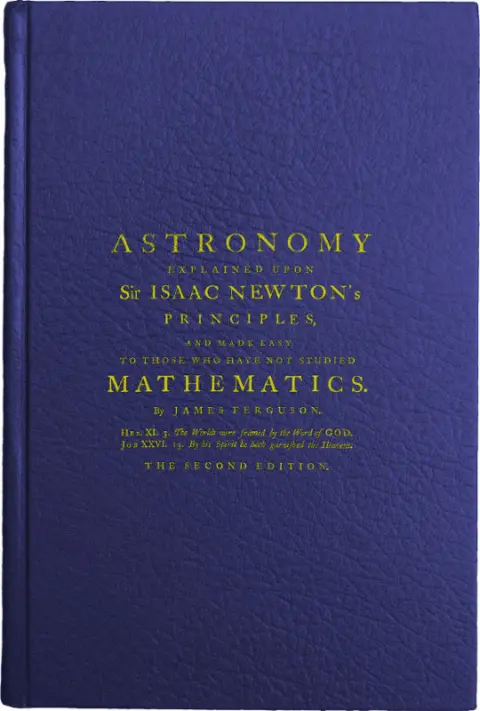
THE CLASSIC COLLECTION · 1756
"Astronomy Explained Upon Sir Isaac Newton's Principles" by James Ferguson is a scientific publication written in the mid-18th century. This work delves into the principles of astronomy as established by Isaac Newton, making complex astronomical concepts accessible to those who lack a mathematical background. The book covers the solar system's structure, the nature of celestial bodies, and various astronomical phenomena, emphasizing the scientific significance and beauty of the universe. The beginning of the book introduces astronomy as the most sublime and useful of sciences, detailing its impact on human understanding and the vastness of the universe. Ferguson aims to convey not only the mechanics of celestial movements but also the grandeur of the cosmos, evoking a sense of wonder about the relationship between humanity and the divine. He emphasizes the infinitude of stars and systems, setting the tone for an exploration of the solar system's structure and properties, which unfolds in subsequent chapters.
Introduction adapted from the source catalogue; source summaries may be automatically generated.
Free to read · English · 129,260 words · No account needed
MAKE TIME FOR A GOOD BOOK
On by default. Untick to stop anonymous reading totals. Each page counts after 10 seconds in view. How this works.
Anonymous counting is on unless you have switched it off.
A TABLE, shewing how much of the Celestial Equator passes over the Meridian in any part of a mean SOLAR DAY; and how much the FIXED STARS gain upon the mean SOLAR TIME every Day, for a Month.
+-----+-----------+-----+------------+-----+------------+ | Time| Motion. | Time| Motion. |Time | Motion. | | | | | | | | +-----+-----------+-----+------------+-----+------------+ |Hours| D. M. S. | *M. | D. M. S. | *M. | D. M. S. | | | | S. | M. S. T. | S. | M. S. T. + | | | T. | S. T. ʺʺ | T. | S. T. ʺʺ | +-----+-----------+-----+------------+-----+------------+ | 1 | 15 2 28 | 1 | 0 15 2 | 31 | 7 46 16 | | 2 | 30 4 56 | 2 | 0 30 5 | 32 | 8 1 19 | | 3 | 45 7 24 | 3 | 0 45 7 | 33 | 8 16 21 | | 4 | 60 9 51 | 4 | 1 0 10 | 34 | 8 31 24 | | 5 | 75 12 19 | 5 | 1 15 12 | 35 | 8 46 26 | +-----+-----------+-----+------------+-----+------------+ | 6 | 90 14 47 | 6 | 1 30 15 | 36 | 9 1 29 | | 7 | 105 17 15 | 7 | 1 45 17 | 37 | 9 16 31 | | 8 | 120 19 43 | 8 | 2 0 20 | 38 | 9 31 34 | | 9 | 135 22 11 | 9 | 2 15 22 | 39 | 9 46 36 | | 10 | 150 24 38 | 10 | 2 30 25 | 40 | 10 1 39 | +-----+-----------+-----+------------+-----+------------+ | 11 | 165 27 6 | 11 | 2 45 27 | 41 | 10 16 41 | | 12 | 180 29 34 | 12 | 3 0 30 | 42 | 10 31 43 | | 13 | 195 32 2 | 13 | 3 15 32 | 43 | 10 46 46 | | 14 | 210 34 30 | 14 | 3 30 34 | 44 | 11 1 48 | | 15 | 225 36 58 | 15 | 3 45 37 | 45 | 11 16 51 | +-----+-----------+-----+------------+-----+------------+ | 16 | 240 39 26 | 16 | 4 0 39 | 46 | 11 31 53 | | 17 | 255 41 53 | 17 | 4 15 41 | 47 | 11 46 56 | | 18 | 270 44 21 | 18 | 4 30 44 | 48 | 12 1 58 | | 19 | 285 46 49 | 19 | 4 45 47 | 49 | 12 17 1 | | 20 | 300 49 17 | 20 | 5 0 49 | 50 | 12 32 3 | +-----+-----------+-----+------------+-----+------------+ | 21 | 315 51 45 | 21 | 5 15 52 | 51 | 12 47 6 | | 22 | 330 54 13 | 22 | 5 30 54 | 52 | 13 2 8 | | 23 | 345 56 40 | 23 | 5 45 57 | 53 | 13 17 11 | | 24 | 360 59 8 | 24 | 6 0 59 | 54 | 13 32 13 | | 25 | 376 1 36 | 25 | 6 16 2 | 55 | 13 47 16 | +-----+-----------+-----+------------+-----+------------+ | 26 | 391 4 4 | 26 | 6 31 4 | 56 | 14 2 18 | | 27 | 406 6 32 | 27 | 6 46 7 | 57 | 14 17 21 | | 28 | 421 9 0 | 28 | 7 1 9 | 58 | 14 32 23 | | 29 | 436 11 28 | 29 | 7 16 11 | 59 | 14 47 26 | | 30 | 451 13 56 | 30 | 7 31 14 | 60 | 15 2 28 | +-----+-----------+-----+------------+-----+------------+
Accelerations
of the
Fixed Stars.
+----+----------+
| D. | H. M. S. |
+----+----------+
| 1 | 0 3 56 |
| 2 | 0 7 52 |
| 3 | 0 11 48 |
| 4 | 0 15 44 |
| 5 | 0 19 39 |
+----+----------+
| 6 | 0 23 35 |
| 7 | 0 27 31 |
| 8 | 0 31 27 |
| 9 | 0 35 23 |
| 10 | 0 39 19 |
+----+----------+
| 11 | 0 43 15 |
| 12 | 0 47 11 |
| 13 | 0 51 7 |
| 14 | 0 55 3 |
| 15 | 0 58 58 |
+----+----------+
| 16 | 1 2 54 |
| 17 | 1 6 50 |
| 18 | 1 10 46 |
| 19 | 1 14 42 |
| 20 | 1 18 38 |
+----+----------+
| 21 | 1 22 34 |
| 22 | 1 26 30 |
| 23 | 1 30 26 |
| 24 | 1 34 22 |
| 25 | 1 38 17 |
+----+----------+
| 26 | 1 42 13 |
| 27 | 1 46 9 |
| 28 | 1 50 5 |
| 29 | 1 54 1 |
| 30 | 1 57 57 |
+----+----------+
[Sidenote: PLATE III.
An absolute Turn of the Earth on it’s Axis never finishes a
solar day.
Fig. II.]
222. Thus it is plain, that an absolute turn of the Earth on it’s Axis (which is always completed when the same Meridian comes to be parallel to it’s situation at any time of the day before) never brings the same Meridian round from the Sun to the Sun again; but that the Earth requires as much more than one turn on it’s Axis to finish a natural day, as it has gone forward in that time; which, at a mean state is a 365th part of a Circle. Hence, in 365 days the Earth turns 366 times round it’s Axis; and therefore, as a turn of the Earth on it’s Axis compleats a sidereal day, there must be one sidereal day more in a year than the number of solar days, be the number what it will, on the Earth, or any other Planet. One turn being lost with respect to the number of solar days in a year, by the Planet’s going round the Sun; just as it would be lost to a traveller, who, in going round the Earth, would lose one day by following the apparent diurnal motion of the Sun: and consequently, would reckon one day less at his return (let him take what time he would to go round the Earth) than those who remained all the while at the place from which he set out. So, if there were two Earths revolving equably on their Axes, and if one remained at A until the other travelled round the Sun from A to A again, that Earth which kept it’s place at A would have it’s solar and sidereal days always of the same length; and so, would have one solar day more than the other at it’s return. Hence, if the Earth turned but once round it’s Axis in a year, and if that turn was made the same way as the Earth goes round the Sun, there would be continual day on one side of the Earth, and continual night on the other.
Your reading position is saved on this browser. Take it to another device with a library code. Reading pages adapt to text, rather than matching a printed edition.
BEHIND THE BOOK
This eBook is for the use of anyone anywhere in the United States and most other parts of the world at no cost and with almost no restrictions whatsoever. You may copy it, give it away or re-use it under the terms of the Project Gutenberg License included with this eBook or online at www.gutenberg.org. If you are not located in the United States, you will have to check the laws of the country where you are located before using this eBook. Read the source licence.
The original source file, including credits and licence, is retained by this library. Request an original-format copy at no charge. Please include the book title and Project Gutenberg identifier #60619.
KEEP YOUR CURIOSITY GOING
John Muir

Asa Gray
Asa Gray

Florence Nightingale
Elizabeth Robins Pennell
Denison Olmsted