
Last letters from the living dead man
David Patterson (Spirit) Hatch
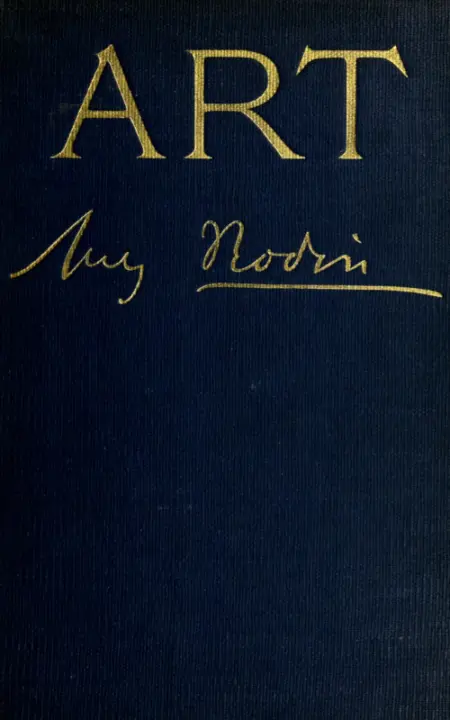
THE CLASSIC COLLECTION · 1912
"Art" by Auguste Rodin is a philosophical treatise on the nature of art written in the early 20th century. The work explores Rodin's thoughts and musings on artistic creation, emphasizing the importance of beauty, expression, and the inner truth of subjects. It serves as both a personal manifesto and a reflective critique of contemporary views on art. The opening of "Art" begins with a vivid description of Rodin's idyllic surroundings near Paris, where he expresses his discontent with the modern world's dismissal of art in favor of material pursuits. Engaging in dialogue with his friend Paul Gsell, Rodin laments how contemporary society has lost its connection to beauty and contemplation, viewing art as an outdated interest. He emphasizes that true art is born from a deep appreciation of nature and the human experience, suggesting that the importance of artistic expression transcends mere functionality and utility. This sets a contemplative tone for the rest of the book, inviting readers to reflect on the role of art in their own lives.
Introduction adapted from the source catalogue; source summaries may be automatically generated.
Free to read · English · 35,336 words · No account needed
MAKE TIME FOR A GOOD BOOK
On by default. Untick to stop anonymous reading totals. Each page counts after 10 seconds in view. How this works.
Anonymous counting is on unless you have switched it off.
Maréchal Ney, Rude’s, 67, 69
Marivaux, 84
Marseillaise, La (newspaper), 135
Marseillaise, Rude’s, 67, 83, 84, 85, 237
Meditation. See Penseur
Meudon, 5, 37, 111, 134, 175
Michael Angelo, 97, 178;
his work expounded by Rodin, 196–202, 218–223
Millet, François, 43, 179, 182, 240, 241
Mirabeau, Houdon’s bust of, 122, 127
Modelling, 53–61, 66
Models, 26
Moses, Michael Angelo’s, 228
Movement in art, 65–89
Mystery in art, 175–188
Nature, as seen by Rodin, 30–34, 37–50
Naufrage de Don Juan, Delacroix’s, 158
Nude, the, 27
Ovid, 68
Palais Royal, 156
Pan, Bourdelle’s, 227
Pantheon, the, 144, 238
Paris, 15, 111, 238
Parnassus, 101
Parthenon, the, 183
Paul III, Titian’s, 131
Pensée, Rodin’s, 161
Penseur, Rodin’s, 151–152, 185
Periboëtos, torso of, 213
Phidias, 114, 165, 218, 222;
his work expounded by Rodin, 192–196
Philip IV, Velasquez’s, 131
Photographs, instantaneous, 73, 74, 75, 76
Pietà, Michael Angelo’s, 222
Pilon, Germain, 218
Pisanello, 131
Polycletus, 199, 212
Pont de l’Alma, 5
Portraits, 123–125, 129–134
Pottery, 99
Poussin, 236, 239
Praxiteles, 199, 206, 213
Prudhon, 240
Puget, 236
Pygmalion, Rodin’s, 163, 164
Racine, 45
Raphael, 97, 101, 102, 103, 104, 105, 106, 107, 200
Realism in art, 25–34
Rembrandt, 101, 102, 103, 105, 106, 107, 167, 168, 187
Robbia, della. See Luca della Robbia
Rochefort, Henri, 138, 139
Rochefort, Rodin’s bust of, 138, 139
Rodin, Auguste, his home at Val-Fleury, 5;
at the Dépôt des Marbres, 25;
his method of work, 26-34;
at “l’Hôtel de Biron,” 111;
his religion, 175-177;
his views on modern art, 6;
on nature, 30-34, 37-50;
on modelling, 53-61;
on drawing and color, 93-107;
on beauty of women, 111-118;
on busts and portraits, 121-148;
on thought in art, 151-171;
on mystery in art, 175-188;
on Phidias and Michael Angelo, 191-207, 218-223;
on usefulness of artists, 227-245
Rousseau, Houdon’s bust of, 125
Rousseau, Theodore, 166
Rubens, 98, 105, 106
Rude, 67, 69, 83, 85, 237
Ruysdael, 166
Sainte Geneviève, Chavannes’, 238
Saint George, 101
Saint-Jean-Baptiste, Rodin’s, 65, 67, 71, 72, 73, 74, 185
Saint John, Rodin’s. See Saint-Jean-Baptiste
Sainte Magdalene, Donatello’s, 40
Saint-Pierre, Eustache de, 86, 88
Santisimo Christo, Chapel del, Burgos, 175
Sanzio, 101
Scopas, 199
Sculpture, Egyptian, 180
Sculpture, Greek, 11, 27, 56, 57, 114, 192-196, 212-218
Sebastian, Velasquez’s, 43
Shakespeare, 45
Siena, 201
Société des Gens de Lettres, 146
Sorbonne, the, 238
South Kensington, 101
Stained-glass, 98
Thiers, 127
Three Fates, 183
Titian, 98, 131, 167, 168
Truth in art, 31, 45
Turner, 106
Ugliness in nature, 42
Ugolin, Rodin’s, 159
Val-Fleury, Rodin’s home at, 5
Vatican, the, 101
Velasquez, 43, 105, 106, 131
Venus, the Cnidian, 206
Venus of the Capitol, 206
Venus di Medici, 54, 206
Venus of Milo, 213
Veronese, 79, 98
Victory of Samothrace, 215
Villain, 136
Villon, 37
Vinci, Leonardo da, 182
Voltaire, Houdon’s bust of, 121, 122, 126, 237
Washington, Houdon’s bust of, 122
Watteau, 80, 81, 85, 115, 237, 240
Women, beauty of, 113-118
1. Silently corrected typographical errors and variations in spelling.
2. Retained anachronistic, non-standard, and uncertain spellings as
printed.
3. Enclosed italics font in underscores.
4. Enclosed bold font in =equals=.
Your reading position is saved on this browser. Take it to another device with a library code. Reading pages adapt to text, rather than matching a printed edition.
BEHIND THE BOOK
This eBook is for the use of anyone anywhere in the United States and most other parts of the world at no cost and with almost no restrictions whatsoever. You may copy it, give it away or re-use it under the terms of the Project Gutenberg License included with this eBook or online at www.gutenberg.org. If you are not located in the United States, you will have to check the laws of the country where you are located before using this eBook. Read the source licence.
The original source file, including credits and licence, is retained by this library. Request an original-format copy at no charge. Please include the book title and Project Gutenberg identifier #59799.
KEEP YOUR CURIOSITY GOING
David Patterson (Spirit) Hatch
Coulson Kernahan

Ralph Waldo Emerson
Frances Wright

Edwin Abbott Abbott

Joseph Droz