THE CLASSIC COLLECTION✦An outlaw’s diary: the CommuneCLASSIC FREE BOOKS
An outlaw’s diary: the Commune
Cécile Tormay
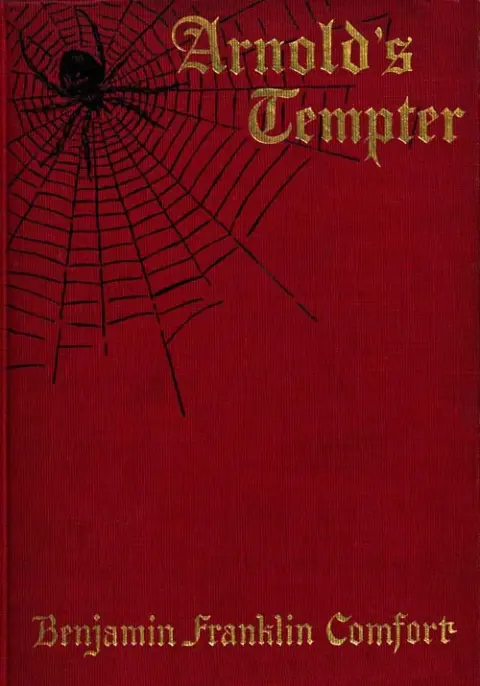
THE CLASSIC COLLECTION · 1908
"Arnold's Tempter" by Benjamin F. Comfort is a historical novel written in the early 20th century. The story is set during the American Revolutionary War and revolves around the intrigues and political machinations in Philadelphia, highlighting key figures such as Roderick Barclugh and Benedict Arnold. The narrative explores themes of loyalty, ambition, and the tension between aristocratic values and emerging democratic ideals. The opening of the novel introduces Roderick Barclugh, who arrives in Philadelphia for an important dinner hosted by Robert FitzMaurice, where he will meet key political figures, including General Benedict Arnold and his wife, Peggy. The social dynamics at the gathering reveal a deep division between loyalists and independence supporters, with dialogue that addresses the complexities and personal motivations behind the American Revolution. Barclugh’s charming persona captures the attention of those around him, and a palpable undercurrent of tension suggests his hidden agendas as he navigates the intricacies of political favor and financial intrigue. The scene sets the stage for the unfolding drama of ambition, betrayal, and moral conflict within the turbulent landscape of the time.
Introduction adapted from the source catalogue; source summaries may be automatically generated.
Free to read · English · 89,107 words · No account needed
MAKE TIME FOR A GOOD BOOK
On by default. Untick to stop anonymous reading totals. Each page counts after 10 seconds in view. How this works.
Anonymous counting is on unless you have switched it off.
“Alas, when I think of him! when I think of him! It is when I think of him!--Oh, disquagummee!”
Her mind rebelled and indignation took the place of sadness as she thought of the happy wigwam that her warrior supplied so well with game and fish; and how she used to enjoy the security of their forest home. While her brave was out after the chase, she was grinding the corn and tanning the skins. When he journeyed far in his favorite hunting-grounds she was cultivating the maize and potatoes for her loved ones, so that there would be plenty for her lord upon his return.
Many times did she swing her baby girl to sleep while her boy played
about the lodge and gazed at her with love in his young eyes as she
sang:
“Swinging, swinging, lullaby,
“Sleep thou, sleep thou, sleep thou,
“Little daughter, lullaby.
“Swinging, swinging, swinging,
“Little daughter, lullaby.
“Your mother cares for you,
“Sleep, sleep, sleep, lullaby.
“Do not fear, my little daughter,
“Sleep, sleep, sleep,
“Do not fear, my little daughter.
“Swinging, swinging, lullaby,
“Not alone art thou.
“Your mother is caring for you.
“Sleep, sleep, my little daughter,
“Swinging, swinging, lullaby,
“Sleep, sleep, sleep.”
But she could not, in the care of her children, dispel the sadness of her mind, knowing that she must give up the joys of her forest life. Everything had been so full of hope when he was beside her, but now she could lie on her couch of boughs and mats and ponder upon the sad fate to which she had been cast by the relentless white man. Her mind oft reflected what has been well written:
“’Tis not enough. That hated race
“Should hunt us out from grove and place,
“And consecrated shore,--where long
“Our fathers raised the lance and song.”
The inevitable had come to Kaubequa, and she sought her white friends, whose religion abhorred war. She set up her lodge on the estate of Dr. Greydon,--not even asking leave to do so.
The first evidence that the master of Dorminghurst had of the newly arrived family, was the presentation of a mokuk of maple sugar to the household by a comely young squaw. She carried an infant daughter on her back, bound up in an Indian’s cradle.
She desired to obtain some meat, and her way was to exchange with the
white people.
Her son was a dextrous lad of nine years, who had learned to fish and trap small animals for food and fur.
Your reading position is saved on this browser. Take it to another device with a library code. Reading pages adapt to text, rather than matching a printed edition.
BEHIND THE BOOK
This eBook is for the use of anyone anywhere in the United States and most other parts of the world at no cost and with almost no restrictions whatsoever. You may copy it, give it away or re-use it under the terms of the Project Gutenberg License included with this eBook or online at www.gutenberg.org. If you are not located in the United States, you will have to check the laws of the country where you are located before using this eBook. Read the source licence.
The original source file, including credits and licence, is retained by this library. Request an original-format copy at no charge. Please include the book title and Project Gutenberg identifier #62181.
KEEP YOUR CURIOSITY GOING
Cécile Tormay

Moritz Busch
Coulson Kernahan
John L. Ransom

Maurice Baring
Frances Wright