THE CLASSIC COLLECTION✦An outlaw’s diary: the CommuneCLASSIC FREE BOOKS
An outlaw’s diary: the Commune
Cécile Tormay
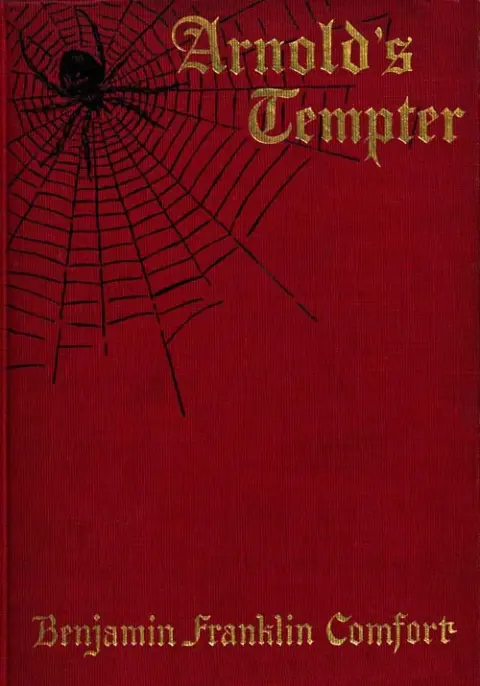
THE CLASSIC COLLECTION · 1908
"Arnold's Tempter" by Benjamin F. Comfort is a historical novel written in the early 20th century. The story is set during the American Revolutionary War and revolves around the intrigues and political machinations in Philadelphia, highlighting key figures such as Roderick Barclugh and Benedict Arnold. The narrative explores themes of loyalty, ambition, and the tension between aristocratic values and emerging democratic ideals. The opening of the novel introduces Roderick Barclugh, who arrives in Philadelphia for an important dinner hosted by Robert FitzMaurice, where he will meet key political figures, including General Benedict Arnold and his wife, Peggy. The social dynamics at the gathering reveal a deep division between loyalists and independence supporters, with dialogue that addresses the complexities and personal motivations behind the American Revolution. Barclugh’s charming persona captures the attention of those around him, and a palpable undercurrent of tension suggests his hidden agendas as he navigates the intricacies of political favor and financial intrigue. The scene sets the stage for the unfolding drama of ambition, betrayal, and moral conflict within the turbulent landscape of the time.
Introduction adapted from the source catalogue; source summaries may be automatically generated.
Free to read · English · 89,107 words · No account needed
MAKE TIME FOR A GOOD BOOK
On by default. Untick to stop anonymous reading totals. Each page counts after 10 seconds in view. How this works.
Anonymous counting is on unless you have switched it off.
We next find Segwuna in New York. She was well acquainted with the way thither, for she had traversed it many times. While pursuing her purpose in New York, Segwuna lived with a small band of Iroquois on Staten Island.
Segwuna found much favor among the ladies of the English officers, for her skill as a prophetess was already established.
She now made it her particular business to call often upon the ladies of General Clinton and General Knypthausen; and, also, upon Major Andre in his office, one afternoon, when the principal business of the day was over.
The offices of the Adjutant-General of the British Army were at No. 1 Broadway, in one of those old Dutch houses the entrance of which led up a short flight of steps to a huge door having an iron knocker.
Dormer windows faced the street in the second story, and the hip roof was covered with shingles that were coated with moss and lichens,--evidences of an ancient construction.
When Segwuna rapped with the iron knocker on the huge door, a
red-coated English Sergeant opened it, and the prophetess modestly
inquired:
“Is Major Andre in?”
“Yes, Madam,” was the reply.
“May I see him?”
“He is very busy,” returned the Sergeant. “Will you give your name, and state your business?”
“Tell him that Segwuna, the Indian prophetess, has news to tell him.”
“Will you come in and be seated?” continued the military man, who ushered her into the outer office of the Adjutant-General.
Segwuna went into the outer office and sat down while the Sergeant rapped on the door of the private office, and a voice within said:
“Come in.”
The Sergeant opened the door carefully and walked up to the desk of the Adjutant-General and stood at attention until Major Andre turned from a letter on his desk and glanced up at the soldier, who saluted:
“What is it?” brusquely asked Andre.
“A young Indian woman, who calls herself Segwuna, the prophetess,
wishes to bring you news.”
“Show her in, Sergeant Donovan,” ordered Andre.
The Sergeant went to the outer office, and politely informed Segwuna:
“The Adjutant says that he will see you, Madam.”
Segwuna tripped lightly to the door and entered the presence of one of the most polished and handsome gentlemen of the British army. Dressed in the most fastidious manner, his young and pleasing face shone out with an animated expression of good-will as he arose and bowed gracefully to Segwuna and said:
“Be seated, Miss Segwuna. I have heard very pleasing accounts of you from Madam Clinton. Do you wish to tell me what my fate will be, this evening?”
Your reading position is saved on this browser. Take it to another device with a library code. Reading pages adapt to text, rather than matching a printed edition.
BEHIND THE BOOK
This eBook is for the use of anyone anywhere in the United States and most other parts of the world at no cost and with almost no restrictions whatsoever. You may copy it, give it away or re-use it under the terms of the Project Gutenberg License included with this eBook or online at www.gutenberg.org. If you are not located in the United States, you will have to check the laws of the country where you are located before using this eBook. Read the source licence.
The original source file, including credits and licence, is retained by this library. Request an original-format copy at no charge. Please include the book title and Project Gutenberg identifier #62181.
KEEP YOUR CURIOSITY GOING
Cécile Tormay

Moritz Busch
Coulson Kernahan
John L. Ransom

Maurice Baring
Frances Wright