THE CLASSIC COLLECTION✦An outlaw’s diary: the CommuneCLASSIC FREE BOOKS
An outlaw’s diary: the Commune
Cécile Tormay
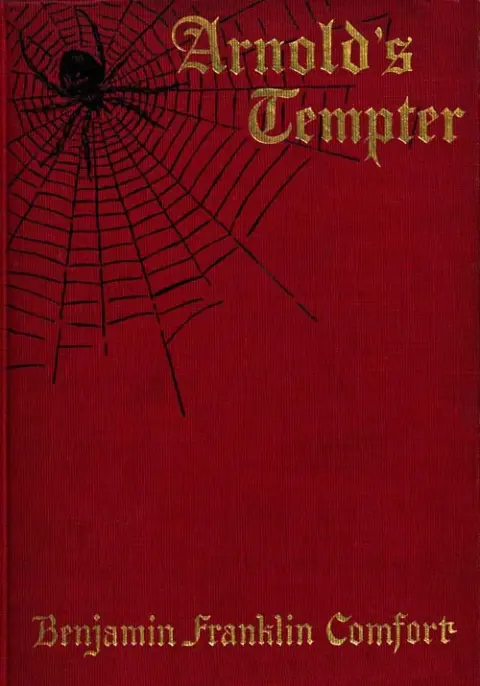
THE CLASSIC COLLECTION · 1908
"Arnold's Tempter" by Benjamin F. Comfort is a historical novel written in the early 20th century. The story is set during the American Revolutionary War and revolves around the intrigues and political machinations in Philadelphia, highlighting key figures such as Roderick Barclugh and Benedict Arnold. The narrative explores themes of loyalty, ambition, and the tension between aristocratic values and emerging democratic ideals. The opening of the novel introduces Roderick Barclugh, who arrives in Philadelphia for an important dinner hosted by Robert FitzMaurice, where he will meet key political figures, including General Benedict Arnold and his wife, Peggy. The social dynamics at the gathering reveal a deep division between loyalists and independence supporters, with dialogue that addresses the complexities and personal motivations behind the American Revolution. Barclugh’s charming persona captures the attention of those around him, and a palpable undercurrent of tension suggests his hidden agendas as he navigates the intricacies of political favor and financial intrigue. The scene sets the stage for the unfolding drama of ambition, betrayal, and moral conflict within the turbulent landscape of the time.
Introduction adapted from the source catalogue; source summaries may be automatically generated.
Free to read · English · 89,107 words · No account needed
MAKE TIME FOR A GOOD BOOK
On by default. Untick to stop anonymous reading totals. Each page counts after 10 seconds in view. How this works.
Anonymous counting is on unless you have switched it off.
“No, Mr. Barclugh,” came the prompt and decided answer of the young Quakeress. “I have very few. My father and my mother are my most constant companions. One tutors me in the classics, almost daily, and the other instructs me in all the duties of our household. I am, therefore, very busy at my books, the spinning, the weaving, the oversight of the dairy and the poultry-yards. I have my circle of friends in Philadelphia and I attend some of the entertainments given there; but in these stirring times, when our countrymen need clothes and food, I owe all of my energy to them.”
“Well, well, Miss Greydon, you are truly in earnest about this war. Let me see,” laughingly remarked Barclugh, “do you really believe that the Colonists can possibly succeed in their efforts to win independence? Will not your zeal have been spent in vain?”
“Why, Mr. Barclugh,” came her reply in girlish enthusiasm, “you remember that Wolsey, in the time of Henry VIII, said:
‘Had I but serv’d my God with half the zeal
‘I serv’d my king, he would not in mine age
‘Have left me naked to mine enemies.’
And I can assure you that I believe when I serve this country for the principles of independence and equality of the people, I am serving my God. So I have heard Mr. Franklin say to father, and he must be right.”
Turning to his host and hostess at each end of the breakfast table, and to Miss Greydon, who sat opposite, Barclugh looked at each one earnestly, while he remarked:
“This young lady must be inspired.”
With the purpose of disclaiming any credit to herself, the young lady, with all the sincerity of a child, laughed with animation, as she tried to explain her wisdom:
“No, Mr. Barclugh, you must not think so. For the past five years we have heard nothing discussed at our tables, at our firesides, and on every occasion, nothing but the ‘Rights of Man,’ ‘Common Sense,’ ‘Age of Reason,’ ‘The Declaration of Independence,’ ‘The Tyranny of Kings,’ and ‘The Corruption of Aristocracy,’ until their doctrines have become household words. I have imbibed them, absorbed them, and discussed them, so I feel that every word I utter is the truth.”
Dr. and Mrs. Greydon let the younger people occupy each other’s attention and listened with smiles of satisfaction at the readiness with which their only daughter was able to expound the sentiments of the household.
However, Dr. Greydon turned to his guest, saying:
“Mr. Barclugh, I must let you know that Mollie is my boy.”
Your reading position is saved on this browser. Take it to another device with a library code. Reading pages adapt to text, rather than matching a printed edition.
BEHIND THE BOOK
This eBook is for the use of anyone anywhere in the United States and most other parts of the world at no cost and with almost no restrictions whatsoever. You may copy it, give it away or re-use it under the terms of the Project Gutenberg License included with this eBook or online at www.gutenberg.org. If you are not located in the United States, you will have to check the laws of the country where you are located before using this eBook. Read the source licence.
The original source file, including credits and licence, is retained by this library. Request an original-format copy at no charge. Please include the book title and Project Gutenberg identifier #62181.
KEEP YOUR CURIOSITY GOING
Cécile Tormay

Moritz Busch
Coulson Kernahan
John L. Ransom

Maurice Baring
Frances Wright