THE CLASSIC COLLECTION✦An outlaw’s diary: the CommuneCLASSIC FREE BOOKS
An outlaw’s diary: the Commune
Cécile Tormay
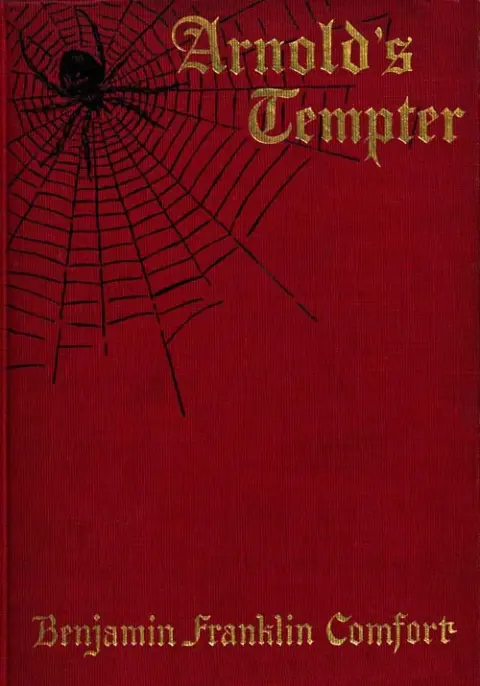
THE CLASSIC COLLECTION · 1908
"Arnold's Tempter" by Benjamin F. Comfort is a historical novel written in the early 20th century. The story is set during the American Revolutionary War and revolves around the intrigues and political machinations in Philadelphia, highlighting key figures such as Roderick Barclugh and Benedict Arnold. The narrative explores themes of loyalty, ambition, and the tension between aristocratic values and emerging democratic ideals. The opening of the novel introduces Roderick Barclugh, who arrives in Philadelphia for an important dinner hosted by Robert FitzMaurice, where he will meet key political figures, including General Benedict Arnold and his wife, Peggy. The social dynamics at the gathering reveal a deep division between loyalists and independence supporters, with dialogue that addresses the complexities and personal motivations behind the American Revolution. Barclugh’s charming persona captures the attention of those around him, and a palpable undercurrent of tension suggests his hidden agendas as he navigates the intricacies of political favor and financial intrigue. The scene sets the stage for the unfolding drama of ambition, betrayal, and moral conflict within the turbulent landscape of the time.
Introduction adapted from the source catalogue; source summaries may be automatically generated.
Free to read · English · 89,107 words · No account needed
MAKE TIME FOR A GOOD BOOK
On by default. Untick to stop anonymous reading totals. Each page counts after 10 seconds in view. How this works.
Anonymous counting is on unless you have switched it off.
Not a word passed the lips of these men of iron for a period that
seemed oppressively long.
At length Barclugh broke the silence, remarking compassionately:
“My dear General Arnold, your life has been worried to distraction by men of small and ungenerous natures. They have sought to elevate themselves by your undoing; but what must you expect from a government such as you have in these Colonies? There is no authority, no responsible head. You, in your case, have no appeal from a backbiting set of adventurers.
“But in government at home such services as you have rendered have the reward of a peerage and a grant from Parliament for the benefit of your family.
“There is no use talking further, you can serve your countrymen far more, by trying to put an end to these injustices, perpetrated by an irresponsible rabble upon personages of substance, than by trying to win independence,--for what?--A worse government, perhaps, than the one you have had as Colonists.”
“In any event, the Commissioners of His Majesty are willing to grant all the demands that the Colonists have asked for.
“Now, General Arnold, you will pardon me, but if I were to put two thousand pounds sterling to your credit, as a loan, and leave it here for your convenience, would that be of any service to you?”
“My dear Mr. Barclugh,” replied Arnold most graciously, “you have befriended me generously--I am in need of friends.
“I shall not forget your kindness, but may I ask you to let me have five hundred pounds to-day?”
“Certainly, certainly,” returned Barclugh, and he counted him out the amount in Bank of England notes.
“But there is only one matter I wish to impress upon you, General Arnold, before you go,” continued Barclugh, as he arose and took Arnold by the hand. “I hope that you will press the matter about West Point with General Washington, and let me know at the very first moment what news you get. I know that General Washington desires to befriend you.”
“Of course, Mr. Barclugh, I will keep you posted. I expect news any day; still there is a feeling within me that Washington is under the influence of my enemies. He does not show the cordiality to me now, that he used to.
“But never mind, I shall be able to give them all a lesson in the manner of treating a gentleman, when the war is over.”
“Good day, Mr. Barclugh, I am more than grateful.”
“Come down at any time, General. We shall arrange all details when you
hear from headquarters.
“Good day,” concluded Roderick Barclugh.
Your reading position is saved on this browser. Take it to another device with a library code. Reading pages adapt to text, rather than matching a printed edition.
BEHIND THE BOOK
This eBook is for the use of anyone anywhere in the United States and most other parts of the world at no cost and with almost no restrictions whatsoever. You may copy it, give it away or re-use it under the terms of the Project Gutenberg License included with this eBook or online at www.gutenberg.org. If you are not located in the United States, you will have to check the laws of the country where you are located before using this eBook. Read the source licence.
The original source file, including credits and licence, is retained by this library. Request an original-format copy at no charge. Please include the book title and Project Gutenberg identifier #62181.
KEEP YOUR CURIOSITY GOING
Cécile Tormay

Moritz Busch
Coulson Kernahan
John L. Ransom

Maurice Baring
Frances Wright