THE CLASSIC COLLECTION✦An outlaw’s diary: the CommuneCLASSIC FREE BOOKS
An outlaw’s diary: the Commune
Cécile Tormay
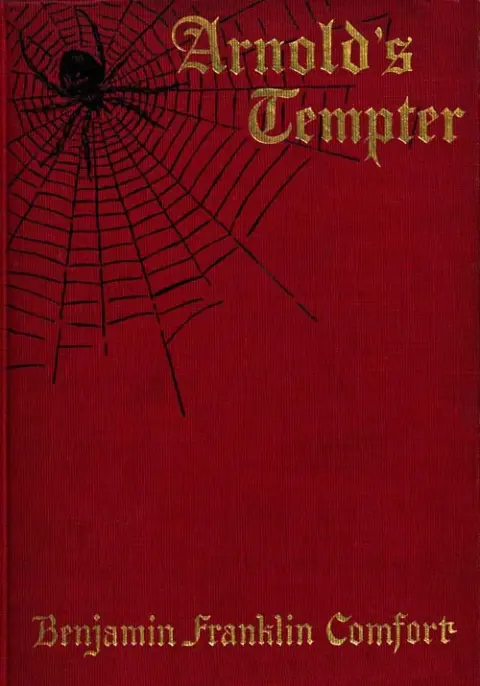
THE CLASSIC COLLECTION · 1908
"Arnold's Tempter" by Benjamin F. Comfort is a historical novel written in the early 20th century. The story is set during the American Revolutionary War and revolves around the intrigues and political machinations in Philadelphia, highlighting key figures such as Roderick Barclugh and Benedict Arnold. The narrative explores themes of loyalty, ambition, and the tension between aristocratic values and emerging democratic ideals. The opening of the novel introduces Roderick Barclugh, who arrives in Philadelphia for an important dinner hosted by Robert FitzMaurice, where he will meet key political figures, including General Benedict Arnold and his wife, Peggy. The social dynamics at the gathering reveal a deep division between loyalists and independence supporters, with dialogue that addresses the complexities and personal motivations behind the American Revolution. Barclugh’s charming persona captures the attention of those around him, and a palpable undercurrent of tension suggests his hidden agendas as he navigates the intricacies of political favor and financial intrigue. The scene sets the stage for the unfolding drama of ambition, betrayal, and moral conflict within the turbulent landscape of the time.
Introduction adapted from the source catalogue; source summaries may be automatically generated.
Free to read · English · 89,107 words · No account needed
MAKE TIME FOR A GOOD BOOK
On by default. Untick to stop anonymous reading totals. Each page counts after 10 seconds in view. How this works.
Anonymous counting is on unless you have switched it off.
“Mr. La Fitte, you know how it is when you have to trust to servants. I have that dish of ham for an ornament on the sideboard, but Betty had to place it on the table this evening. That is just like those girls. They do not know better.”
There was nothing for Barclugh to do now but to eat bread and butter, and fill up on tea and talk.
When a man is disappointed in his meal he begins to get ugly. So Barclugh arose from the table, went into the sitting-room and demanded his bill and declared that he would have to leave for the next stopping-place.
But Mrs. Puffer objected, by saying:
“Oh, no, Mr. La Fitte, you know that these roads are infested with ‘cow-boys’ and ‘skinners,’ and you may be captured and robbed.”
“Which party is it that you belong to, Mrs. Puffer?” asked Barclugh. “I should think that you belonged to the latter.”
From without the house loud shouts of “Hello!” “Hello!” were heard on
the road.
Mrs. Puffer turned to Barclugh exclaiming:
“Some of those rascals are there now. You better hide yourself
somewhere.”
“Never mind, madam,” replied Barclugh, and handing over a sovereign to pay his fare, continued, “I can take care of myself.”
At that instant a burly fellow in the uniform of a Continental walked
in.
“Any strangers here to-night, Mrs. Puffer?” came in heavy tones from
the soldier.
“There’s one gentleman here, Mr. La Fitte. I believe he can give a good account of himself,” replied the landlady.
“What’s your business here, Mr. La Fitte? Where are you going?”
demanded the soldier.
“Here’s my passport, sir,” was the reply, and Barclugh handed out the Colonel’s document.
“You’re the sort of a party we want!” remarked the fellow, as he went to the door and whistled, meanwhile holding his pistol ready and eying Barclugh.
Four of his companions came into the room, and at once the spokesman
ordered:
“Fasten his arms, men. He’s a spy.”
Barclugh submitted while wondering why his passport was not sufficient.
After the squad had searched Barclugh and disarmed him, they marched him out and ordered him to mount his horse and ride between them.
However, when the troopers started off their course led them to the southward. They acted queerly to Barclugh. They crossed the Croton at Pine Bridge and went toward the Hudson. In any event he was all right unless the scamps were bent on robbery. However, he did not lose his nerve. Finally, after an hour’s ride and silence, the prisoner ventured this question:
“Gentlemen, I am a prisoner in the hands of which party?”
Your reading position is saved on this browser. Take it to another device with a library code. Reading pages adapt to text, rather than matching a printed edition.
BEHIND THE BOOK
This eBook is for the use of anyone anywhere in the United States and most other parts of the world at no cost and with almost no restrictions whatsoever. You may copy it, give it away or re-use it under the terms of the Project Gutenberg License included with this eBook or online at www.gutenberg.org. If you are not located in the United States, you will have to check the laws of the country where you are located before using this eBook. Read the source licence.
The original source file, including credits and licence, is retained by this library. Request an original-format copy at no charge. Please include the book title and Project Gutenberg identifier #62181.
KEEP YOUR CURIOSITY GOING
Cécile Tormay

Moritz Busch
Coulson Kernahan
John L. Ransom

Maurice Baring
Frances Wright