THE CLASSIC COLLECTION✦An outlaw’s diary: the CommuneCLASSIC FREE BOOKS
An outlaw’s diary: the Commune
Cécile Tormay
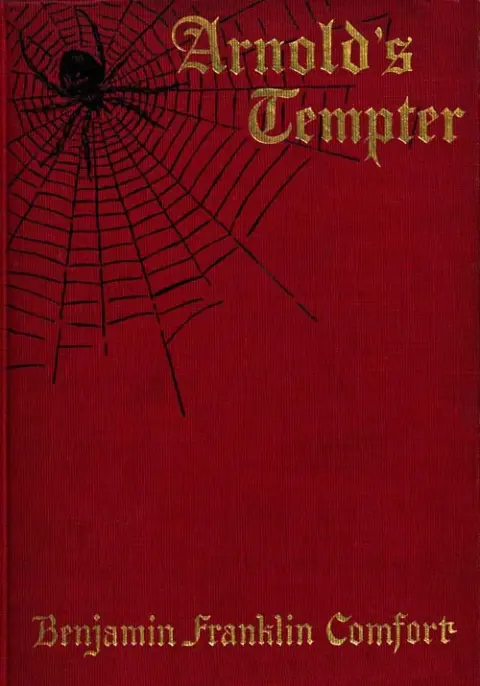
THE CLASSIC COLLECTION · 1908
"Arnold's Tempter" by Benjamin F. Comfort is a historical novel written in the early 20th century. The story is set during the American Revolutionary War and revolves around the intrigues and political machinations in Philadelphia, highlighting key figures such as Roderick Barclugh and Benedict Arnold. The narrative explores themes of loyalty, ambition, and the tension between aristocratic values and emerging democratic ideals. The opening of the novel introduces Roderick Barclugh, who arrives in Philadelphia for an important dinner hosted by Robert FitzMaurice, where he will meet key political figures, including General Benedict Arnold and his wife, Peggy. The social dynamics at the gathering reveal a deep division between loyalists and independence supporters, with dialogue that addresses the complexities and personal motivations behind the American Revolution. Barclugh’s charming persona captures the attention of those around him, and a palpable undercurrent of tension suggests his hidden agendas as he navigates the intricacies of political favor and financial intrigue. The scene sets the stage for the unfolding drama of ambition, betrayal, and moral conflict within the turbulent landscape of the time.
Introduction adapted from the source catalogue; source summaries may be automatically generated.
Free to read · English · 89,107 words · No account needed
MAKE TIME FOR A GOOD BOOK
On by default. Untick to stop anonymous reading totals. Each page counts after 10 seconds in view. How this works.
Anonymous counting is on unless you have switched it off.
“He is traveling incognito and if you can further him on his journey, our common cause will be very materially assisted.
“With every sentiment of esteem and regard, I am, dear General,
“Your most obedient servant, “(Signed) R. FitzMaurice.
“To His Excellency, General Washington.”
“I told you! I told you!” said the leader, “he calls himself Mr. La Fitte, and here’s Mr. Barclugh on a secret mission to New York about some treasure ships. I wonder if he has any treasure aboard naow. Boys, you jest peel off that feller’s clothes a little more.”
The other two went at Barclugh with surprising energy, and examined every seam of his clothing, and brought off a buckskin belt that was around his waist, and the three went at its contents.
First they brought off fifty gold pieces, English guineas.
Then they felt some papers in a small pocket and lo, here were bills of exchange on the Bank of Amsterdam for eighty thousand pounds in gold.
The leader held the bills up and counted three each for twenty thousand pounds and two each for ten thousand pounds, and then turning to his companions, said seriously:
“That beats my reckonin’. Boys, this fellow is an infernal rascal, for he has more money on his person than any one man can honestly earn. Say, Mr. Feet, where did you git this treasure? Did you earn it? Did you find it? Does it belong to you?”
“Gentlemen,” replied Barclugh, “if you will conduct me to the camp of General Washington, I will present you with the guineas I have and any reasonable reward you may ask.”
“Nary a guinea will an American soldier ask from a stranger to perform his duty. You will be conducted safely, with every guinea you have, to Captain Thomas Storm and he will turn you over to Colonel Abraham Brinkerhoff, who has command of our precinct,” were the soldierly words of the spokesman of the party as he continued:
“Fall in, boys.”
They now took up the march in silence, leading the horse which carried their prisoner, bootless and sockless, on the saddle.
Their journey led Barclugh to Newburg, the headquarters of Colonel Brinkerhoff, who at once ordered the important prisoner with his papers to the headquarters of General Washington.
The Commander-in-Chief received the papers and went at once to his office, whither Roderick Barclugh had been conducted, and very graciously returned the bills and gold after reading the letter from R. FitzMaurice, the financier, with no remark except:
Your reading position is saved on this browser. Take it to another device with a library code. Reading pages adapt to text, rather than matching a printed edition.
BEHIND THE BOOK
This eBook is for the use of anyone anywhere in the United States and most other parts of the world at no cost and with almost no restrictions whatsoever. You may copy it, give it away or re-use it under the terms of the Project Gutenberg License included with this eBook or online at www.gutenberg.org. If you are not located in the United States, you will have to check the laws of the country where you are located before using this eBook. Read the source licence.
The original source file, including credits and licence, is retained by this library. Request an original-format copy at no charge. Please include the book title and Project Gutenberg identifier #62181.
KEEP YOUR CURIOSITY GOING
Cécile Tormay

Moritz Busch
Coulson Kernahan
John L. Ransom

Maurice Baring
Frances Wright