
Letters to a Friend, Written to Mrs. Ezra S. Carr, 1866-1879
John Muir
THE CLASSIC COLLECTION · 1900
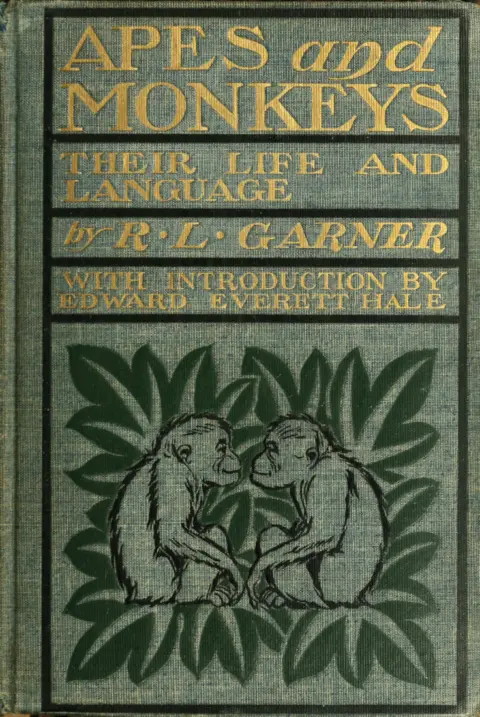
"Apes and Monkeys: Their Life and Language" by R. L. Garner is a scientific publication written in the late 19th century. The book explores the physical, mental, and social habits of apes and monkeys, aiming to provide a better understanding of these animals and their communication methods. Through the author's detailed observations and studies, readers can expect to gain insights into the similarities and differences between these creatures and humans. The opening portion of the book introduces readers to the author's extensive research background, highlighting his belief in the interconnectedness of all living beings. Garner emphasizes the importance of recognizing the complex behaviors and potential cognitive abilities of monkeys and apes. He also mentions his unique opportunity to study these animals in their natural habitats, which contrasts with the more common observational practices in captivity. The author expresses his goal of enriching human appreciation for nature and to inform readers about the intricacies of simian life, laying the groundwork for deeper explorations into their language and social behaviors in the subsequent chapters.
Introduction adapted from the source catalogue; source summaries may be automatically generated.
Free to read · English · 80,735 words · No account needed
MAKE TIME FOR A GOOD BOOK
On by default. Untick to stop anonymous reading totals. Each page counts after 10 seconds in view. How this works.
Anonymous counting is on unless you have switched it off.
“Dodo”
Nemo’s apologetic speech, 47
her appeal to her keeper, 48-50
Drake, Mr. J. H., African traveler, 261
Drum, The (see Kanjo)
Du Chaillu, Paul, African traveler, 214, 272, 273
Early reports of apes (see Ford, Savage, Wilson, Walker, Hanno, Battel, Du Chaillu)
“Elisheba” (see also Aaron with Elisheba)
where captured, 154
her shrewish temper, 154-156
her selfishness and perversity, 155-156
her champion and slave, 156, 162-165
a suitor rebuffed, 163-165
submissive only from policy, 166
her illness and death, 168-171
Eloquence of monkeys’ speech, 22, 47-50
Emotions, Simians display human
sympathy, 149-152, 170-171
aversion, 26, 148-149
sorrow, 50, 152, 170
jealousy, 46, 125, 162-165, 186
contempt, 203, 206, 250
affection, 58-59, 134-135, 173, 174
Enjocko, 268
Enumeration (see Number, Perception of)
Esyira (tribe and country), 140, 144, 145, 218, 228, 267, 269
Ethics, Monkeys’ code of, 30
Etymology of native names, 232, 272
Evolution, 36
Expression (see also Facial expression)
defined, 13
speech a means of, 13
animals’ limit of, 13, 23
Facial expression of simians, 1, 16, 46, 47, 126, 146-147, 150, 162, 170, 182, 197, 202-204, 206, 207, 229
Falkenstein, Dr., 267
Ferocity of apes exaggerated, 229, 235-236
Ferran Vaz (lake), 66, 144, 149, 219, 228, 270
Fiote (tribe and language), 86, 267
Five young kulus, 207-210
Food
of chimpanzee, 106-107, 128-129, 132
of gorilla, 245-246
Ford, Dr., African traveler, 214, 217
Form, Simians’ perception of, 30, 139, 196
Fort Gorilla, 71
Gaboon (town and river), 66, 153, 155, 182, 211, 214-217, 268, 272
Gaboon, Some captives at, 182 ff.
their table manners, 182-184
their love of beer, 183-184
their dexterity, 184
maladies resemble man’s, 186
Gibbon, The
order of intelligence, 4
arboreal habit, 96, 276
size and activity, 275-276
skeleton, 276
can stand erect, 276
wonderful leaping power, 276
several known species, 277
vocal qualities, 277
Glave, E. J., African traveler, 241
Goode, Rev. A. C., late missionary at Batanga, 272
Gorilla, The
order of intelligence, 4, 211, 232
resemblance to man, 60
in native haunts, 70, 71
seen from the cage, 71, 77-78, 186, 252-260
his scream and beating sound, 84, 109, 237-242
arboreal habit, 96-97, 224-225, 245
nomadic, 97, 233
habitat, 211 ff., 273, 278-279
early reports of (see references under Early reports)
skeleton, 218-223
described in detail, 223 ff.
cannot walk erect, 225
the “calf” as means of comparison, 227
species, 228, 274
compared with other apes and with man, 228-231
social traits and government, 231 ff.
derivation of name, 232
in council, 234
ferocity exaggerated, 235-236, 262, 273
mode of attack, 236-237
sounds wrongly attributed to, 109, 240-242
method of carrying young, 242, 259
disposition, 242, 250-251, 284
food, 245-246, 282-283
stealthiness, 253, 262
calling sound, 254
difficult to find, 260-263
only one ever brought to America, 263
a wild gorilla takes his own photograph, 264-265
care in captivity, 278 ff.
Great forest, The, 68
Guinea, Gulf of, 85, 266
Habitat
of gorilla, 211 ff., 273, 278-279
of chimpanzee, 85-87, 280
of orang, 274
of gibbon, 276
Handmann, Mr. Otto, German consul at Gaboon, 182
Hanno, 500 B.C., earliest mention of the ape, 266-267
Harris, Captain, African traveler, 217
Harvard Medical School Collection, 6
Hornaday, W. T., authority on orang, 275
Human faculties, embryo of all, exists in simians, 37
Ikomba njina, 232, 234, 235
Inenga (lake), 218
Ingenuity of simians (see Dexterity)
Izanga (lake), 184, 212, 223
an unhappy captive at, 184-185
an act of mercy, 185
“Jack,” 25
“Jennie,” 27
“Johanna”
her value for scientific use, 190, 192
probable age, 191
size, 191
intellectual plane, 192
“Jokes” 24 ff.
his fright, 24
the reconciliation, 26
Your reading position is saved on this browser. Take it to another device with a library code. Reading pages adapt to text, rather than matching a printed edition.
BEHIND THE BOOK
This eBook is for the use of anyone anywhere in the United States and most other parts of the world at no cost and with almost no restrictions whatsoever. You may copy it, give it away or re-use it under the terms of the Project Gutenberg License included with this eBook or online at www.gutenberg.org. If you are not located in the United States, you will have to check the laws of the country where you are located before using this eBook. Read the source licence.
The original source file, including credits and licence, is retained by this library. Request an original-format copy at no charge. Please include the book title and Project Gutenberg identifier #67517.
KEEP YOUR CURIOSITY GOING
John Muir

Asa Gray
Asa Gray

Florence Nightingale
Elizabeth Robins Pennell
Denison Olmsted