THE CLASSIC COLLECTION✦The Sin of Monsieur Pettipon, and other humorous talesCLASSIC FREE BOOKS
The Sin of Monsieur Pettipon, and other humorous tales
Richard Edward Connell
THE CLASSIC COLLECTION · 1924
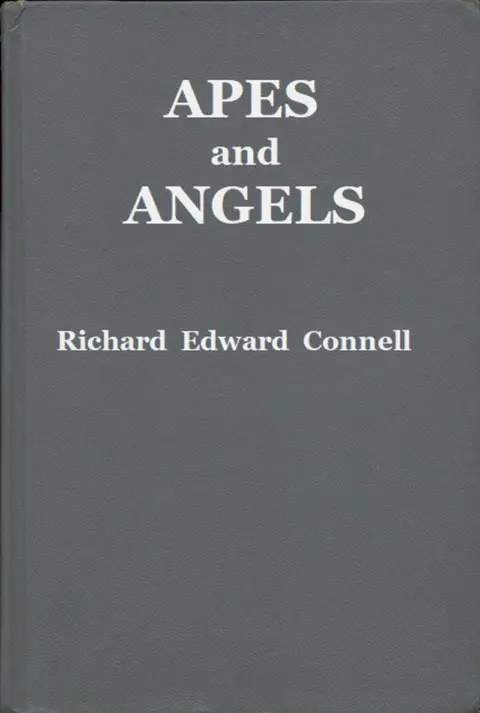
"Apes and Angels" by Richard Edward Connell is a collection of light tragedies written in the early 20th century. The stories delve into themes of love, friendship, and the complexities of human nature through whimsical narratives and colorful characters. The opening story, "A Friend of Napoleon," introduces readers to Papa Chibou, a night watchman at the Museum Pratoucy in Paris, who shares an unconventional friendship with a wax figure of Napoleon. At the start of "A Friend of Napoleon," we meet Papa Chibou, a cheerful and dedicated night watchman who treats the wax figures in the museum as friends. His conversations with them, particularly his friendship with the figure of Napoleon, highlight both the absurdity and poignancy of his lonely existence. As Papa Chibou observes the lives and loves of the museum visitors, he becomes deeply invested in the unfolding romance between an American girl and a young Frenchman, vowing to help them find happiness. However, as the museum faces closure and potential destruction of its exhibits, including Napoleon, Papa Chibou's loyalty to his wax companion drives him to desperate measures that culminate in action that puts him at odds with the law.
Introduction adapted from the source catalogue; source summaries may be automatically generated.
Free to read · English · 61,637 words · No account needed
MAKE TIME FOR A GOOD BOOK
On by default. Untick to stop anonymous reading totals. Each page counts after 10 seconds in view. How this works.
Anonymous counting is on unless you have switched it off.
“You’ll pose for the shoulders?”
He gulped, but nodded. He felt his breath coming in short, cold pants; his brow was icy damp. He heard her low voice say:
“You’ll pose for . . . the figure?”
The room swam before his eyes; his cheeks were conflagrations; he drew in his breath with an effort, and gulped again.
“I’ll do . . . whatever models do,” he said.
Her eyes ran over him like flies over a cake; beneath them he trembled. How his heart throbbed! In a nightmare, he heard her say.
“Good! Go behind that screen.”
To Edwin Dell the lights were blurred now; the singing in his ears was frenzied. His pallid face was set. Walking like an automaton, he went behind the crimson screen. Slowly his quivering fingers fumbled with his polka-dot tie; his shoe lace seared his finger-tips. . . .
“Come, get a wiggle on. Don’t take all night. I’m waiting,” he heard the woman say. Her voice sounded, somehow, tense.
His teeth bit his bloodless lips; his nails dug into the palms of his
hands.
“Fortitude,” whispered Edwin Dell.
Then he stepped out on the tiger-skin rug.
Came morn to the bedroom of Edwin Dell. Dully he opened his eyes. Had it all been a terrible dream?
He went to the window and scooped up a handful of snow and held it to his fevered brow. No, it had not all been a terrible dream. He dressed with leaden fingers. A letter had been slipped under his door and he opened it without interest. What could letters mean to him . . . now?
It was a note from his aunt. She told him to come home for Christmas, and enclosed a ticket to Crosby Corners, and a check. The check fluttered to the floor; the crooked smile of irony twisted his lips.
“Too late,” he said “too late.”
More like a machine than a man, he began to pack his straw suit-case. The last thing he did before leaving the room was to take down the picture of Emerson; Edwin did not look into those wise, kind, understanding eyes; he tore the picture into small pieces. Then, with bowed head, a wan, worn caricature of what had been Edwin Dell went slowly out into the snow-garbed metropolis.
It was Christmas eve in Crosby Corners. Thick snow was falling heavily and the wind whistled like a drunken demon; it was cold, bitter cold. Edwin Dell rapped with mittened hand on the door of the cozy farm-house and Aunt Charity opened it.
“Well, aunt,” he said, “I’ve come back.”
“For pity’s sake, close the door,” she said. “Hang up your coat and put your goloshes in the golosh-box.”
Your reading position is saved on this browser. Take it to another device with a library code. Reading pages adapt to text, rather than matching a printed edition.
BEHIND THE BOOK
This eBook is for the use of anyone anywhere in the United States and most other parts of the world at no cost and with almost no restrictions whatsoever. You may copy it, give it away or re-use it under the terms of the Project Gutenberg License included with this eBook or online at www.gutenberg.org. If you are not located in the United States, you will have to check the laws of the country where you are located before using this eBook. Read the source licence.
The original source file, including credits and licence, is retained by this library. Request an original-format copy at no charge. Please include the book title and Project Gutenberg identifier #65201.
KEEP YOUR CURIOSITY GOING
Coulson Kernahan

Maurice Baring
Frances Wright
Cécile Tormay

Frederic Jesup Stimson

W. H. P. (William Henry Pope) Jarvis