THE CLASSIC COLLECTION✦The Sin of Monsieur Pettipon, and other humorous talesCLASSIC FREE BOOKS
The Sin of Monsieur Pettipon, and other humorous tales
Richard Edward Connell
THE CLASSIC COLLECTION · 1924
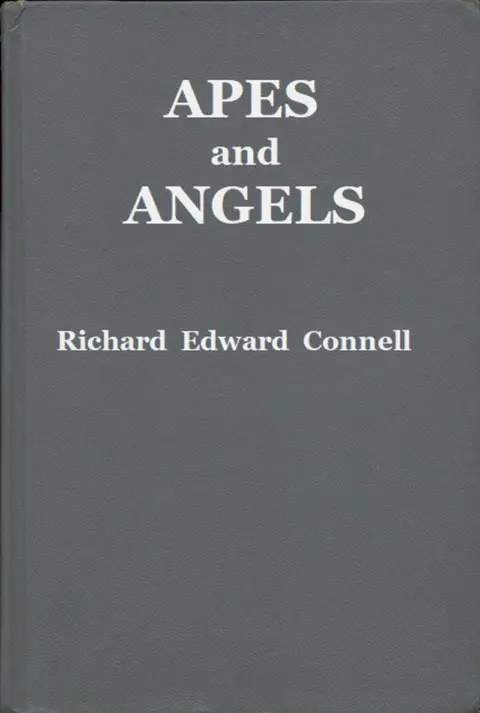
"Apes and Angels" by Richard Edward Connell is a collection of light tragedies written in the early 20th century. The stories delve into themes of love, friendship, and the complexities of human nature through whimsical narratives and colorful characters. The opening story, "A Friend of Napoleon," introduces readers to Papa Chibou, a night watchman at the Museum Pratoucy in Paris, who shares an unconventional friendship with a wax figure of Napoleon. At the start of "A Friend of Napoleon," we meet Papa Chibou, a cheerful and dedicated night watchman who treats the wax figures in the museum as friends. His conversations with them, particularly his friendship with the figure of Napoleon, highlight both the absurdity and poignancy of his lonely existence. As Papa Chibou observes the lives and loves of the museum visitors, he becomes deeply invested in the unfolding romance between an American girl and a young Frenchman, vowing to help them find happiness. However, as the museum faces closure and potential destruction of its exhibits, including Napoleon, Papa Chibou's loyalty to his wax companion drives him to desperate measures that culminate in action that puts him at odds with the law.
Introduction adapted from the source catalogue; source summaries may be automatically generated.
Free to read · English · 61,637 words · No account needed
MAKE TIME FOR A GOOD BOOK
On by default. Untick to stop anonymous reading totals. Each page counts after 10 seconds in view. How this works.
Anonymous counting is on unless you have switched it off.
“I could not sleep in the same house with this thing,” he said. She shrugged her shoulders and carelessly dropped the book on the tiger-skin rug. A Swiss cuckoo clock proclaimed that it was ten. Edwin shuddered; two hours to midnight . . . and the streets.
“Well, let’s begin,” said Valerie Keat, picking up a palette.
“Begin to what?” he asked, tremulously.
“I to paint,” she answered; “you to pose.”
“But, merciful Heavens, Miss Keat, you don’t think I came here for . . .
that?”
“Then what did you come for?” Her eyes narrowed.
“To bring back that dreadful book.”
Her sardonic laugh jarred on his ear-drums.
“A man doesn’t come to a woman’s studio late at night to bring back a
book,” she said.
“I must go, really I must,” declared Edwin, wondering, as he spoke,
where to.
He put his hand on the door-knob; the door seemed to be locked.
“Please reconsider your decision,” said Valerie Keat. She turned on her most pathetic look. “If I could paint you it would mean everything to me; everything, do you understand? You have my artistic career at your mercy. Won’t you help me?”
He hesitated. To one so good at heart as he, such an appeal could not go
unanswered.
“I’d like to,” he began, “but Emerson says——”
“Besides,” she broke in, “think of the ten dollars.”
Had she read his inmost thoughts?
“What possible harm could it do?” she argued. “Can’t you see I respect you? Won’t you trust me?”
“Let me think,” begged Edwin Dell. “Give me five minutes for quiet
thought.”
Valerie Keat went to the buhlwork cabinet and took out a square bottle
and a glass.
“Here,” she said. “This will help you think.”
“I never drink.”
“This is only juniper-berry juice and water. It’s a soft drink,” she
told him.
Her eyes were so friendly, and he remembered how she had spoken of her father, so he poured half a glass of the pellucid drink down his dry throat. An agreeable sensation of warmth and well-being filled him. He emptied the glass. How bright the lights were!
He stood up and said:
“I have arrived at a decision.”
“Yes? What?” she asked, eagerly.
“I will be your model,” said Edwin Dell.
He sank back into his chair; there was a singing in his ears, a dancing
before his eyes.
“Go ahead, paint me,” he said, almost with sang froid.
She came close to him and fastened on him intense eyes.
“You say you’ll be my model?” she asked.
“Yes.”
“You know what that means.”
“I think so.”
“You’ll pose for the head?”
He nodded.
Your reading position is saved on this browser. Take it to another device with a library code. Reading pages adapt to text, rather than matching a printed edition.
BEHIND THE BOOK
This eBook is for the use of anyone anywhere in the United States and most other parts of the world at no cost and with almost no restrictions whatsoever. You may copy it, give it away or re-use it under the terms of the Project Gutenberg License included with this eBook or online at www.gutenberg.org. If you are not located in the United States, you will have to check the laws of the country where you are located before using this eBook. Read the source licence.
The original source file, including credits and licence, is retained by this library. Request an original-format copy at no charge. Please include the book title and Project Gutenberg identifier #65201.
KEEP YOUR CURIOSITY GOING
Coulson Kernahan

Maurice Baring
Frances Wright
Cécile Tormay

Frederic Jesup Stimson

W. H. P. (William Henry Pope) Jarvis