THE CLASSIC COLLECTION✦A dead man’s diaryCLASSIC FREE BOOKS
A dead man’s diary
Coulson Kernahan
THE CLASSIC COLLECTION · 1902
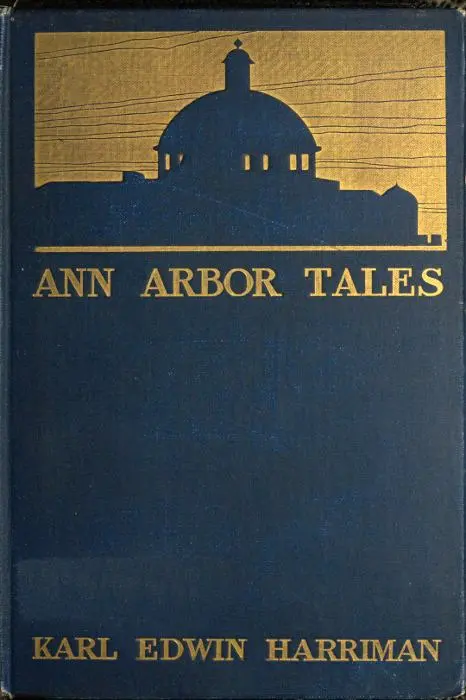
"Ann Arbor Tales" by Karl Edwin Harriman is a collection of stories written in the early 20th century. The narrative introduces characters navigating love, youth, and the complexities of relationships within the backdrop of Ann Arbor. It highlights themes of ambition, romance, and personal growth, especially focusing on characters such as Jack Houston, a young man grappling with his passions and vices, and Florence, a captivating woman intertwined in his life. The opening of the book sets the stage with a vivid and nostalgic portrayal of the youthful atmosphere in Ann Arbor during a summer filled with possibilities. It centers on Jack Houston and his enchantment with Florence, offering a glimpse into their budding romance against the collegiate backdrop. As their relationship develops, various dynamics emerge, including the influence of their peers, Jack's struggles with alcohol, and the contrasting personalities that surround them, particularly the steadfast Jim Crowley. The scene unfolds with a tone of both excitement and melancholy, hinting at the complexities that will define their interactions and the emotional landscape that lies ahead.
Introduction adapted from the source catalogue; source summaries may be automatically generated.
Free to read · English · 59,594 words · No account needed
MAKE TIME FOR A GOOD BOOK
On by default. Untick to stop anonymous reading totals. Each page counts after 10 seconds in view. How this works.
Anonymous counting is on unless you have switched it off.
"No, of course you can't. I hardly expected you could," the president exclaimed. "But, Mr. Catherwood"--he spoke slowly--"have you no idea who it was committed this most dastardly assault upon you?"
There was an instant's silence during which Catherwood followed the scroll design of the carpet up one row and down another.
"Yes, sir--I have."
"Who?" The president leaned forward.
"I don't feel justified in saying, sir."
Catherwood did not look up as he spoke.
The president leaned back and passed his hand across his forehead.
"Ah, yes; I think I understand, Mr. Catherwood--you--you--perhaps fear the blame may be placed where it should not--a fine sense of justice; Mr. Catherwood--a very fine sense of justice--I congratulate you upon it, sir."
Catherwood glanced up now, moved to a sort of secret impatience by what he assumed to be a note of sarcasm in the president's voice.
But the face his eyes encountered was most kindly.
His eyes fell again.
The president took up the envelope opener and placed the steel point to
his lips.
"Mr. Catherwood," he began, and hesitated.
"Yes, sir."
"Of course you know," he went on, "that since my return the facts in your case have been placed before me by certain members of the faculty who are familiar with them."
"Yes, sir," Catherwood murmured.
"Now, Mr. Catherwood, while they have told me many things of interest, there is one little detail that seems to me to have a very important bearing upon the case, but which, for some unaccountable reason, they all seem to have missed. Perhaps you can throw some light upon this dark place." The president indulged here in a round, full laugh.
Encouraged by the infinite kindness of this voice, Catherwood lifted his
eyes.
"Yes, sir; if I can--what is it?"
"Ah, yes." The president cleared his throat. "Mr. Catherwood," he resumed calmly, twirling the envelope opener between his fingers, "what I wish so very much to know is how you managed to tie your hands behind you!"
"Why I----" Catherwood began, and stopped. He tried to wrench his eyes from those of the president,--calm, blue--but could not. The room whirled. The design in the carpet became the design of the walls and of the ceiling; and there were no windows in the room, or doors--and all was black--black--black, save for two points of light; for there were those calm blue eyes, shining back at his.
And then as though it spoke from some great height he heard the mellow
voice in his ears again.
"Go on, Mr. Catherwood," the voice said.
Your reading position is saved on this browser. Take it to another device with a library code. Reading pages adapt to text, rather than matching a printed edition.
BEHIND THE BOOK
This eBook is for the use of anyone anywhere in the United States and most other parts of the world at no cost and with almost no restrictions whatsoever. You may copy it, give it away or re-use it under the terms of the Project Gutenberg License included with this eBook or online at www.gutenberg.org. If you are not located in the United States, you will have to check the laws of the country where you are located before using this eBook. Read the source licence.
The original source file, including credits and licence, is retained by this library. Request an original-format copy at no charge. Please include the book title and Project Gutenberg identifier #41816.
KEEP YOUR CURIOSITY GOING
Coulson Kernahan

Maurice Baring
Frances Wright
Cécile Tormay

Frederic Jesup Stimson

W. H. P. (William Henry Pope) Jarvis