THE CLASSIC COLLECTION✦A dead man’s diaryCLASSIC FREE BOOKS
A dead man’s diary
Coulson Kernahan
THE CLASSIC COLLECTION · 1902
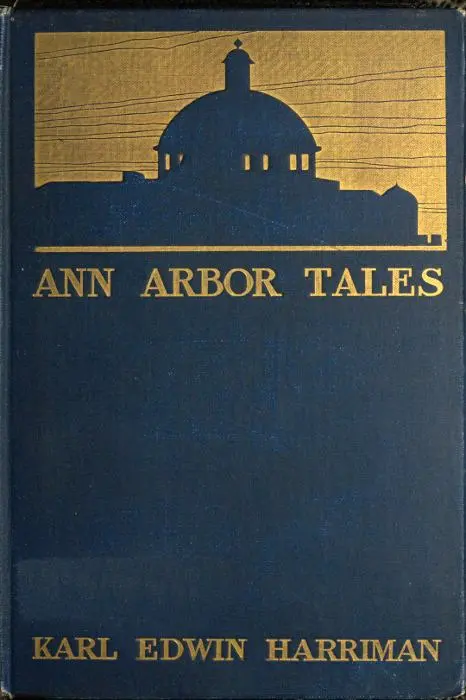
"Ann Arbor Tales" by Karl Edwin Harriman is a collection of stories written in the early 20th century. The narrative introduces characters navigating love, youth, and the complexities of relationships within the backdrop of Ann Arbor. It highlights themes of ambition, romance, and personal growth, especially focusing on characters such as Jack Houston, a young man grappling with his passions and vices, and Florence, a captivating woman intertwined in his life. The opening of the book sets the stage with a vivid and nostalgic portrayal of the youthful atmosphere in Ann Arbor during a summer filled with possibilities. It centers on Jack Houston and his enchantment with Florence, offering a glimpse into their budding romance against the collegiate backdrop. As their relationship develops, various dynamics emerge, including the influence of their peers, Jack's struggles with alcohol, and the contrasting personalities that surround them, particularly the steadfast Jim Crowley. The scene unfolds with a tone of both excitement and melancholy, hinting at the complexities that will define their interactions and the emotional landscape that lies ahead.
Introduction adapted from the source catalogue; source summaries may be automatically generated.
Free to read · English · 59,594 words · No account needed
MAKE TIME FOR A GOOD BOOK
On by default. Untick to stop anonymous reading totals. Each page counts after 10 seconds in view. How this works.
Anonymous counting is on unless you have switched it off.
"You can't do it, Nibs,--you can't do it--you may have the spurt speed, but you haven't got the wind."
"Rot--why, you don't know what you're talking about, Jimmy; I can beat him forty ways. Look at those legs!"
And the lank creature thrust them into view and patted them affectionately between the knee and the hip.
"Oh, I know you've got the legs, Nibs," was the indifferent reply, "it's the wind you're shy of."
"What does wind amount to in a hundred yards, I'd like to know? All a fellow needs is a good breath at the pistol. A good one will carry him over the string." The speaker leaned across the table; "Now, on the square, Jimmy, don't you think I can beat Billy Shaw?" he asked eagerly.
The young man opposite, tilting back his chair, eyed his companion critically from under half-dropped lids. He flecked the ash from his cigarette, scrupulous that it should not dust his clothes, and said slowly, and more as though by way of encouragement than expressive of an opinion--"Well, of course, there's a chance."
Nibs smiled broadly, at that, and settled back, apparently quite
satisfied.
"I knew you were joking," he said.
It was a Saturday evening. Had the dial of the Court House clock been illuminated, it would have shown the hour to be half-past seven. On the corner, a gasolene lamp was burning at the top of a weather-stained post. In front of the Opera House an Uncle Tom's Cabin band was straining at the melancholy air, "Massa's In de Col', Col' Ground," played in circus tempo. Now and then was heard the scuffle of hurrying feet on the tar walk outside.
Nibs Morey and Jimmy Hulburt sat in silence for a space.
No one had ever been able--if, indeed, any one had sought--to fathom the friendship that for two years had been maintained unbroken between these two. Perhaps it was due to the counter effect of Hulburt's derision of Morey's abundant conceit, for had Nibs Morey been asked to cite an instance of Jimmy's championing him, he, positively, would have failed. It was the one's lack, or expressed lack, of confidence in the other, that evenly balanced the other's really splendid confidence in himself.
When first Nibs had expressed his intention of posting a challenge to Billy Shaw on the Bulletin Board in the Main Hall, Jimmy had sniffed and sneered derisively.
"What's the use making a Jack of yourself?" he asked.
"Who's going to?" Nibs replied, tartly.
"You are. He'll beat you by a rod," was the cool retort.
"Don't you believe it."
"Well, I do."
"You needn't."
"All right; we'll see."
Your reading position is saved on this browser. Take it to another device with a library code. Reading pages adapt to text, rather than matching a printed edition.
BEHIND THE BOOK
This eBook is for the use of anyone anywhere in the United States and most other parts of the world at no cost and with almost no restrictions whatsoever. You may copy it, give it away or re-use it under the terms of the Project Gutenberg License included with this eBook or online at www.gutenberg.org. If you are not located in the United States, you will have to check the laws of the country where you are located before using this eBook. Read the source licence.
The original source file, including credits and licence, is retained by this library. Request an original-format copy at no charge. Please include the book title and Project Gutenberg identifier #41816.
KEEP YOUR CURIOSITY GOING
Coulson Kernahan

Maurice Baring
Frances Wright
Cécile Tormay

Frederic Jesup Stimson

W. H. P. (William Henry Pope) Jarvis