The Life and Love of the Insect
Jean-Henri Fabre
THE CLASSIC COLLECTION · 1921
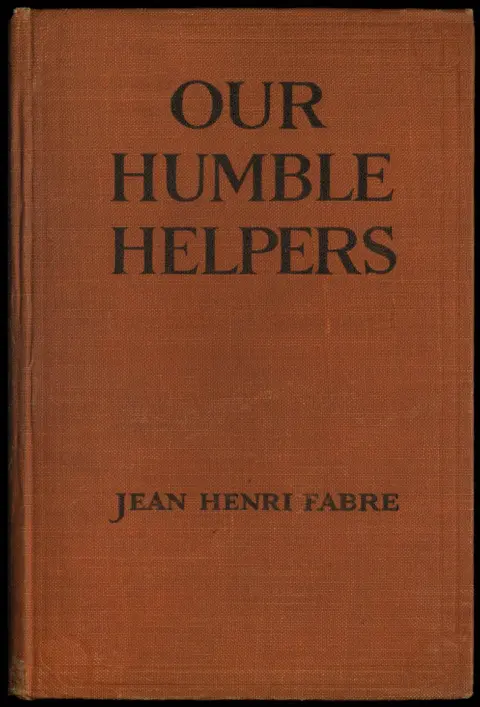
"Animal Life in Field and Garden" by Jean-Henri Fabre is a scientific publication written in the late 19th century. This work explores the interactions between various animal species and their roles in agricultural ecosystems, emphasizing their contributions as allies in the fight against harmful pests. The opening of the work introduces Uncle Paul, who proposes to engage his nephews in educational discussions about the animals that assist farmers by controlling pests. He plans to describe these creatures, not as enemies but as friends, highlighting their importance. Through this dialogue, the reader is invited to learn about the ecological balance and the beneficial roles of various animals, beginning with a focus on teeth and their correlation with diet, which serves as a framework for understanding animal behaviors and interactions. This thoughtful introduction sets the stage for a deeper exploration of animal life and its significance to human agriculture.
Introduction adapted from the source catalogue; source summaries may be automatically generated.
Free to read · English · 91,875 words · No account needed
MAKE TIME FOR A GOOD BOOK
On by default. Untick to stop anonymous reading totals. Each page counts after 10 seconds in view. How this works.
Anonymous counting is on unless you have switched it off.
“So well known is the toad’s usefulness that in England the animal is an article of commerce. Toads are bought in the market at so much a head, carried home carefully so as not to come to any harm, and then allowed the freedom of the garden or placed in a hothouse, a crystal palace, perhaps, where wonderful plants are grown. The toad’s business is to lie in wait for beetles, slugs, and other destroyers that might nibble the valuable plants; and it does its duty with zeal. What a change of fortune for the maligned creature when it finds itself living in a warm atmosphere and surrounded by the most splendid flowers procured at great expense from all parts of the world and now exhaling the most fragrant odors! As a finishing touch to the honor done the poor thing in its floral palace of glass, there is offered the tribute of poetry, that flower of the human imagination and invention. Listen to this.
“A wretched toad with head split open and one eye gouged out by some cruel hand was painfully dragging itself along through the mud of a public highway, when four small boys chanced to spy it as they were passing.
“They spied the toad, And one and all sent up a gleeful shout: ‘Come on, come on, let’s kill the ugly lout! But first we’ll have some fun.’ They laughed their fill, As boys will laugh, hard-hearted, when they kill. They pricked and goaded with a pointed stick, Devising each in turn some cruel trick, Flushed with their sport, egged on by passers-by, While for the martyred toad none gave a sigh. Poor ugly thing! But nature made it so; For this alone its blood was caused to flow. It tried to flee; one foot was severed quite, Which gave the heartless band renewed delight. Its gouged-out eye hung down; half-blind it sought Some sheltering reeds; its efforts came to naught. Its mangled form had been, you would have sworn, Through some machine, to be so rent and torn. And, oh, to think that hearts can be so base As to wish ill to one in such sad case, And to so great a load of suffering sore To undertake to add one torment more! Well-nigh exhausted now, hope almost gone, The half-dismembered creature still toiled on. E’en death itself would not, for pity’s sake, So hideous a thing consent to take; Or thus it seemed, and so with antics rude The toad’s tormentors still their sport pursued. Attempts to snare it next were made in vain: It dodged, and sought a rut half filled with rain; And, by its muddy bath somewhat restored, Withstood the missiles that upon it poured. Ah, what a sight was there, the beauty fresh Of childhood, and its joy in bleeding flesh! Such sport as theirs there surely ne’er had been: ‘Come on,’ they called, ‘come John, come Benjamin! And bring a stone, a big one, and we’ll see If Master Toad is quite as smart as we.’ Accordingly a massive stone was found, Of ponderous weight, unwieldy, large, and round; But cheerfully the lads their muscles strained, With ends so laudable to be attained. Just then, by curious chance, there passed that way An over-loaded, heavy-rumbling dray. An aged donkey, deaf, half-starved, and lame, Was harnessed to the cart—the more’s the shame— And on its back a pannier also bore. A long day’s march behind and home before, The patient beast trudged on with labored breath, Though each step more seemed like to be its death. Its toil-worn frame was so exceeding thin You would have said ‘twas naught but bones and skin. It bore full many marks of cruel blows, And in its eyes one read the tale of those That suffer hardship without hope. Meanwhile Its master heaped upon it curses vile, Nor spared the cudgel; but the road was deep In mire that clogged the wheels, the hills were steep. Creaking and groaning in lugubrious tones, The dray, thus pulled by thing of skin and bones, Moved slowly forward till at length the road Descended sharply, and thus eased the load; But this now crowded on the nigh-spent beast With force sufficient (so it seemed, at least) To hurl him headlong. And yet, strange to tell, The donkey paused, unheeding blows that fell From wrathful hand. The boys broke off their play, Content to yield the donkey right of way. ‘Stand off!’ they cried; ‘let go there, Dick and Bob; Let go the stone, the cart will do our job With much more sport for us, so stand aside!’ All stood alert to see what should betide Their wretched victim. But far otherwise The thing fell out before their wondering eyes Than they had thought: the donkey, bruised and lame, At sight of woes that put his own to shame Spared not himself, but gathered all his strength And held the loaded cart until, at length, Although remonstrant blows rained on his back, He turned the dray from out the beaten track. The grinding wheels, diverted, harmless pass, And tortured toad is saved by tortured ass. The driver cracks his whip, pulls at the reins, And now the dray once more the road regains. At that, one of the group engaged in play (The very one who tells you this to-day) Let fall the stone he’d been about to cast Just as the laden wain came rumbling past; And as he dropped it, lo, in accents clear A mandate from on high fell on his ear, A mandate that was quickly understood, For it was brief, these simple words: ‘Be good.’ [8]
Your reading position is saved on this browser. Take it to another device with a library code. Reading pages adapt to text, rather than matching a printed edition.
Jean-Henri Fabre
Jean-Henri Fabre
Jean-Henri Fabre
Jean-Henri Fabre
BEHIND THE BOOK
This eBook is for the use of anyone anywhere in the United States and most other parts of the world at no cost and with almost no restrictions whatsoever. You may copy it, give it away or re-use it under the terms of the Project Gutenberg License included with this eBook or online at www.gutenberg.org. If you are not located in the United States, you will have to check the laws of the country where you are located before using this eBook. Read the source licence.
The original source file, including credits and licence, is retained by this library. Request an original-format copy at no charge. Please include the book title and Project Gutenberg identifier #66755.
KEEP YOUR CURIOSITY GOING
Cécile Tormay

Moritz Busch
John L. Ransom
Frances Wright
Cécile Tormay

Mabel Potter Daggett