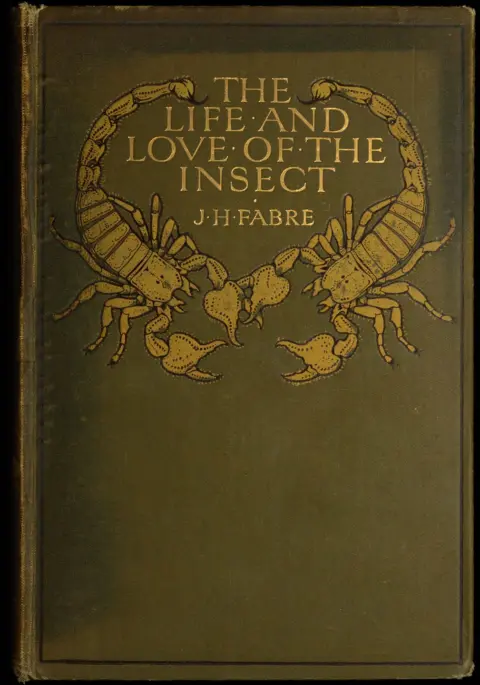
The Life and Love of the Insect
Jean-Henri Fabre
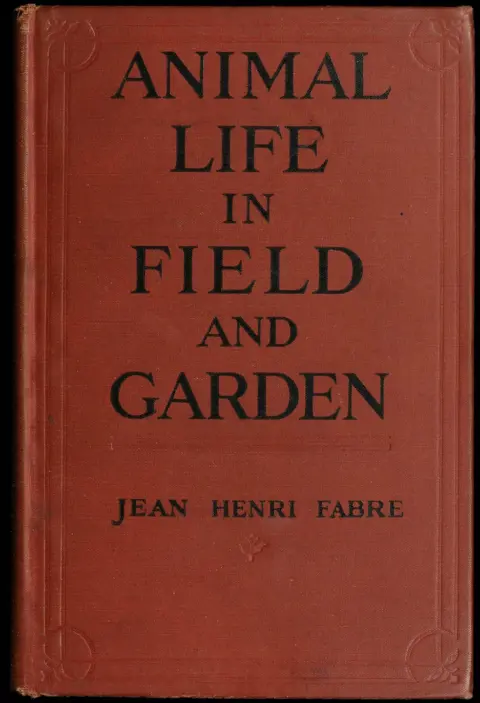
THE CLASSIC COLLECTION · 1921
"Animal Life in Field and Garden" by Jean-Henri Fabre is a scientific publication written in the late 19th century. This work explores the interactions between various animal species and their roles in agricultural ecosystems, emphasizing their contributions as allies in the fight against harmful pests. The opening of the work introduces Uncle Paul, who proposes to engage his nephews in educational discussions about the animals that assist farmers by controlling pests. He plans to describe these creatures, not as enemies but as friends, highlighting their importance. Through this dialogue, the reader is invited to learn about the ecological balance and the beneficial roles of various animals, beginning with a focus on teeth and their correlation with diet, which serves as a framework for understanding animal behaviors and interactions. This thoughtful introduction sets the stage for a deeper exploration of animal life and its significance to human agriculture.
Introduction adapted from the source catalogue; source summaries may be automatically generated.
Free to read · English · 91,875 words · No account needed
MAKE TIME FOR A GOOD BOOK
On by default. Untick to stop anonymous reading totals. Each page counts after 10 seconds in view. How this works.
Anonymous counting is on unless you have switched it off.
“Now let us go back to the principal slender-beaked birds, eaters of insects only and consequently our greatest helpers. They are all small in size, delicately and gracefully formed, and modest in dress. Among them we find the sweet singers that make the woods echo in spring with the refreshing songs of the opening season.
“First there is the nightingale, clothed all in brown except the under parts, which are whitish in color. Listen to it some calm evening in May. All is quiet, so we need not lose a note of the bird’s hymn. It begins with a few timid and tentative phrases, thus:
Teoo-oo, teoo-oo, teoo-oo, teoo-oo,
Shpe, teoo-oo, tokooa.
Then it becomes more animated:
Teo, teo, teo, teo, teo,
Koo-oo-teoo, koo-oo-teoo, koo-oo-teoo, koo-oo-teoo, Tskoo-o,
tskoo-o, tskoo-o, tskoo-o,
Tsee-ee, tsee-ee, tsee-ee, tsee-ee, tsee-ee, tsee-ee.
Here the phrasing becomes more marked, the melody quicker:
Dlo, dlo, dlo, dlo, dlo, dlo,
Koo-e-oo, trrrrrrritz!
Lu-lu-lu, le-le-le-le, lee-lee-lee-lee.
Enthusiasm then bursts all bounds and the bird indulges in the most brilliant roulades; but our harsh alphabet is powerless to show the sounds that come from this wonderful throat.
“‘The nightingale,’ says Buffon, ‘begins with a timid prelude in weak and almost wavering tones, as if wishing to try its instrument and win the attention of those within hearing; but presently, gaining assurance, it gradually becomes animated and displays all the resources of its incomparable organ. Bursts of melody, lively volleys of rippling song in which clearness is equaled only by volubility, low and voiceless murmurs inaudible to the listener, but calculated to increase the brilliance of the notes about to be heard, vivid and rapid trills that sweep the gamut and are articulated with force and even with a certain hardness of effect not unpleasing to the ear, plaintive cadences softly modulated, notes struck without art but full of soul, enchanting and poignant chords that seem to come from the very heart and to convey a touching significance—such are the impassioned strains by which, in a tongue doubtless full of sentiment, this natural songster appears to try to charm its mate or, rather, to contend before her with his jealous rivals for the prize of supreme excellence in song.’
“I have seen unfeeling barbarians cut short this pretty romance with a shot from a gun. They say that half a dozen nightingales make an excellent broiled dish. Horrors! What a frightful brute is man when he thinks of nothing but his stomach!
Your reading position is saved on this browser. Take it to another device with a library code. Reading pages adapt to text, rather than matching a printed edition.
Jean-Henri Fabre
Jean-Henri Fabre
Jean-Henri Fabre
Jean-Henri Fabre
BEHIND THE BOOK
This eBook is for the use of anyone anywhere in the United States and most other parts of the world at no cost and with almost no restrictions whatsoever. You may copy it, give it away or re-use it under the terms of the Project Gutenberg License included with this eBook or online at www.gutenberg.org. If you are not located in the United States, you will have to check the laws of the country where you are located before using this eBook. Read the source licence.
The original source file, including credits and licence, is retained by this library. Request an original-format copy at no charge. Please include the book title and Project Gutenberg identifier #66755.
KEEP YOUR CURIOSITY GOING
Cécile Tormay

Moritz Busch
John L. Ransom
Frances Wright
Cécile Tormay

Mabel Potter Daggett