THE CLASSIC COLLECTION✦An outlaw’s diary: the CommuneCLASSIC FREE BOOKS
An outlaw’s diary: the Commune
Cécile Tormay
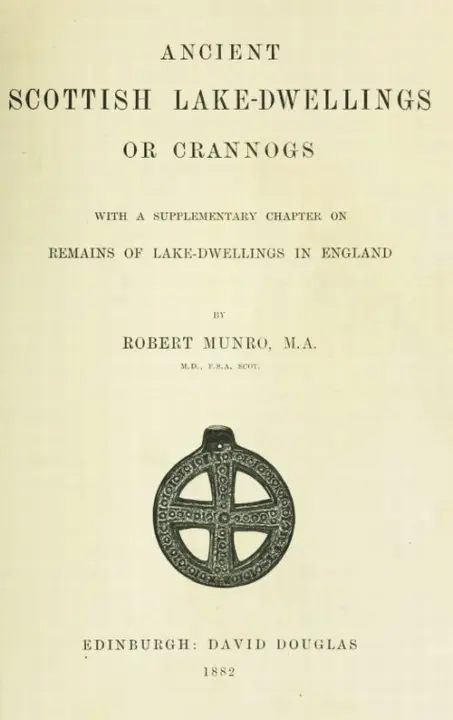
THE CLASSIC COLLECTION · 1882
"Ancient Scottish Lake-Dwellings or Crannogs" by Robert Munro is a historical account written in the late 19th century. The work explores the fascinating archaeological discoveries regarding ancient lake-dwellings in Scotland, specifically focusing on the crannogs—artificial islands often constructed in freshwater bodies. The book aims to present a comprehensive overview of these structures, combining recent findings with historical references to better understand their significance within the prehistoric context of Scotland. At the start of the volume, the author discusses the nature of prehistoric archaeology and the exceptional circumstances that preserve the remains of ancient human activities. Munro emphasizes the importance of lacustrine deposits and how they have contributed to our understanding of past civilizations. He further outlines the intent of the book, which is to compile a complete compendium of existing knowledge on Scottish lake-dwellings, touching on previous studies and laying the groundwork for the exploration of these archaeological sites. Overall, the opening portion introduces the reader to the overarching themes of preservation, historical significance, and the methodological approach of the research presented throughout the work.
Introduction adapted from the source catalogue; source summaries may be automatically generated.
Free to read · English · 91,111 words · No account needed
MAKE TIME FOR A GOOD BOOK
On by default. Untick to stop anonymous reading totals. Each page counts after 10 seconds in view. How this works.
Anonymous counting is on unless you have switched it off.
When the greater advantages of stone buildings became generally recognised, the old wooden refuges, so liable to decay, so easily destroyed by fire, and so unsuitable for supporting heavy buildings of masonry, would be gradually superseded. It would then be found easier and better to conduct the water to the stronghold than to construct the stronghold in a natural basin of water, however convenient its locality might be. To the transitional period preceding this great change, which culminated in the almost impregnable moated and mediæval castle, may be assigned many of the remains of stone forts, castles, etc., still abundantly found in bogs, drained marshes, and natural or, maybe, artificially built islands.
While it is therefore possible to assign the wooden islands to a fairly well-defined period, which, speaking generally, precedes that when stone and lime were used for building purposes in this country, the claims of all other island homes to great antiquity must be judged of by their special peculiarities.
The annexed tabular statement comprises not only all the known artificial islands, whether constructed of wood or other materials, but also some natural ones known to have been artificially strengthened or fortified, as well as a few examples of other structural remains, such as camps, castles, etc., now or formerly located in bogs or lakes. The first column of numbers in this table contains only the crannogs proper, i.e. islands constructed on wood and surrounded by piles; while the second includes all the remaining classes. The characteristic or differential features of all these examples, when not referred to in the text, will be found in the marginal notes or references, so that a mere glance gives a general idea of their number, character, and geographical distribution.
TABLE showing GEOGRAPHICAL DISTRIBUTION OF LAKE-DWELLINGS, ARTIFICIAL ISLANDS, ETC., IN SCOTLAND, with Notes and References. Those to which no reference is given will be found described in the text.
+---------------+-----------------------------+-----------+------------+ |COUNTY. | NAME. |Constructed|Constructed | | | |with wood, |with stones,| | | |etc. |earth, etc. | +---------------+-----------------------------+-----------+------------+ |Ayrshire, |Loch of Kilbirnie, | 1 | ... | | " |Lochlee, | 1 | ... | | " |Lochspouts, | 1 | ... | | " |Buston, | 1 | ... | | " |Loch Doon,[1] | ... | 1 | |(Renfrewshire),|Loch Winnoch (Pail),[2] | ... | 1 | |Aberdeenshire, |Loch Canmore, | 1 | 1 | | " |Banchory, | 1 | ... | | " |Federatt,[3] | ... | 1 | | " |Peel Bog,[4] | ... | 1 | |Buteshire, |Loch Quien, | 1 | ... | | " |Dhu Loch, | 1 | ... | |Berwickshire, |Battleknowes,[5] | ... | 1 | |Argyllshire, |Kielziebar | 1 | ... | | " |Loch na Mial | | | | | (island of Mull), | 1 | ... | | " |Ledaig, | 1 | ... | | " |Lochnell, | 1 | ... | | " |Parish of Kilchoman,[6] | ... | 1 | | " |Fasnacloich (Appin),[7] | ... | 1 | |Dumfriesshire, |Lochmaben, | 1 | ... | | " |Black Loch of Sanquhar, | 1 | ... | | " |Friars' Carse, | 1 | ... | | " |Loch Orr,[8] | ... | 1 | | " |Lochwood,[9] | ... | 1 | | " |Closeburn,[10] | ... | 1 | | " |Corncockle (Applegarth),[11] | 1 | ... | | " |Morton (parish of),[12] | ... | 1 | |Fifeshire, |Collessie,[13] | ... | 1 | | " |Stravithy,[14] | ... | 1 | +---------------+-----------------------------+-----------+------------+
Notes and References.
[1] Island, with castle of Saxon and Gothic architecture. Several canoes found near it in the loch.--New Stat. Account, vol. v. p. 337.
Your reading position is saved on this browser. Take it to another device with a library code. Reading pages adapt to text, rather than matching a printed edition.
BEHIND THE BOOK
This eBook is for the use of anyone anywhere in the United States and most other parts of the world at no cost and with almost no restrictions whatsoever. You may copy it, give it away or re-use it under the terms of the Project Gutenberg License included with this eBook or online at www.gutenberg.org. If you are not located in the United States, you will have to check the laws of the country where you are located before using this eBook. Read the source licence.
The original source file, including credits and licence, is retained by this library. Request an original-format copy at no charge. Please include the book title and Project Gutenberg identifier #52339.
KEEP YOUR CURIOSITY GOING
Cécile Tormay

Moritz Busch
John L. Ransom
Frances Wright
Cécile Tormay

Mabel Potter Daggett