THE CLASSIC COLLECTION✦An outlaw’s diary: the CommuneCLASSIC FREE BOOKS
An outlaw’s diary: the Commune
Cécile Tormay
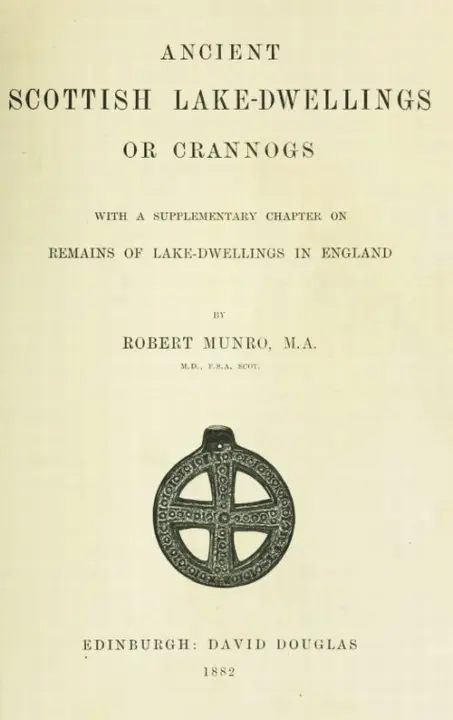
THE CLASSIC COLLECTION · 1882
"Ancient Scottish Lake-Dwellings or Crannogs" by Robert Munro is a historical account written in the late 19th century. The work explores the fascinating archaeological discoveries regarding ancient lake-dwellings in Scotland, specifically focusing on the crannogs—artificial islands often constructed in freshwater bodies. The book aims to present a comprehensive overview of these structures, combining recent findings with historical references to better understand their significance within the prehistoric context of Scotland. At the start of the volume, the author discusses the nature of prehistoric archaeology and the exceptional circumstances that preserve the remains of ancient human activities. Munro emphasizes the importance of lacustrine deposits and how they have contributed to our understanding of past civilizations. He further outlines the intent of the book, which is to compile a complete compendium of existing knowledge on Scottish lake-dwellings, touching on previous studies and laying the groundwork for the exploration of these archaeological sites. Overall, the opening portion introduces the reader to the overarching themes of preservation, historical significance, and the methodological approach of the research presented throughout the work.
Introduction adapted from the source catalogue; source summaries may be automatically generated.
Free to read · English · 91,111 words · No account needed
MAKE TIME FOR A GOOD BOOK
On by default. Untick to stop anonymous reading totals. Each page counts after 10 seconds in view. How this works.
Anonymous counting is on unless you have switched it off.
Gangway.--The probable existence of some kind of communication between the crannog and the shore of the lake was suggested at a very early stage of these investigations by the discovery of a few oak piles in a drain outside the mound, and to clear up this mystery was now the only problem of importance that remained to be solved. We commenced this inquiry by excavating a rectangular space, 30 feet long, 16 feet broad, and 3 to 4 feet deep, in the line of direction indicated by the piles (marked O on the Plan), and exposed quite a forest of oak stakes. Other trenches, marked P and Q respectively, were then made with exactly similar results. The stakes thus revealed did not at first appear to conform to any systematic arrangement, but by and by we detected, in addition to single piles, small groups of three, four, and five, here and there at short intervals. This observation, however, conveyed little or no meaning, so that we could form no opinion as to the manner in which they were used. No trace of mortised beams was anywhere to be seen. In all the trenches the stuff dug up was of the same character. First or uppermost there was a bed of fine clay rather more than 2 feet thick, and then a soft dark substance formed of decomposed vegetable matters. The source of the latter was evident from the occurrence in its upper stratum of large quantities of leaves, some stems, branches, and the roots of stunted trees, apparently in situ. The tops of the piles in the trench Q were from 2 to 3 feet below the surface of the field, but they appeared to rise gradually as we receded from the crannog, and in the trench next the shore one or two were found on a level with the grass. About 4 feet deep the stuff at the bottom of the trench was so soft that a man could scarcely stand on it without sinking ankle-deep. It was not nearly so heavy as ordinary soil, but more adhesive, and of a nutty brown colour, which, on exposure, quickly turned dark. Notwithstanding the flabbiness of this material, the piles felt quite firm, and this fact, together with the experience derived from our examination of the deeper structures of the island, led to the supposition that the piles would be found to terminate in some more solid basis than had yet been made apparent. To remove all doubts on this point, though a long iron rod could be easily pushed downwards without meeting any resistance, we ordered a large deep shaft to be dug in the line of the piles, and the cutting Q, being nearest the crannog, was selected for this purpose. This was accomplished with much difficulty, but we were amply rewarded by coming upon an elaborate system of wood-work, which I found no less difficult to comprehend than it now is to describe. The first horizontal beam was reached about 7 feet deep, and for other 3 feet we passed through a complete network of similar beams, lying in various directions. Below this, i.e. 10 feet from the surface, the workmen could find no more beams, and the lake silt became harder and more friable. We then cleared a larger area so as to exhibit the structural arrangement of the wood-work. The reason of grouping the piles now became apparent. The groups were placed in a somewhat zigzag fashion near the sides of the gangway, and from each there radiated a series of horizontal beams, the ends of which crossed each other and were kept in position by the uprights. One group was carefully inspected. The first or lowest beam observed was right across, the next lay lengthways and of course at right angles to the former, then three or four spread out diagonally, like a fan, and terminated in other groups at the opposite side of the gangway, and lastly, one again lay lengthways. (See Plan and Sections.) Thus each beam raised the level of the general structure the exact height of its thickness, though large lozenge-shaped spaces remained in the middle quite clear of any beams. The general breadth of the portion of this unique structure examined was about 10 feet (but an isolated pile was noticed farther out), and its thickness varied from 3 to 4 feet. A large oak plank, some 10 feet long, showing the marks of a sharp cutting instrument by which it was formed, was found lying on edge at its west side, and beyond the line of piles, but otherwise no remains of a platform were seen. All the beams and stakes were made of oak, and so thoroughly bound together that, though not a single joint, mortise, or pin was discovered, the whole fabric was as firm as a rock. No relics were found in any of the excavations along the line of this gangway.
Your reading position is saved on this browser. Take it to another device with a library code. Reading pages adapt to text, rather than matching a printed edition.
BEHIND THE BOOK
This eBook is for the use of anyone anywhere in the United States and most other parts of the world at no cost and with almost no restrictions whatsoever. You may copy it, give it away or re-use it under the terms of the Project Gutenberg License included with this eBook or online at www.gutenberg.org. If you are not located in the United States, you will have to check the laws of the country where you are located before using this eBook. Read the source licence.
The original source file, including credits and licence, is retained by this library. Request an original-format copy at no charge. Please include the book title and Project Gutenberg identifier #52339.
KEEP YOUR CURIOSITY GOING
Cécile Tormay

Moritz Busch
John L. Ransom
Frances Wright
Cécile Tormay

Mabel Potter Daggett