
Transplanted
Gertrude Franklin Horn Atherton
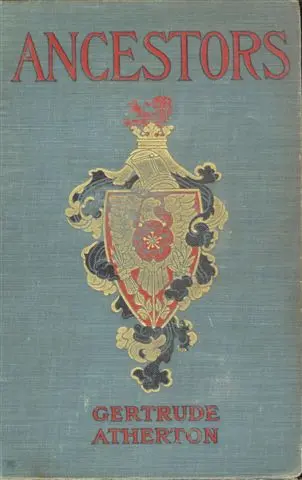
THE CLASSIC COLLECTION · 1907
"Ancestors: A Novel" by Gertrude Franklin Horn Atherton is a fiction work written in the early 20th century. The story seems to oscillate around the lives of British aristocrats and their connections, blending themes of heritage, ambition, and friendship. Notably, the narrative prominently features Lady Victoria Gwynne and her friend Miss Flora Thangue, as well as the American cousin Isabel Otis, who has recently arrived in England. The opening of the novel introduces several key characters engaging in a tension-laden tea gathering at the country house Capheaton. Victoria Gwynne appears to be anxious about her son Jack's recent election, and the atmosphere is charged with unspoken concerns regarding personal and familial obligations. Flora Thangue observes this dynamic, curious about the changes in her friend's demeanor after a long sojourn abroad. As discussions unfold, Isabel, a relatively underprivileged American cousin with ties to the Gwynne family, arrives at the estate. This encounter sets the stage for a blend of personal histories and ambitions, revealing deeper undercurrents of political and social expectations against the backdrop of family legacies. The opening hints at the exploration of class, belonging, and the gravitational pull of ancestral roots, effectively drawing readers into the complex lives of these characters.
Introduction adapted from the source catalogue; source summaries may be automatically generated.
Free to read · English · 199,042 words · No account needed
MAKE TIME FOR A GOOD BOOK
On by default. Untick to stop anonymous reading totals. Each page counts after 10 seconds in view. How this works.
Anonymous counting is on unless you have switched it off.
She had had little time to think of Gwynne, but it had crossed her mind that she would accept this heartrending episode, in which she had been called upon to play an intimate part, as but another warning; one, moreover, that would stand its ground did she attempt to force it aside. But Gwynne entered and filled her dispossessed mind the moment she sat down under her acacia-tree, which was perhaps an hour after her return home. But this time her dreams did not flow upon a smooth golden scented tide. She searched the accumulated newspapers for mention of him in the despatches, wept stormily at his neglect, tormented herself with the belief that Julia Kaye was in Washington; at all events that he had discovered that his love for herself was but one more passing fancy, born of propinquity.
She saw mention of him. Twice he had dined at the White House, and his name was frequently in the list of guests at other dinners and functions. He was not visiting at the British Embassy, and Isabel drew her only comfort from the fact: he might be enjoying himself too much to think of her, but his purpose was unaltered, or he certainly would be the guest of a man whom she knew to be his friend: Gwynne was the last man to embarrass anybody, and if the ambassador had enemies they would find his connivance at the Americanization of a useful British peer vastly to his own discredit.
Isabel enjoyed no further peace of mind. The flames of uncertainty devoured her. The worst she could endure, but suspense spurred her always ardent imagination to such appalling feats that she barely ate or slept. But she was far too high-handed to suffer actively for long. She buried her pride in one of her many crypts, summoned her feminine craft, and wrote Gwynne a letter. It began in the brief and business-like manner the iniquities of their builders demanded--they were on strike--and her facile pen flowed on with various other items of information, more or less unpleasant. Mr. Clink, the lessee of Mountain House, had absconded with all the furniture, including the doors and windows, and she hesitated to refurnish, not knowing if Gwynne would return in time for the salmon-fishing. Nor had she been able to find another tenant, although she had spent two days in the mountains. She thought it might be a good place for a sanitarium, if he were inclined to form a company. Some sulphur springs had recently bubbled out of the ground near the house, which would add to the value of the property; but she must confess that they ruined the place for her. She distrusted the sudden advent of mineral waters; one never knew what was coming next. Then, after more cheering, but equally practical information, she rambled off into gossip, told the sad story of the Coltons' bereavement, and asked him a few friendly questions about himself. Of course he had not succeeded in getting his passport or he would be home--unless, to be sure, the Britisher was too strong in him after all, and he would not return. This alternative she contemplated with a lively regret, for she had had no one to talk to since he left, and so much business sat heavily on her shoulders. Then she announced herself his affectionate cousin; and it was not until the letter was gone, and quite a day of self-gratulation at her own adroitness, that it suddenly occurred to her that Gwynne had made up his mind that the first letter should come from her. For a few moments she was furious, then concluded that she did not care; she wanted to hear from him on any terms. She counted the days, intending finally to count the hours and minutes; but this agreeably breathless task came to an abrupt end at the close of the sixth day. Gwynne answered by telegraph. He thanked her for her interesting and more than welcome letter. He was well, and bored, and hoping daily to settle his affairs and start for home. In any case he should have returned to California: he was surprised at her doubts. She was not to bother further about his affairs out there. He had telegraphed to the contractor that he could wait as long as the strikers. He added that he longed for California.
Your reading position is saved on this browser. Take it to another device with a library code. Reading pages adapt to text, rather than matching a printed edition.
Gertrude Franklin Horn Atherton
Gertrude Franklin Horn Atherton
Gertrude Franklin Horn Atherton
Gertrude Franklin Horn Atherton
BEHIND THE BOOK
This eBook is for the use of anyone anywhere in the United States and most other parts of the world at no cost and with almost no restrictions whatsoever. You may copy it, give it away or re-use it under the terms of the Project Gutenberg License included with this eBook or online at www.gutenberg.org. If you are not located in the United States, you will have to check the laws of the country where you are located before using this eBook. Read the source licence.
The original source file, including credits and licence, is retained by this library. Request an original-format copy at no charge. Please include the book title and Project Gutenberg identifier #31858.
KEEP YOUR CURIOSITY GOING
Coulson Kernahan

Maurice Baring
Frances Wright
Cécile Tormay

Frederic Jesup Stimson

W. H. P. (William Henry Pope) Jarvis