
Transplanted
Gertrude Franklin Horn Atherton
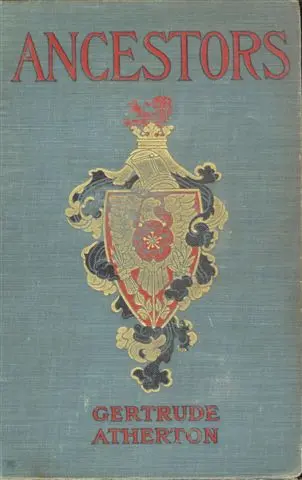
THE CLASSIC COLLECTION · 1907
"Ancestors: A Novel" by Gertrude Franklin Horn Atherton is a fiction work written in the early 20th century. The story seems to oscillate around the lives of British aristocrats and their connections, blending themes of heritage, ambition, and friendship. Notably, the narrative prominently features Lady Victoria Gwynne and her friend Miss Flora Thangue, as well as the American cousin Isabel Otis, who has recently arrived in England. The opening of the novel introduces several key characters engaging in a tension-laden tea gathering at the country house Capheaton. Victoria Gwynne appears to be anxious about her son Jack's recent election, and the atmosphere is charged with unspoken concerns regarding personal and familial obligations. Flora Thangue observes this dynamic, curious about the changes in her friend's demeanor after a long sojourn abroad. As discussions unfold, Isabel, a relatively underprivileged American cousin with ties to the Gwynne family, arrives at the estate. This encounter sets the stage for a blend of personal histories and ambitions, revealing deeper undercurrents of political and social expectations against the backdrop of family legacies. The opening hints at the exploration of class, belonging, and the gravitational pull of ancestral roots, effectively drawing readers into the complex lives of these characters.
Introduction adapted from the source catalogue; source summaries may be automatically generated.
Free to read · English · 199,042 words · No account needed
MAKE TIME FOR A GOOD BOOK
On by default. Untick to stop anonymous reading totals. Each page counts after 10 seconds in view. How this works.
Anonymous counting is on unless you have switched it off.
Mariana cooked the ducks with the skill of the unsung chef she was, and enhanced them with other delicacies for which she alone had a name. Gwynne, faithless to Isabel's crude though honest effort, rose to gayety and wondered whether California was practising the insidious methods of the wife. Colton, absent of eye, disposed of his share of the repast as negatively as he did most things, and as soon as they had retired to the veranda produced a bag of peanuts from his pocket, without which, he remarked, no meal was complete. Gwynne declined the national delicacy, feeling that diplomacy had its limits, and lit a pipe, wondering how he should lead his new friend to give him some practical political information. He detected the guile under that bland, almost vacant exterior, and Colton's prattle about duck-shooting and deer-hunting, although apparently endless, did not divert him for a moment. But he had less trouble than he had anticipated. Colton's mind seldom roved far from politics, and it required little tact to lead him to the trough.
"As I am necessarily in your confidence I will take you voluntarily into mine," he announced, in his clear high pipe. "I don't in my heart care a hang more for the Democratic party than I do for the Republican. But the Republicans own the State at present, and there's no chance to get your name up and really do things in that party. They're out for graft, every last one of them. The chance is on the other side. It's a big chance; for the laboring class, what with unions, and being rotten spoilt with easy living in this State, is becoming more and more dissatisfied every day. If they were let alone it would never occur to them they weren't the chosen of the Lord; but we--the Democratic party--can't afford to let them alone, unless we want to go out of business altogether. They are just about the only dough we've got to work on, and for the last few years we've been systematically sowing the seeds of discontent by means of the press, metropolitan and local, abusing the rich, the trusts, harping on the segregation of capital by a favored few, to the unjust and illegal impoverishment of the many, painting gaudy pictures of what the working-man's lot will be when he gets his rights, emphasizing that in this State, of all others, man was intended to be happy and share equally in her abundance. We sail pretty close to anarchy; but they are an ignorant foolish lot, and we keep a tight hand on the reins and will drive them in a straight line when the time comes. I am qualifying for the position of district leader hereabouts, although I'm not announcing it from the house-tops. But the present one is getting old, and I'm on the inside track. I dress in these battered old clothes, that make my little wife weep--she'll never have any other cause from me--just to impress the farmers what a good Democrat I am; not a bit like Hyliard Wheaton, who is a dude. All he is waiting for is his father's death so that he can move to San Francisco. But I drive round in a dusty old buggy, with candy for the children in my pocket, and chin with the farmers about the crops and any old thing. When this county turns Democratic, as it shall in the next five years--likely as not sooner, we have so much raw material to work on in these immigrants--I intend to go to Congress, hold on in the House until there is a vacancy in the Senate, and there I'll be for life, and the boss of this State to boot. I can't say I care about the Presidency. It's only a chance that there may be anything doing while you're in--it's largely luck--and then when you're out, if you survive the White House--which most Presidents don't--you're as good as dead. I don't care about going abroad as a Consul-General, or even Ambassador, for I wouldn't hold any office under the United States government that was dependent upon the favor of a small group in Washington. You're no better than a servant, and you never know where you are. Political enemies at home, liars abroad, somebody with a little more influence, or any low political business, and you're fired without being heard in your own defence. You've got no redress, and may be disgraced for life without ever knowing where you were hit. None of that for me, although I'd like a big position of that sort for my wife. But she can cut all the dash she wants as a senator's wife, and I'll wield the big stick. That's where the fun comes in. I have a natural turn for politics, and then it's the only road out of Rosewater. The old gentleman is dead set upon my succeeding him in the bank, and he'd never give me a lift, although if I made a hit at anything he'd be so proud it would be easy sailing after. He's not a bit displeased that I've turned over a few thousands an aunt left me. But I'm after bigger game than that. She also left me two thousand acres of land, that look hopeless because there's not so much as a spring on them, and they're in one of the droughtiest sections in the State--she got them as a bad debt. Now, just over the border of that ranch is a big lake, and the owner of it won't sell or rent me water rights, thinking I'll sell out for a song. But he don't know Tom Colton. I'm a member of the present legislature--and that isn't the least of the reasons why. A few hundreds in a few hungry pockets, and we run a snake through the legislature declaring that lake state property. Then I ditch from the lake, and I am the proud owner of a large tract of valuable irrigated land. I sell off in small farms, and clean up a hundred thousand dollars. That I'll invest in a Class A building in San Francisco. I'm also in this projected electric railway of Boutts's--would advise you to buy a block of that stock--I can let you in on the ground floor. Money and political power, boss of this State--that's what I'm after--and no idle dream either. I know the ropes, and all I have to do is to hang on. I'll build a house on Connecticut Avenue in Washington, and my wife shall have dresses four times a year from Paris." He turned to Gwynne with glowing eyes. "You've barely seen her--and you haven't had a sight of the kids. She's Isabel's great friend. I wonder you haven't been round. I've got the nicest little shanty you ever saw, and we'd always be glad to see you."
Your reading position is saved on this browser. Take it to another device with a library code. Reading pages adapt to text, rather than matching a printed edition.
Gertrude Franklin Horn Atherton
Gertrude Franklin Horn Atherton
Gertrude Franklin Horn Atherton
Gertrude Franklin Horn Atherton
BEHIND THE BOOK
This eBook is for the use of anyone anywhere in the United States and most other parts of the world at no cost and with almost no restrictions whatsoever. You may copy it, give it away or re-use it under the terms of the Project Gutenberg License included with this eBook or online at www.gutenberg.org. If you are not located in the United States, you will have to check the laws of the country where you are located before using this eBook. Read the source licence.
The original source file, including credits and licence, is retained by this library. Request an original-format copy at no charge. Please include the book title and Project Gutenberg identifier #31858.
KEEP YOUR CURIOSITY GOING
Coulson Kernahan

Maurice Baring
Frances Wright
Cécile Tormay

Frederic Jesup Stimson

W. H. P. (William Henry Pope) Jarvis