
Transplanted
Gertrude Franklin Horn Atherton
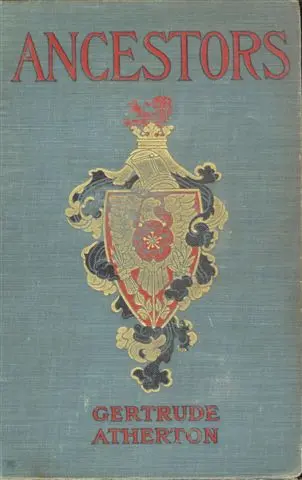
THE CLASSIC COLLECTION · 1907
"Ancestors: A Novel" by Gertrude Franklin Horn Atherton is a fiction work written in the early 20th century. The story seems to oscillate around the lives of British aristocrats and their connections, blending themes of heritage, ambition, and friendship. Notably, the narrative prominently features Lady Victoria Gwynne and her friend Miss Flora Thangue, as well as the American cousin Isabel Otis, who has recently arrived in England. The opening of the novel introduces several key characters engaging in a tension-laden tea gathering at the country house Capheaton. Victoria Gwynne appears to be anxious about her son Jack's recent election, and the atmosphere is charged with unspoken concerns regarding personal and familial obligations. Flora Thangue observes this dynamic, curious about the changes in her friend's demeanor after a long sojourn abroad. As discussions unfold, Isabel, a relatively underprivileged American cousin with ties to the Gwynne family, arrives at the estate. This encounter sets the stage for a blend of personal histories and ambitions, revealing deeper undercurrents of political and social expectations against the backdrop of family legacies. The opening hints at the exploration of class, belonging, and the gravitational pull of ancestral roots, effectively drawing readers into the complex lives of these characters.
Introduction adapted from the source catalogue; source summaries may be automatically generated.
Free to read · English · 199,042 words · No account needed
MAKE TIME FOR A GOOD BOOK
On by default. Untick to stop anonymous reading totals. Each page counts after 10 seconds in view. How this works.
Anonymous counting is on unless you have switched it off.
"Very good. I suspicioned something of the sort. He can't corrupt you, and you couldn't get a better insight into corruption than through him; so fire away. What's your program, anyhow?"
"It's too soon to make one--be sure that I am willing to return your confidence with my own"--as the sharp china-blue eyes opposite contracted; "but I can do little now except win the confidence of the farmers in this district and of men like yourself. But if a reform party does achieve power, if only for a term, the first thing for it to do is to overhaul the ballot system. Before we reformed ours we were as deep in the mire as yourselves. When the American voter is under the supervision of an honest judiciary, a general system of local reforms will follow as a matter of course."
Mr. Wheaton sighed. "You would have to begin with the judiciary. If you reformed them, and had any strength left, and then reformed the ballot in the manner of your own country, I guess you'd get about anything you wanted. But you'll need a tidal reform wave, I'm afraid. However, you never can tell what one year will bring forth in this country. On the other hand, the results of certain reforms, fought and died for, have done as much to make us pessimists as any of the immovable abuses. Take the question of Civil Service Reform, for instance. In the old days when you wanted to induce a man to give you the benefit of his abilities and influence during an election, you held out hopes of preferment, and he took your word if he knew your word was good, and worked with a decent sort of ambition--all things being relative. What happens now? Few find anything promising or attractive in the competitive examination. You ask a man--the professional politician he is now, sure enough--to help you get your candidate, or yourself, in, and what happens? The gentleman coolly demands, 'How much?' and holds out his hand. You fill it or he turns his back and walks off. There is just that much less of good left to appeal to in this particular brand of human nature. Ours is a much more complicated civilization than yours, Mr. Gwynne. You were dealing with Britishers only, in 1832. We are trying to digest the riffraff of the world, and can't do it, in spite of such incorrigible optimists as Judge Leslie. Immigrants in the first generation have just about as much feeling for the American flag as a chicken has for Rosewater. They look upon vote-selling as a legitimate way of improving their fortunes, and they are the easy prey of such agitators as Colton, because they had nothing in their own countries, and want the earth in this. Of course their children go to the public schools, and become Americans, but we always have the problem of fresh hordes to deal with. And new and old--it is easy to plant the weevil in their brains that the rich have corralled all the money, and the laborer--even in California, where he gets the highest wages paid on this earth--is a miserable victim, and entitled to all he doesn't make. They never remember that nearly every capitalist in the country has risen from their own ranks, and that their dreams are mainly occupied with doing the same. But you might as well talk to the trade-winds, especially with such men as Tom Colton stirring the caldron. 'Get rich quick; and selling votes is as good a starter as any.' There you have the moral sickness of the country in a nutshell. And few professions pay better than that of the politician. The pettiest division leader, who does the Boss's dirtiest work, and has fewer redeeming virtues than the midnight burglar, makes such a good thing out of it that the prettiest Salvation Army lass couldn't convince him of the error of his ways. And he enjoys himself. To hang around saloons, prize-fights, help out shyster lawyers with their tricks, and play the game hard during election times--that satisfies him until he sees a chance of stepping into a bigger pair of boots of the same make. But, thank God, there are more honest men out of politics than in. That is the trouble, but there they are, and it will be a part of your business to round them up. Well, I guess I've held forth long enough. I'll send you round a few volumes from my Lincoln library to-morrow. I always go to it when I lose my faith in human nature. Good-night."
Your reading position is saved on this browser. Take it to another device with a library code. Reading pages adapt to text, rather than matching a printed edition.
Gertrude Franklin Horn Atherton
Gertrude Franklin Horn Atherton
Gertrude Franklin Horn Atherton
Gertrude Franklin Horn Atherton
BEHIND THE BOOK
This eBook is for the use of anyone anywhere in the United States and most other parts of the world at no cost and with almost no restrictions whatsoever. You may copy it, give it away or re-use it under the terms of the Project Gutenberg License included with this eBook or online at www.gutenberg.org. If you are not located in the United States, you will have to check the laws of the country where you are located before using this eBook. Read the source licence.
The original source file, including credits and licence, is retained by this library. Request an original-format copy at no charge. Please include the book title and Project Gutenberg identifier #31858.
KEEP YOUR CURIOSITY GOING
Coulson Kernahan

Maurice Baring
Frances Wright
Cécile Tormay

Frederic Jesup Stimson

W. H. P. (William Henry Pope) Jarvis