
Transplanted
Gertrude Franklin Horn Atherton
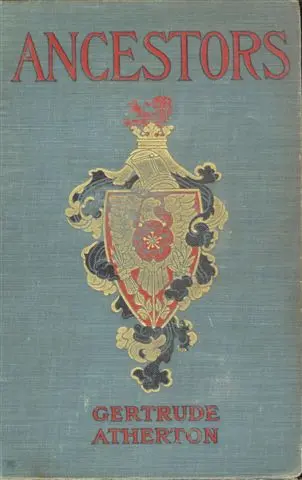
THE CLASSIC COLLECTION · 1907
"Ancestors: A Novel" by Gertrude Franklin Horn Atherton is a fiction work written in the early 20th century. The story seems to oscillate around the lives of British aristocrats and their connections, blending themes of heritage, ambition, and friendship. Notably, the narrative prominently features Lady Victoria Gwynne and her friend Miss Flora Thangue, as well as the American cousin Isabel Otis, who has recently arrived in England. The opening of the novel introduces several key characters engaging in a tension-laden tea gathering at the country house Capheaton. Victoria Gwynne appears to be anxious about her son Jack's recent election, and the atmosphere is charged with unspoken concerns regarding personal and familial obligations. Flora Thangue observes this dynamic, curious about the changes in her friend's demeanor after a long sojourn abroad. As discussions unfold, Isabel, a relatively underprivileged American cousin with ties to the Gwynne family, arrives at the estate. This encounter sets the stage for a blend of personal histories and ambitions, revealing deeper undercurrents of political and social expectations against the backdrop of family legacies. The opening hints at the exploration of class, belonging, and the gravitational pull of ancestral roots, effectively drawing readers into the complex lives of these characters.
Introduction adapted from the source catalogue; source summaries may be automatically generated.
Free to read · English · 199,042 words · No account needed
MAKE TIME FOR A GOOD BOOK
On by default. Untick to stop anonymous reading totals. Each page counts after 10 seconds in view. How this works.
Anonymous counting is on unless you have switched it off.
"... I almost wish Jack would return, although at first I approved of his going. His case seemed so desperate. But since the elections there has been so much talk of him, so many prophecies as to what he will do when he returns--they believe him to be travelling in South America--so much seems to be expected of him, especially now that the Liberals are in, and there is so much dissatisfaction with the Cabinet--I really believe he would be the one to keep the party in power and that his becoming prime-minister would be a question of only a few years. Not such a bad outlook! But I don't care to say all this to Jack--or even to Vicky. You are responsible for the present state of affairs, and I am sure you realize what a tremendous responsibility it is. Besides, you know every side of the question over there as I do not. Think it over, dear Isabel.... Julia Kaye, I happen to know, has been trying to get his address. So far, she has not landed another big fish, and no doubt thinks that Jack's disgust and enthusiasm have both worn themselves out by this time. Don't send him back, but bring him. Of course he has fallen in love with you. Besides, you could accomplish any mortal thing you put your will to. Do, please, think it all over. A few years' delay, and he might return and find it too late. The public memory is short. There are rivals. The one he had most to fear from has an Under-secretaryship, and lets no one forget him. There will be deep resentment at too long an absence, especially if he should become an American citizen meanwhile. They would never forgive that.
"... About Vicky. I wish I could have gone with her, but she did not feel that she could afford to take me, and Vicky's spasms of economy are not to be discouraged. But, thank heaven, she has you and Jack. Perhaps all she really needed was a change: she was always an individual, but she got to be distinctly peculiar after you left--nerves, I suppose: only instead of being merely irritable like other women she sealed herself up like a Mahatma preparing for astral flight. I only wish she was one. Women of her class no longer take to religion, when the fires are dead, but they certainly need a substitute, and I should think theosophy would be as good as any. It is such a delightful mixture of vagueness and cock-sureness, and even more picturesque than Romanism. It is time for me to follow the fashion and write a book, and I think I'll paint the mysterious delights of India as a late autumn resort. I am so sick of all these public mausoleums for youth! It would be a positive relief to think of all our erstwhile beauties stretched out in some frescoed cave with their ears and eyes and noses sealed up with wax, while their ever-youthful spirits sallied forth for new conquests on the astral plane. But Vicky never 'made up': one must say that much for her. Only this terrible fetish of youth! Heavens! the tragedies my sympathetic soul has endeavored to see as tragedies only. Not that growing old seems to be the worst of it. The underlying tragedy is that they can't care enough, and this they take to be the real end of youth, and patter up and down the old worn-out track of device, trying to fool themselves as well as others. But Vicky, as I said, is an individual: a touch or two more and she might have been a genius. She is like the mass of women in many things, heaven knows, but her divergences are the more startling; and the point of divergence lies down in the roots of her pride. She suddenly felt the complete loss, the final departure of youth, and she accepted it like a fallen goddess, and refused even the sudden and startling renewal of Sir Cadge Vanneck's devotions. She had nothing left to give him, and although her pride may have urged her to show the world that she still could capture a man like that, I think he really bored her to death, and she was satisfied to parade him for a time and then publicly throw him over. And she once loved him, I am certain of it. That is tragedy, if you like. I fancy she has desperate moments, but she will pull through in her own way. Don't delude yourself with the notion that she is sitting down in sackcloth and ashes with her past! Those women don't repent, for they never admit that the laws of common mortals apply to them. What is their royal pleasure to do they do, and when it is over a square inch of their memory might have gone with it. To mull themselves, commit some flagrant error that lands them in the divorce court, or high and dry in the outskirts--that is another matter. They repent then, sans doute; and get no mercy. We overlook everything at this apex of civilization but stupidity. We respect the high-handed but not the light-headed. That is one reason those long-winded novels of sin and repentance--generally over one slip and when the man has wearied--leave us cold. We know too much. It seems such a lot of fuss about so little. If some of these good, painstaking, and--let us whisper it--bourgeoise novelists had seen one-tenth of the pagan disregard for all they cherish most highly, that I have seen, and if they could only be made to comprehend--which they never could--how absolutely admirable these same women are in many other respects--such capacity for deep undying friendship, such uncalculating loyalty, such racial possibilities of heroism--well, they would do a good deal harder thinking than they have had to do yet, if they attempted to readjust their traditions to the actual facts of life. But the old traditions get back at our women all the same, although they don't suspect it. They pay the penalty in that late--sometimes not so late--intolerable maddening ennui. Heavens! how many women I have heard wish they were dead. Thank God I am a virgin!
Your reading position is saved on this browser. Take it to another device with a library code. Reading pages adapt to text, rather than matching a printed edition.
Gertrude Franklin Horn Atherton
Gertrude Franklin Horn Atherton
Gertrude Franklin Horn Atherton
Gertrude Franklin Horn Atherton
BEHIND THE BOOK
This eBook is for the use of anyone anywhere in the United States and most other parts of the world at no cost and with almost no restrictions whatsoever. You may copy it, give it away or re-use it under the terms of the Project Gutenberg License included with this eBook or online at www.gutenberg.org. If you are not located in the United States, you will have to check the laws of the country where you are located before using this eBook. Read the source licence.
The original source file, including credits and licence, is retained by this library. Request an original-format copy at no charge. Please include the book title and Project Gutenberg identifier #31858.
KEEP YOUR CURIOSITY GOING
Coulson Kernahan

Maurice Baring
Frances Wright
Cécile Tormay

Frederic Jesup Stimson

W. H. P. (William Henry Pope) Jarvis