
Transplanted
Gertrude Franklin Horn Atherton
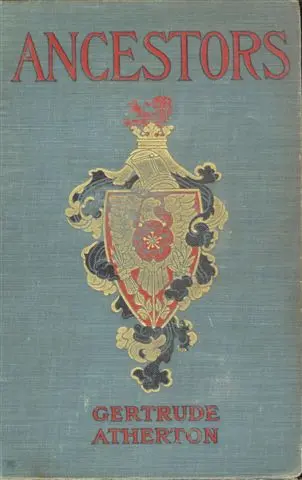
THE CLASSIC COLLECTION · 1907
"Ancestors: A Novel" by Gertrude Franklin Horn Atherton is a fiction work written in the early 20th century. The story seems to oscillate around the lives of British aristocrats and their connections, blending themes of heritage, ambition, and friendship. Notably, the narrative prominently features Lady Victoria Gwynne and her friend Miss Flora Thangue, as well as the American cousin Isabel Otis, who has recently arrived in England. The opening of the novel introduces several key characters engaging in a tension-laden tea gathering at the country house Capheaton. Victoria Gwynne appears to be anxious about her son Jack's recent election, and the atmosphere is charged with unspoken concerns regarding personal and familial obligations. Flora Thangue observes this dynamic, curious about the changes in her friend's demeanor after a long sojourn abroad. As discussions unfold, Isabel, a relatively underprivileged American cousin with ties to the Gwynne family, arrives at the estate. This encounter sets the stage for a blend of personal histories and ambitions, revealing deeper undercurrents of political and social expectations against the backdrop of family legacies. The opening hints at the exploration of class, belonging, and the gravitational pull of ancestral roots, effectively drawing readers into the complex lives of these characters.
Introduction adapted from the source catalogue; source summaries may be automatically generated.
Free to read · English · 199,042 words · No account needed
MAKE TIME FOR A GOOD BOOK
On by default. Untick to stop anonymous reading totals. Each page counts after 10 seconds in view. How this works.
Anonymous counting is on unless you have switched it off.
After luncheon Mrs. Hofer had invited Miss Montgomery into the automobile, and taken her and Isabel for a long ride, chattering of everything under the sun, but with breathing spells that enabled Isabel to exchange a few remarks with her old friend; and between remorse for her own neglect and pity for that desolated life, she was almost effusive, and begged Miss Montgomery to visit her in the valley where Anne's father too had owned a ranch in palmier days. She offered to furnish a room immediately, and Miss Montgomery smilingly promised to obtain surcease from dinner-parties, where her portion was to enter by the back door--in nine cases out of ten with the ancestral silver--and take the rest she needed. She made a good living, she assured Isabel, but was educating a young relative for the navy, and lived in a flat that was largely kitchen. All her fragile wild-rose beauty was gone long since, but she still remembered how to put on her clothes, and her position was unaffected in that devil-may-care city; she went into society when she chose.
Mrs. Hofer, on their return from the environs, left them for a few moments in front of a house on Van Ness Avenue where a friend lay ill, and Isabel made an enthusiastic allusion to the gay out-door appearance of the city. The broad avenue was crowded with men, women, and children, promenading in the sunshine. Every street-car was filled with people on their way to or from the Park, Presidio, or Cliff House. They had passed hundreds of automobiles and fine turnouts of every description, and out at the three great resorts thousands of pleasure-seekers.
Miss Montgomery set her well-cut mouth in a pale line. "I get somewhat weary of all this pagan delight in mere externals," she remarked. "It is all so superficial and deceptive, although sincere enough in its ebullitions. I can tell you, my dear idealist--you have not changed a particle, by the way--that there is another side you have never seen. I doubt if you ever would see it, even if you came to live in the town." The automobile stood on a corner. Miss Montgomery indicated the rise and fall of the hill-side, east and west of the avenue. "Look at all those shabby-genteel rows of houses, each exactly like the next, each with its awful bow window, and all needing a new coat of paint. So are the lives inside. And there are miles of them. There are just four sorts of people in this town--ignoring its underworld--that get any real enjoyment out of life: those that are wealthy enough to command constant variety; the careless clever Bohemians with their wits always on the alert and plenty of congenial work; the club women; the laboring class, that get the highest wages on earth and are as happy as beasts of the field on a bright warm winter's day like this. But oh, the thousands and thousands of mere mortals that are mired in their ruts and no longer even plan to climb out! There is no more chance for those people--who are in some little business, or are clerks, or small professional men, or fractions in the great corporations--to mention but a few examples--no more chance for them than in any of the older cities; for San Francisco has gone at such a pace that she has as many ruts as if centuries had plowed her, and those in the ruts might as well be on Lone Mountain. They--the women particularly--have the tedium vitae in an acuter form than you have seen anywhere in Europe, for over there the centuries have mellowed and enriched life; there is something besides this eternal climate which can never take the place of art. Of course there was a day when every man had an equal chance, but that day has passed long since. And then in Europe," she went on, the minor note in her voice becoming more plaintive, although she was too well bred to whine, "you are always near some other place. You can save your money for a few months and command a change of scene. Here you have to travel three thousand miles to find a change of accent. I often have the delusion that California is on Mars. And the climate! Day after day, when I walk down that shabby hill with menus revolving in my head, or take the boat across that sparkling bay--I have customers all about--I long for the extremes of seasons they have in the East--fogs and four months of intermittent rain are only an irritant to one's natural love of variety. I long for the excitement of wading through snow drifts. I wish we would have a war. I should love to hear the shells hissing overhead, to see great buildings collapse, people rushing about in a mad state of excitement--anything, anything, to relieve the monotony of this isolated bit of semi-civilization--where, I can tell you, more women meditate suicide from pure ennui than in any city on earth!"
Your reading position is saved on this browser. Take it to another device with a library code. Reading pages adapt to text, rather than matching a printed edition.
Gertrude Franklin Horn Atherton
Gertrude Franklin Horn Atherton
Gertrude Franklin Horn Atherton
Gertrude Franklin Horn Atherton
BEHIND THE BOOK
This eBook is for the use of anyone anywhere in the United States and most other parts of the world at no cost and with almost no restrictions whatsoever. You may copy it, give it away or re-use it under the terms of the Project Gutenberg License included with this eBook or online at www.gutenberg.org. If you are not located in the United States, you will have to check the laws of the country where you are located before using this eBook. Read the source licence.
The original source file, including credits and licence, is retained by this library. Request an original-format copy at no charge. Please include the book title and Project Gutenberg identifier #31858.
KEEP YOUR CURIOSITY GOING
Coulson Kernahan

Maurice Baring
Frances Wright
Cécile Tormay

Frederic Jesup Stimson

W. H. P. (William Henry Pope) Jarvis