
Transplanted
Gertrude Franklin Horn Atherton
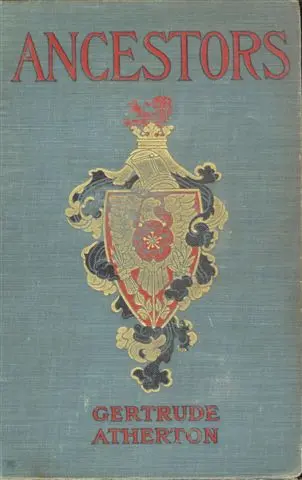
THE CLASSIC COLLECTION · 1907
"Ancestors: A Novel" by Gertrude Franklin Horn Atherton is a fiction work written in the early 20th century. The story seems to oscillate around the lives of British aristocrats and their connections, blending themes of heritage, ambition, and friendship. Notably, the narrative prominently features Lady Victoria Gwynne and her friend Miss Flora Thangue, as well as the American cousin Isabel Otis, who has recently arrived in England. The opening of the novel introduces several key characters engaging in a tension-laden tea gathering at the country house Capheaton. Victoria Gwynne appears to be anxious about her son Jack's recent election, and the atmosphere is charged with unspoken concerns regarding personal and familial obligations. Flora Thangue observes this dynamic, curious about the changes in her friend's demeanor after a long sojourn abroad. As discussions unfold, Isabel, a relatively underprivileged American cousin with ties to the Gwynne family, arrives at the estate. This encounter sets the stage for a blend of personal histories and ambitions, revealing deeper undercurrents of political and social expectations against the backdrop of family legacies. The opening hints at the exploration of class, belonging, and the gravitational pull of ancestral roots, effectively drawing readers into the complex lives of these characters.
Introduction adapted from the source catalogue; source summaries may be automatically generated.
Free to read · English · 199,042 words · No account needed
MAKE TIME FOR A GOOD BOOK
On by default. Untick to stop anonymous reading totals. Each page counts after 10 seconds in view. How this works.
Anonymous counting is on unless you have switched it off.
Gwynne repressed his gorge and answered practically: "Not a bad idea if two were really suited, for no doubt companionship is one of the best things in life, and a woman is more useful in many ways to a man than a partner of his own sex. It is even apparent that she does equally well in certain varieties of sport. I suppose the more experience a man has had of life the more he hesitates to define what love really is. One has attacks of such a severity and one recovers so completely! Doubtless Schopenhauer was right: it is merely the furious determination of the race to persist. Spencer tells us that it is 'absolutely antecedent to all relative experience whatever.' Companionship--yes--perhaps----"
"It is necessary to a man; but by no means to all women----"
"Not for yourself, you mean. You are still blunted and somewhat
disgusted--"
"I have dismissed the question. You cannot imagine how happy I feel every morning when I wake up, and every night when I go, always rather tired, into my comfortable little bed, knowing that I shall sleep like an infant. I love work. I love out-door life. I love the long evenings with my books and my thoughts, and my plans for the future--all my own. I revel in the thought that I can never be unhappy again, because now I love no one. I loved my poor father, and suffered with him in his fits of repentance and shame. I loved, of course, that man. I have absolutely nothing in common with Paula, and my mother is merely a pretty memory. I am fond of Anabel and perhaps several other friends--Mr. and Mrs. Leslie; but that sort of affection does not go very deep. Love is synonymous with selfishness and slavery--slavery because you no longer own yourself. My brother-in-law adores my sister, makes a great point of his fidelity, because before his marriage he was always flaunting some painted female, without which possession, a few years ago, a San Franciscan felt that he would lose the respect of his fellow-citizens. But Lyster's reform makes him as exacting as a Turk. If my poor silly little sister smiles at some fugitive thought he demands to know what it is, and if she cannot remember he sulks for a day. He would possess her very thoughts. She dares not have a man friend, talk to a man for half an hour at a time. He won't let her belong to a club--clubs are all very well for other women, but his wife is not as other women. On the other hand, he has long since let her persuade him that he is the most marvellous of men, and, in consequence, permits her to make every sort of mean little sacrifice while he spends his money on himself. Her eyes are in a measure open now, but it is too late, and she rebels in the usual futile feminine way. There are millions like them. You will meet Anne Montgomery. She is thirty-five now, quite plain, and makes a living as a sort of itinerant housekeeper and caterer. She was a most lovely girl, with a wild-rose complexion and starlike eyes, and full of life and buoyant hope. Her great talent was for the violin, and she dreamed of conquering the world. Teachers told her that with the proper study she could at least become a professional of the first rank, although she lacked the genius of creation. Her parents and an older sister--one of the plain, domestic, unselfish kind, whose pleasure is in living for others--were horrified at the bare suggestion. Not only because they were old-fashioned--some of the most old-fashioned people on earth are in San Francisco--but because it would mean separation from their idol. They surrounded her like a flaming belt, not even a man could get at her. They worshipped her as if she was a being of another world, devoured her; all the treasures of life were centred in her. That there might be the less temptation, they never took her to Europe; and gradually induced her to lay aside the instrument altogether. She was very sweet and gentle, and she loved them and submitted (I would have throttled them all). But she faded rapidly, lost her lovely coloring and animation, and she had no other beauty. Then her father speculated and failed. While they were undergoing real privations the influenza swooped down upon them and carried off the three older members of the family in a week. Anne Montgomery is the most conspicuous victim of what are generally supposed to be the higher affections that I know. They were just commonplace animals--those three--nothing more."
Your reading position is saved on this browser. Take it to another device with a library code. Reading pages adapt to text, rather than matching a printed edition.
Gertrude Franklin Horn Atherton
Gertrude Franklin Horn Atherton
Gertrude Franklin Horn Atherton
Gertrude Franklin Horn Atherton
BEHIND THE BOOK
This eBook is for the use of anyone anywhere in the United States and most other parts of the world at no cost and with almost no restrictions whatsoever. You may copy it, give it away or re-use it under the terms of the Project Gutenberg License included with this eBook or online at www.gutenberg.org. If you are not located in the United States, you will have to check the laws of the country where you are located before using this eBook. Read the source licence.
The original source file, including credits and licence, is retained by this library. Request an original-format copy at no charge. Please include the book title and Project Gutenberg identifier #31858.
KEEP YOUR CURIOSITY GOING
Coulson Kernahan

Maurice Baring
Frances Wright
Cécile Tormay

Frederic Jesup Stimson

W. H. P. (William Henry Pope) Jarvis