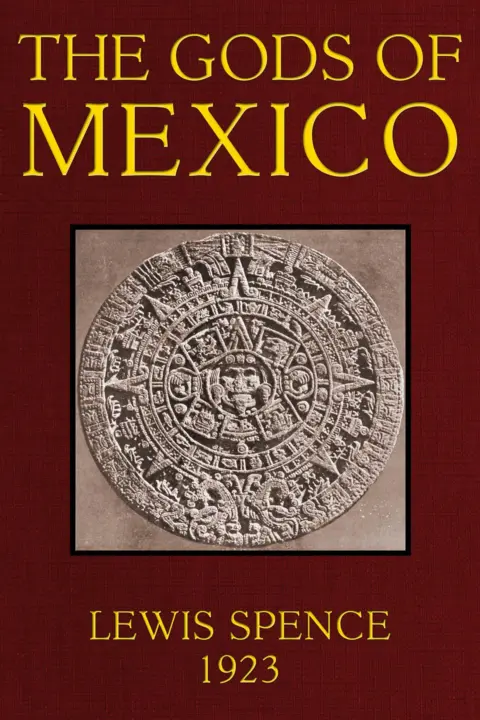
The gods of Mexico
Lewis Spence
THE CLASSIC COLLECTION · 1921
"An Introduction to Mythology" by Lewis Spence is a scholarly examination of mythological principles, likely written in the early 20th century. This comprehensive work explores the evolution, classification, and significance of myths within the context of primitive religion and culture, presenting an overview of the scientific approaches to mythology. Spence aims to illuminate the historical progression of mythic study and its modern applications by synthesizing various theories and presenting definitions that clarify key concepts. The opening of the text introduces the reader to the foundational aspects of mythology, explaining its purpose in understanding the early religious and scientific experiences of humanity. It lays out important definitions distinguishing myths from folklore and legends, suggesting that myths function as explanations for physical and social phenomena. Spence outlines how mythology intersects with folklore, illustrating that myths serve as primitive attempts at rationalizing the universe, while also highlighting significant changes in myth interpretation and classification over time as societies evolve.
Introduction adapted from the source catalogue; source summaries may be automatically generated.
Free to read · English · 115,570 words · No account needed
MAKE TIME FOR A GOOD BOOK
On by default. Untick to stop anonymous reading totals. Each page counts after 10 seconds in view. How this works.
Anonymous counting is on unless you have switched it off.
Hebrews. Bible belief.
Teutons (Scandinavia). The "Völuspá": "The sun shall grow dark, the land sink in the waters, the bright stars be quenched, and high flames climb Heaven itself."
Algonquins. Michabo will stamp his foot, flames will devour the earth and only a chosen few (probably one pair) be left to re-people the new earth.
Arawaks (Guiana and N. Brazil). Aimon Kondi.
Aztecs. Extinguished every fire on last night of each cycle of fifty-two years. Then priests made new fire by friction. If this failed the end of the world had come.
Maya. World to be destroyed by ravening fire and the
gods with it.
Peruvians. Amantas taught that some day an eclipse would veil the sun for ever, and earth, moon, and stars be wrapped in devouring flame.
Tupi-Guarani (Brazil). Monan, Irin Magé.
FLOOD MYTHS. A great deluge in which Heaven or the earth or both Heaven and earth are submerged in water and all living things drowned with the exception of one individual or family favoured by the god or gods.
Egyptians. Tem, Temu, Atem, Atmu.
Babylonians. Ut-Napishtim, the Babylonian Noah.
Hebrews. Noah.
Persians. Yima.
Greeks. Deucalion and Pyrrha.
Teutons (Scandinavia). Bergelmir and Ymir.
Hindus. Manu, son of the sun-god Vivasvat.
Ahts Indians (Vancouver Island). Wispohahp.
Algonquin Indians. Michabo or Manibozho.
Antis Indians (Brazil). Yurukares.
Arawaks. Sigu, Marerewana.
Aschochimi Indians (California). Coyote.
Caribs (Antilles). The ibis.
Hare Indians. Kunyan 'the intelligent,'
Mexicans. Atonatiuh (the Water-Sun) descends upon the
earth.
Muyscas (Bogota). Chia or Chin, the moon, floods earth
out of spite.
Peruvians. Re-creation after deluge at Tiahuanaco.
Tupi-Guarani (Brazil), Monan, Irin Magé.
MYTHS OF A PLACE OF REWARD (the celestial garden of God).
Country or Race Place of Reward Egyptians Aalu Persians Alburz Greeks The Elysian Fields Romans The Fortunate Isles Celts The Otherworld beyond or beneath the sea. Tir-nan-og, Avalon, etc. Teutons (Scandinavia) Valhalla Vedas Agni (or Pushan) conducts the souls to the abodes of bliss Buddhists Nirvana American Indians Happy hunting grounds (generally) Aztecs Tlalocan 'the east, the terrestrial Paradise.' Tamoanchan, in the west Caribs Braves feast in happy islands served by Arawak slaves Tonga Islanders Island Paradise of Bolotu
Country or Race Name of place of Name of presiding punishment Deity or Deities
Egyptians Amenti Osiris Babylonians Sheol or Aralu Allatu or Nergal Greeks Tartarus, Hades Pluto and Persephone Celts Annwn Teutons (Scandinavia) Hel Hel Ladaks (Tibet border) Bad men become marmots Japanese Land of Yomi Eruma-o Caribs 'Bad' men (i.e. cowards) become slaves to Arawaks in barren land beyond the mountains Gallinomero, 'Bad' men become Californian Indians coyotes Guatemalans (Kiches) Xibalba Hun-Came and Vucub-Came Mexicans Mictlan Mictlantecutli and Mictecaciuatl Peruvians Çupay
Your reading position is saved on this browser. Take it to another device with a library code. Reading pages adapt to text, rather than matching a printed edition.
BEHIND THE BOOK
This eBook is for the use of anyone anywhere in the United States and most other parts of the world at no cost and with almost no restrictions whatsoever. You may copy it, give it away or re-use it under the terms of the Project Gutenberg License included with this eBook or online at www.gutenberg.org. If you are not located in the United States, you will have to check the laws of the country where you are located before using this eBook. Read the source licence.
The original source file, including credits and licence, is retained by this library. Request an original-format copy at no charge. Please include the book title and Project Gutenberg identifier #45048.
KEEP YOUR CURIOSITY GOING

Maurice Baring
Francis Greenleaf Allinson & Anne C. E. (Anne Crosby Emery) Allinson
Stuart Dodgson Collingwood
Percy Keese Fitzhugh
Mary Macleod & Edmund Spenser

Cooke Don-Carlos