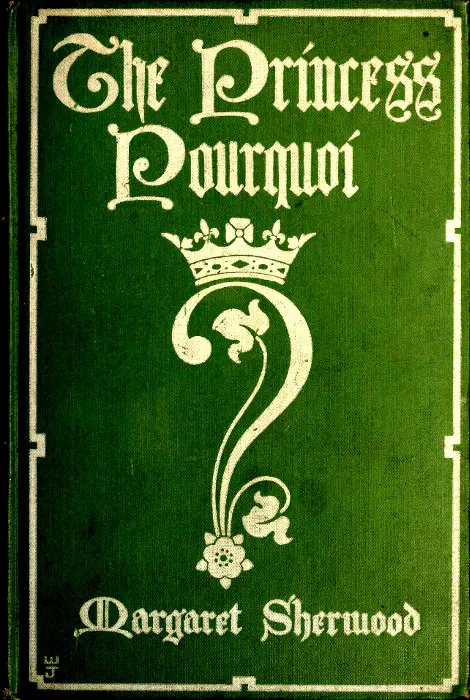
The Princess Pourquoi
Margaret Pollock Sherwood
THE CLASSIC COLLECTION · 1895
"An Experiment in Altruism" by Elizabeth Hastings is a novel written in the late 19th century. The story opens as the narrator arrives in a new city, aiming to engage in philanthropic work, and is introduced to a cast of characters including the Altruist, Janet, and the Doctor—each with diverse perspectives on altruism and societal issues. The book explores themes of social reform, the complexities of human relationships, and the struggle between idealism and realism in the context of helping the less fortunate. The opening portion introduces the narrator's impressions of the city and its inhabitants, who are depicted as introspective and engaged in various charitable efforts. Through conversations between characters, particularly with Janet, the reader gains insight into differing views on the effectiveness of these philanthropic efforts and the nature of altruism. The narrator also reflects on the paradoxes involved in trying to better the conditions of the poor, hinting at both the selflessness and the challenges faced by those engaged in social reform. As the characters' dialogues unfold, the groundwork is laid for a deeper exploration of the motivations behind their actions and the impact of their beliefs on real-world issues.
Introduction adapted from the source catalogue; source summaries may be automatically generated.
Free to read · English · 33,148 words · No account needed
MAKE TIME FOR A GOOD BOOK
On by default. Untick to stop anonymous reading totals. Each page counts after 10 seconds in view. How this works.
Anonymous counting is on unless you have switched it off.
“I mean,” said the Doctor, “that we are absurd when we talk of teaching the lower classes rightness of feeling, for by good rights they ought to teach us. So far as I know, the moral forces are not the result of culture. They work up from below. There has never been a great reform that did not originate with the so-called ‘People.’ All that culture can do is occasionally to supply directing power, cold brain force, to the impulse of the masses. Something deeper than thought, in the primary instincts of the masses, keeps the race sane, healthy, right at heart.”
“It is strange to hear that,” mused the Altruist, “in the face of the awful degradation and the crying sin of the slums of this city. Nothing short of miraculous regeneration, physical, mental, and spiritual, can save them.”
“What is it that Whitman says?” asked Janet. Then she quoted softly:
“‘In this broad earth of ours, Amid the measureless grossness and the slag, Enclosed and safe within its central heart, Nestles the seed perfection.’”
“That crass optimism,” said the Altruist, sternly, “is materialistic and superficial. It simply ignores the vileness of a sin-stricken world.”
This question, as to whether the People are more sane at heart than the not-People we never settled, for the committee-meeting drew to its close.
When we separated, I went into the corridor with the Altruist for a
parting word.
“I am very sanguine in regard to our club,” he said, stroking his smooth-shaven chin. “Janet will do fine work if her power can be set free. I find it hard to be patient with her unreasonable pessimism.”
“It isn’t quite fair to call it unreasonable, is it,” I murmured, “until one knows the reason for it? We have not yet discovered that.”
“As for the Doctor,”—he continued, not noticing my remark, “she is a forceful woman, but crude. I actually feel that she does not understand me half the time when I am talking. Of course she springs too directly from the People to be thoroughly fine. And our difference in belief would always make full spiritual communion impossible.”
Then he looked at me, and his eyes lighted up.
“I have an idea that you comprehend me better than any of the others,”
he said, graciously.
When I went back to the parlour, I found the Doctor preparing to go.
“There is one thing that can be said about the Altruist,” she remarked, fastening her gloves with a snap. “He may know a great deal about God, but he knows precious little about men and women.”
Your reading position is saved on this browser. Take it to another device with a library code. Reading pages adapt to text, rather than matching a printed edition.
Margaret Pollock Sherwood

Margaret Pollock Sherwood
Margaret Pollock Sherwood
BEHIND THE BOOK
This eBook is for the use of anyone anywhere in the United States and most other parts of the world at no cost and with almost no restrictions whatsoever. You may copy it, give it away or re-use it under the terms of the Project Gutenberg License included with this eBook or online at www.gutenberg.org. If you are not located in the United States, you will have to check the laws of the country where you are located before using this eBook. Read the source licence.
The original source file, including credits and licence, is retained by this library. Request an original-format copy at no charge. Please include the book title and Project Gutenberg identifier #67432.
KEEP YOUR CURIOSITY GOING
Coulson Kernahan

Maurice Baring
Frances Wright
Cécile Tormay

Frederic Jesup Stimson

W. H. P. (William Henry Pope) Jarvis