THE CLASSIC COLLECTION✦An outlaw’s diary: the CommuneCLASSIC FREE BOOKS
An outlaw’s diary: the Commune
Cécile Tormay
THE CLASSIC COLLECTION · 1894
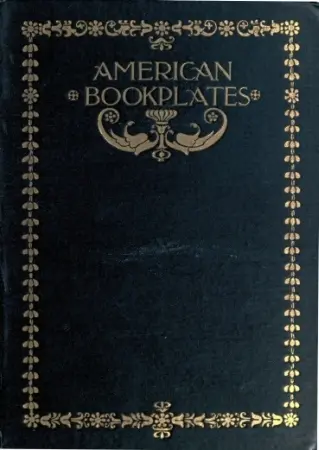
"American Book-Plates: A Guide to Their Study with Examples" by Charles Dexter Allen is a reference work on the artistic and historical study of book-plates, written in the late 19th century. This guide serves to explore the unique world of American ex-libris, highlighting their evolution and significance, while providing numerous illustrations of both rare and noteworthy examples. The book addresses not only the artistic styles but also the prominent figures associated with their production and use throughout American history. The opening of the book features a detailed preface in which the author acknowledges the contributions of prior scholars and collectors in the realm of book-plate studies. Allen emphasizes the growing interest in book-plates as part of American cultural heritage, and he frames his work as a pioneering effort to document and introduce the uniquely American aspects of this practice. He reflects on the transition from early imported designs to those crafted by native engravers in the U.S., distinguishing the regional styles emerging in different colonies. This introduction sets the stage for an in-depth exploration of various types of book-plates, their artistic styles, and their historical contexts, making the work not only informative but also a celebration of the craft of book-plate design.
Introduction adapted from the source catalogue; source summaries may be automatically generated.
Free to read · English · 83,261 words · No account needed
MAKE TIME FOR A GOOD BOOK
On by default. Untick to stop anonymous reading totals. Each page counts after 10 seconds in view. How this works.
Anonymous counting is on unless you have switched it off.
In Philadelphia were the Logans, Morgans, Powels, Banckers, and Hamiltons; while further South, the Lees, Lightfoots, Tayloes, Wormeleys, Pages, Cabels, Tubervilles, Armisteads, Byrds, Blands, Bollings, Dinwiddies, Fitzhughs, Hubards, Magills, and Randolphs used plates and were families of prominence and distinction.
Among the prominent Loyalists are Chalmers, Cooper, Hallowell, Hamilton, Livius, Lloyd, Oliver, and Robinson. Of titled Americans the following used book-plates: Fairfax, Gardiner, Murray of Dunmore, and the Pepperrell families.
Of the early authors we can mention Alsop, Antill, Bozman, Byrd, Dana, Key, Stith, and Abercrombie; of physicians, Assheton, Bond, Beatty, Holyoke, Middleton, and Jeffries; of the statesmen, Bayard, Carmichael, Dana, Duane, Gallatin, Jay, Lewis, Marshall, Norris, and Randolph.
Among the early clergymen can be named Apthorp, Boucher, Williams,
Jarvis, and Provoost.
Allen and Thomas, early printers; Aitkin, who made the first American edition of the Holy Bible; and Bartram, the great botanist, used plates, which are described in the list.
Bloomfield, Brearly, Banister, Chester, Eustace, Hale, Mercer, Schuyler, Sullivan, and Varick are among the soldiers of the Revolutionary army; and of the orators we have Otis and Randolph.
Coming now to the signers of the Declaration, we find that we know thus far the plates of eleven of them: John Adams, Charles Carroll, Samuel Chase, Thomas Hayward, William Hooper, Francis Hopkinson, Benjamin Rush, Richard Stockton, George Taylor, Oliver Wolcott, and George Wythe.
Surely the book-plates of all these men whose mention stirs patriotic feeling, are of exceeding interest, and worthy to rank with any in point of value and appreciation.
No book-plate, however, is of greater interest to the American collector than that of George Washington, not alone by reason of the prominence of that eminent man, but because of the scarcity of the plate, the high price it brings, and the interesting fact that it is the only American plate which has been deemed worthy of counterfeiting.
A genuine contemporary print of this plate is readily recognized by the connoisseur. The plate has no striking features, but is a regular design in the pure Chippendale style. The arms are displayed upon a shield of the usual shell-like form, and the sprays and rose branches of this style are used in the ornamentation of the sides of the escutcheon. The motto, Exitus acta probat, is given upon its ribbon at the base of the shield, and the name is engraved in script on
the bracket at the bottom of the design. In general appearance the plate is like scores of Chippendale plates of the period.
Your reading position is saved on this browser. Take it to another device with a library code. Reading pages adapt to text, rather than matching a printed edition.
BEHIND THE BOOK
This eBook is for the use of anyone anywhere in the United States and most other parts of the world at no cost and with almost no restrictions whatsoever. You may copy it, give it away or re-use it under the terms of the Project Gutenberg License included with this eBook or online at www.gutenberg.org. If you are not located in the United States, you will have to check the laws of the country where you are located before using this eBook. Read the source licence.
The original source file, including credits and licence, is retained by this library. Request an original-format copy at no charge. Please include the book title and Project Gutenberg identifier #47682.
KEEP YOUR CURIOSITY GOING
Cécile Tormay

Moritz Busch
John L. Ransom
Frances Wright
Cécile Tormay

Mabel Potter Daggett