THE CLASSIC COLLECTION✦An outlaw’s diary: the CommuneCLASSIC FREE BOOKS
An outlaw’s diary: the Commune
Cécile Tormay
THE CLASSIC COLLECTION · 1894
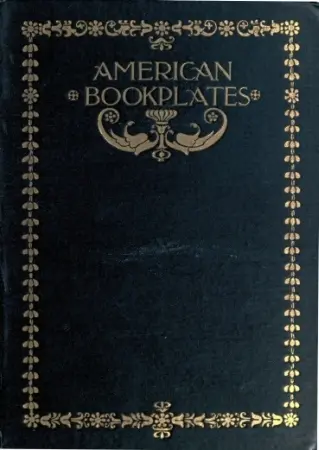
"American Book-Plates: A Guide to Their Study with Examples" by Charles Dexter Allen is a reference work on the artistic and historical study of book-plates, written in the late 19th century. This guide serves to explore the unique world of American ex-libris, highlighting their evolution and significance, while providing numerous illustrations of both rare and noteworthy examples. The book addresses not only the artistic styles but also the prominent figures associated with their production and use throughout American history. The opening of the book features a detailed preface in which the author acknowledges the contributions of prior scholars and collectors in the realm of book-plate studies. Allen emphasizes the growing interest in book-plates as part of American cultural heritage, and he frames his work as a pioneering effort to document and introduce the uniquely American aspects of this practice. He reflects on the transition from early imported designs to those crafted by native engravers in the U.S., distinguishing the regional styles emerging in different colonies. This introduction sets the stage for an in-depth exploration of various types of book-plates, their artistic styles, and their historical contexts, making the work not only informative but also a celebration of the craft of book-plate design.
Introduction adapted from the source catalogue; source summaries may be automatically generated.
Free to read · English · 83,261 words · No account needed
MAKE TIME FOR A GOOD BOOK
On by default. Untick to stop anonymous reading totals. Each page counts after 10 seconds in view. How this works.
Anonymous counting is on unless you have switched it off.
Naturally the artistic quality of a book-plate influences its value; the more elaborate designs are preferred to the plain armorials or the printed labels. Pictorial plates, introducing bits of landscape, interiors of libraries, or allegorical subjects, are sought for, as are plates which are accepted as particularly good types of the different styles. In addition to these technical reasons for valuing one plate more highly than another may be given others which will appear more reasonable perhaps to the general reader. All articles belonging to the noted men of the past have a certain antiquarian value greater than attaches to the kindred belongings of their contemporaries of lesser or no fame. So with book-plates.
A glance at the list will show a goodly number of names which we remember with pride and interest; the names of patriots, orators, lawyers, statesmen, officers of the army, officers of the state and nation, members of Congress, signers of the Declaration, governors, old-time merchants, authors, divines, physicians, and not a few of that plucky number who stood by the King in trying times--the American Loyalists. Quakers, too, as well as royal office-holders, and titled Americans are among those whose book-plates have come down to us.
Of our early Presidents, the plates of George Washington, John Adams, John Quincy Adams, and John Tyler are known to us. All of these except the last, which is a plain printed label, are armorial.
Members of the Boston Tea Party, of the Constitutional Convention, and of the early Assemblies are among those whose plates we know.
Of royal officers we have: Craven, one of the Lords Proprietors of South Carolina; Elliston, Collector of His Majesty’s Customs at New York; Sir William Keith, Governor of Pennsylvania; John Tabor Kempe, Attorney-General under the Crown at New York; and William Penn, Proprietor and Governor of the colony which bore his name.
Owners of large estates, employers of numbers of slaves, merchants whose vessels carried on a trade with remote and prosperous shores, and who established names that have endured, used book-plates which are still known to us. Among these are the plates from the following families, well-known in New England: Ames, Bowdoin, Cabot, Chandler, Chauncey, Coffin, Lodge, Lowell, Minot, Quincy, Sears, Winthrop, Barrell, Greene, Perkins, Swan, Vassall, and Vaughan.
Of those well-known in and about New York may be mentioned, Clinton, Colden, Constable, Cutting, De Peyster, Duer, Ellery, Goelet, Hoffman, Ogden, Paulding, Phillipse, Pintard, Van Cortlandt, and Van Rensselaer. To these should be added the Livingstons, which family had the largest number of book-plates of any we know.
Your reading position is saved on this browser. Take it to another device with a library code. Reading pages adapt to text, rather than matching a printed edition.
BEHIND THE BOOK
This eBook is for the use of anyone anywhere in the United States and most other parts of the world at no cost and with almost no restrictions whatsoever. You may copy it, give it away or re-use it under the terms of the Project Gutenberg License included with this eBook or online at www.gutenberg.org. If you are not located in the United States, you will have to check the laws of the country where you are located before using this eBook. Read the source licence.
The original source file, including credits and licence, is retained by this library. Request an original-format copy at no charge. Please include the book title and Project Gutenberg identifier #47682.
KEEP YOUR CURIOSITY GOING
Cécile Tormay

Moritz Busch
John L. Ransom
Frances Wright
Cécile Tormay

Mabel Potter Daggett