Fighting Germany’s Spies
French Strother
THE CLASSIC COLLECTION · 1921
"All in a Life-time" by Henry Morgenthau and French Strother is a memoir written in the early 20th century. The book chronicles the life experiences of Henry Morgenthau, providing insights into his personal journey from a childhood in Germany to becoming a prominent figure in American society, particularly during significant political events. The narrative explores Morgenthau's early years, his education, and his entry into various professional fields, including law and real estate, as well as his reflections on American culture and the immigrant experience. The opening of the memoir introduces readers to Morgenthau's childhood in Mannheim, Germany, where he describes the idyllic life and rich cultural experiences that shaped his early years. Recounting stories of family, education, and community, he poignantly reflects on the simplicity and contentment of his upbringing. However, a shift occurs when his family decides to emigrate to America due to economic challenges, leading to their adventurous journey across the Atlantic. The narrative sets the stage for Morgenthau’s transitions, detailing his initial impressions of America as he embarks on a quest for opportunity and a better future.
Introduction adapted from the source catalogue; source summaries may be automatically generated.
Free to read · English · 146,028 words · No account needed
MAKE TIME FOR A GOOD BOOK
On by default. Untick to stop anonymous reading totals. Each page counts after 10 seconds in view. How this works.
Anonymous counting is on unless you have switched it off.
Wilson, President Woodrow, presented with typewriter, 93;
defies state bosses, 122;
why attracted to, 128, 129;
at the Free Synagogue Dinner, 130;
taking Borah’s measure, 130;
Presidential candidacy, 132;
the hope of political regeneration, 135;
introduces Walter Hines Page, 136;
explanation of the “cocked-hat” letter, 140;
speech at Jackson Day Dinner, 143;
comment on Champ Clark-Col. Harvey episode, 149;
Campaign of 1912, 150;
asks reconsideration of refusal to accept
chairmanship of Finance Committee, 152;
elected President, 159;
asks acceptance of Ambassadorship of Turkey, 160;
instructions on leaving to assume post of Ambassador to Turkey, 175;
reëlection in 1916, not thought possible by party leaders, 234;
attitude toward New York Postmastership appointment, 238;
renominated at St. Louis Convention, 241;
election night returns
seem to show defeat, 246;
election assured, 248;
report to on trips to battle fronts, 274;
letter advising exposure of German intrigue, 297;
at Metropolitan Opera House gathering, 304;
attitude toward Lane as Director-General of International Red Cross, 318;
the hope of the Peace Conference, 323;
at signing of Peace Treaty, 336;
discuss Polish Mission with, and propose Armenian Mission to, 338;
cable to from America proposing this Mission, 339;
appoints commission to investigate treatment of Jews in Poland, 352;
insists on having a Jew on commission to investigate Polish pogroms, 354
Wilson, Mrs. Woodrow, claims the President’s typewriter, 93;
at signing of Peace Treaty, 336
Winthrop, Henry Rogers, on Board of Directors
of Metropolitan Opera Company, 100
Wise, Dr. Stephen S., speaks at Conried’s funeral, 105; urges acceptance of Ambassadorship to Turkey, 162; acquaints President Wilson with his plans for Zionism, 293
Wise Centenary Fund, Isaac M.,
speech at dinner of Executive Committee, 294
“Wish-bone speech” at Sulzer dinner, 169
Woerishoefer, Carola, 107
Wolff, Lucien, representing Jews of England at Peace Conference, 350
Woman’s activities in the war, 299
Women in Turkey, their position, 195
Woodruff, Lieutenant-Governor, at Roosevelt’s fusion meeting, 280
Wood, Sir Henry, 188
World, New York, danger of defection, owing to
Postmastership appointment, 238, 240
Yeaman, George H., 19, 30
Young Turks, government a failure, 196
Zermoysky, Countess, at reception in Warsaw, 364
Zionism, article in New York Times, 289;
a fallacy in Poland, 383;
a surrender not a solution, 385;
its economic aspect, 393;
its political foundations, 395;
a spiritual will-o’-the-wisp, 398
Zionists, their Nationalistic plans not favoured, 349; present their case to Mission at Warsaw, 363
[1] See Appendix No. 3, which contains this report.
[2] This chapter was written in June, 1921, and most of it was published in the World’s Work for July, 1921.
[3] Reprinted from the New York Times of November 9, 1919. Copyright, 1919, by the New York Times Company.
Your reading position is saved on this browser. Take it to another device with a library code. Reading pages adapt to text, rather than matching a printed edition.
French Strother
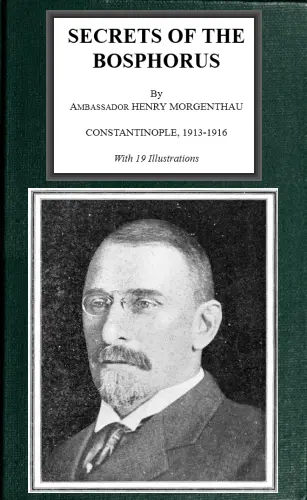
Henry Morgenthau
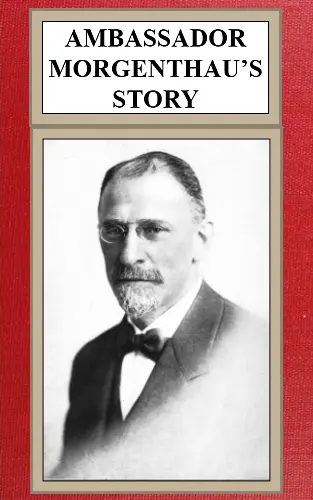
Henry Morgenthau
BEHIND THE BOOK
This eBook is for the use of anyone anywhere in the United States and most other parts of the world at no cost and with almost no restrictions whatsoever. You may copy it, give it away or re-use it under the terms of the Project Gutenberg License included with this eBook or online at www.gutenberg.org. If you are not located in the United States, you will have to check the laws of the country where you are located before using this eBook. Read the source licence.
The original source file, including credits and licence, is retained by this library. Request an original-format copy at no charge. Please include the book title and Project Gutenberg identifier #63538.
KEEP YOUR CURIOSITY GOING
Cécile Tormay

Moritz Busch
John L. Ransom
Frances Wright
Cécile Tormay

Mabel Potter Daggett