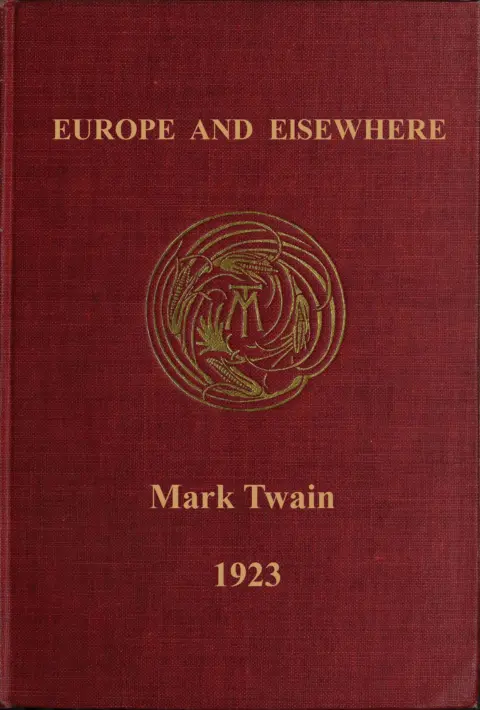
Europe and elsewhere
Mark Twain
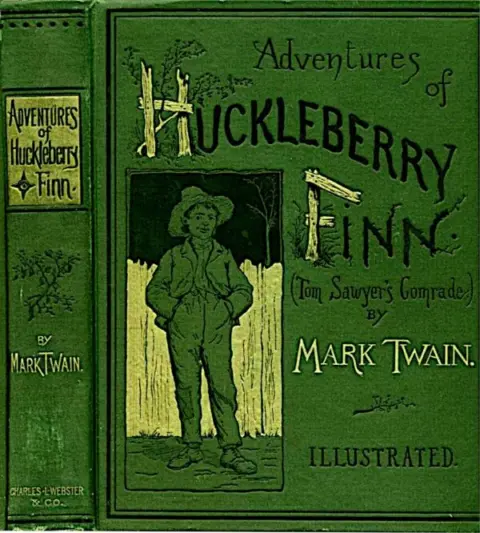
THE CLASSIC COLLECTION · 1884
"Adventures of Huckleberry Finn" by Mark Twain is a picaresque novel published in 1884-1885. Told in vernacular English, it follows young Huck Finn as he escapes his abusive father and flees down the Mississippi River with Jim, an enslaved man seeking freedom. Their journey brings encounters with feuding families, con artists, and moral dilemmas that challenge Huck's conscience. Set in the antebellum South, this sequel to "Tom Sawyer" is celebrated for its portrayal of boyhood and its satirical examination of racism and society.
Introduction adapted from the source catalogue; source summaries may be automatically generated.
Free to read · English · 116,563 words · No account needed
MAKE TIME FOR A GOOD BOOK
On by default. Untick to stop anonymous reading totals. Each page counts after 10 seconds in view. How this works.
Anonymous counting is on unless you have switched it off.
Jim pitied him ever so much, and so did I. We tried to comfort him, but he said it warn’t much use, he couldn’t be much comforted; said if we was a mind to acknowledge him, that would do him more good than most anything else; so we said we would, if he would tell us how. He said we ought to bow when we spoke to him, and say “Your Grace,” or “My Lord,” or “Your Lordship”—and he wouldn’t mind it if we called him plain “Bridgewater,” which, he said, was a title anyway, and not a name; and one of us ought to wait on him at dinner, and do any little thing for him he wanted done.
Well, that was all easy, so we done it. All through dinner Jim stood around and waited on him, and says, “Will yo’ Grace have some o’ dis or some o’ dat?” and so on, and a body could see it was mighty pleasing to him.
But the old man got pretty silent by-and-by—didn’t have much to say, and didn’t look pretty comfortable over all that petting that was going on around that duke. He seemed to have something on his mind. So, along in the afternoon, he says:
“Looky here, Bilgewater,” he says, “I’m nation sorry for you, but you ain’t the only person that’s had troubles like that.”
“No?”
“No you ain’t. You ain’t the only person that’s ben snaked down wrongfully out’n a high place.”
“Alas!”
“No, you ain’t the only person that’s had a secret of his birth.” And, by jings, he begins to cry.
“Hold! What do you mean?”
“Bilgewater, kin I trust you?” says the old man, still sort of sobbing.
“To the bitter death!” He took the old man by the hand and squeezed it, and says, “That secret of your being: speak!”
“Bilgewater, I am the late Dauphin!”
You bet you, Jim and me stared this time. Then the duke says:
“You are what?”
“Yes, my friend, it is too true—your eyes is lookin’ at this very moment on the pore disappeared Dauphin, Looy the Seventeen, son of Looy the Sixteen and Marry Antonette.”
“You! At your age! No! You mean you’re the late Charlemagne; you must be six or seven hundred years old, at the very least.”
“Trouble has done it, Bilgewater, trouble has done it; trouble has brung these gray hairs and this premature balditude. Yes, gentlemen, you see before you, in blue jeans and misery, the wanderin’, exiled, trampled-on, and sufferin’ rightful King of France.”
Your reading position is saved on this browser. Take it to another device with a library code. Reading pages adapt to text, rather than matching a printed edition.
BEHIND THE BOOK
This eBook is for the use of anyone anywhere in the United States and most other parts of the world at no cost and with almost no restrictions whatsoever. You may copy it, give it away or re-use it under the terms of the Project Gutenberg License included with this eBook or online at www.gutenberg.org. If you are not located in the United States, you will have to check the laws of the country where you are located before using this eBook. Read the source licence.
The original source file, including credits and licence, is retained by this library. Request an original-format copy at no charge. Please include the book title and Project Gutenberg identifier #76.
KEEP YOUR CURIOSITY GOING
Coulson Kernahan

Maurice Baring
Frances Wright
Cécile Tormay

Frederic Jesup Stimson

W. H. P. (William Henry Pope) Jarvis