
Letters of Marque
Rudyard Kipling
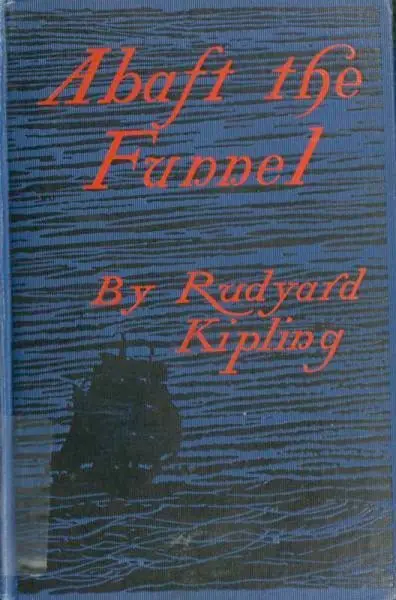
THE CLASSIC COLLECTION · 1909
"Abaft the Funnel" by Rudyard Kipling is a collection of short stories written in the early 20th century. This compilation features tales primarily set in maritime environments, reflecting Kipling's observations and experiences from his time spent in the British Raj and on the high seas. The stories include vibrant characters and scenarios that explore themes of adventure, humor, and the human condition, emphasizing the nuances of life aboard ships and in colonial settings. At the start of the book, readers are introduced to a range of lively characters aboard various ships, including a humorous incident involving a cat named Erastasius who has a penchant for mischief. The narrative delves into the day-to-day life aboard the ship "Whanghoa", showcasing the interactions between the crew and passengers, along with the cat’s amusing antics. Kipling sets a tone that blends quirky humor with vivid storytelling, striking a balance between light-heartedness and deeper reflections on the lives of those at sea. This opening portion captivates readers with its charm and invites them to delve into more tales that promise a mix of adventure and insight.
Introduction adapted from the source catalogue; source summaries may be automatically generated.
Free to read · English · 61,171 words · No account needed
MAKE TIME FOR A GOOD BOOK
On by default. Untick to stop anonymous reading totals. Each page counts after 10 seconds in view. How this works.
Anonymous counting is on unless you have switched it off.
It is Sir Wollobie; the ex-Everything!
Also the ex-Everything else!
Figure you the situation!
He clasps my hand.
As a child clasps the hand of its nurse.
He demands of me particular rensignments of my health. It is to him a
matter important.
Other time he regulated the health of forty-five millions.
I riposte. I enquire of his liver--his pancreas, his abdomen.
The sacred internals of Sir Wollobie!
He has them all. And they all make him ill.
He is very lonely. He speaks of his wife. There is no Lady Wollobie, but a woman in a flat in Bayswater who cries in her sleep for more curricles.
He does not say this, but I understand.
He derides the Council of the Indian Office. He imprecates the
Government.
He curses the journals.
He has a clob. He curses that clob.
Females with teeth monstrous explain to him the theory of Government.
Men of long hair, the psychologues of the paint-pots, correct him
tenderly, but from above.
He has known of the actualities of life--Death, Power, Responsibility, Honour--the Good accomplished, the effacement of Wrong for forty years.
There remains to him a seat in a penny 'bus.
If I do not take him from that.
I rap my heels on the knife-board. I sing "tra la la." I am also well
disposed to larmes.
He courbes himself underneath an ulstaire and he damns the fog to
eternity.
He wills not that I leave him. He desires that I come to dinner.
I am grave. I think upon Lady Wollobie--shorn of chaprassies--at the
Clob. Not in Bayswater.
I accept. He will bore me affreusely, but ... I have taken his seat.
He descends from the tumbril of his humiliation, and the street hawker rolls a barrow up his waistcoat.
Then intervenes the fog--dense, impenetrable, hopeless, without end.
It is because of the fog that there is a drop upon the end of my nose
so chiselled.
Gentlemen the Governors, the Lieutenant-Governors and the Commissaires, behold the doom prepared.
I am descended to the gates of your Life in Death. Which is Brompton or
Bayswater.
You do not believe? You will try the constituencies when you return; is
it not so?
You will fail. As others failed.
Your seat waits you on the top of an Omnibuse Proletariat.
I shall be there.
You will embrace me as a shipwrecked man embraces a log. You will be
"dam glad t' see me."
I shall grin.
Oh Life! Oh Death! Oh Power! Oh Toil! Oh Hope! Oh Stars! Oh Honour! Oh Lodgings! Oh Fog! Oh Omnibuses! Oh Despair! Oh Skittles!
[Footnote 8: "Turnovers," Vol. VIII.]
Your reading position is saved on this browser. Take it to another device with a library code. Reading pages adapt to text, rather than matching a printed edition.
Rudyard Kipling

Rudyard Kipling
Rudyard Kipling

Rudyard Kipling
BEHIND THE BOOK
This eBook is for the use of anyone anywhere in the United States and most other parts of the world at no cost and with almost no restrictions whatsoever. You may copy it, give it away or re-use it under the terms of the Project Gutenberg License included with this eBook or online at www.gutenberg.org. If you are not located in the United States, you will have to check the laws of the country where you are located before using this eBook. Read the source licence.
The original source file, including credits and licence, is retained by this library. Request an original-format copy at no charge. Please include the book title and Project Gutenberg identifier #59332.
KEEP YOUR CURIOSITY GOING
Coulson Kernahan

Maurice Baring
Frances Wright
Cécile Tormay

Frederic Jesup Stimson

W. H. P. (William Henry Pope) Jarvis