THE CLASSIC COLLECTION✦Found in the Philippines: The Story of a Woman’s LettersCLASSIC FREE BOOKS
Found in the Philippines: The Story of a Woman’s Letters
Charles King
THE CLASSIC COLLECTION · 1898
"A Wounded Name" by Captain Charles King is a novel written in the late 19th century. The story unfolds in the arid landscapes of Arizona, focusing on Lieutenant Gerald Blake, an officer in the U.S. Army, who is dealing with the aftermath of a romantic betrayal. As Blake grapples with his past and the harsh realities of frontier life, he becomes embroiled in the adventures and intrigues surrounding a dubious fellow officer, Captain Nevins, whose dishonest dealings and eventual downfall impact everyone connected to him. The opening of the novel introduces us to the dusty, lawless world of Arizona through various characters, including Blake, who longs for distance from the romantic woes that haunt him. We meet Sancho, a ranch-keeper entangled in the chaos, and Pedro, his mischievous half-breed associate. The narrative captures Blake's cynical approach to his bleak posting after a love affair has gone sour, setting a backdrop of tension and adventure. As the stagecoach rolls into view, it hints at the arrival of important characters and developments that will deepen the plot and complicate the lives of those involved. The dynamics between soldiers, private interests, and local characters are layered, suggesting a world where trust is scarce and the deserts hold more than just land—there are secrets waiting to unfold.
Introduction adapted from the source catalogue; source summaries may be automatically generated.
Free to read · English · 60,689 words · No account needed
MAKE TIME FOR A GOOD BOOK
On by default. Untick to stop anonymous reading totals. Each page counts after 10 seconds in view. How this works.
Anonymous counting is on unless you have switched it off.
The sutler's "shack" at Camp Cooke was crowded with officers that evening and the episode of Nevins' address was the talk of all tongues. Certain civilians were there, too, frequenters of Sancho's place, but they were silent, observant and unusually abstemious. To say that Nevins had astonished everybody by an exhibition of feeling and an access of conscience would be putting it mildly. But the fact was indisputable. He himself, after adjournment, exhibited to the interrogative major two long letters, recently received from San Francisco, in graceful feminine hand, and signed "Your sad but devoted wife, Naomi." One of these referred to Lieutenant Loring, "whom Geraldine met at West Point and saw frequently the summer and fall that followed his graduation."
There were members of the court who sought to hear what Loring had to say on the subject, but he proved unapproachable. All men noted the amaze--indeed, the shock--that resulted from Nevins' public and somewhat abrupt mention of the sister's name. The judge advocate sat for a moment as though stricken dumb, his eyes fixed and staring, his face pallid, the muscles of his compressed lips twitching perceptibly, his hand clinched and bearing hard upon the table. There were few army women at Camp Cooke in those days, only two or three veteran campaigners and one misguided bride, but had the post been full of them there could hardly have been curiosity more lively than was exhibited by most of the court all that long afternoon and evening. Conjecture, comment, suggestion passed from, lip to lip. One or two men even went so far as to drop in at the tent assigned to the lonely accused and after expressing interest and sympathy and a desire to see that he got "fair play and a fresh start," they ventured to inquire if Nevins knew why Mr. Loring had been so much astonished, if not overcome, by the mention of the name of Nevins' sister-in-law. Nevins didn't know, but at that moment he would have given his hopes of mercy to find out. He was writing to his wife when his visitors came, and demanding explanation. He could think of several possibilities, any one of which in his unenlightened mind might give him a claim, even a hold on the hitherto intractable West Pointer. Why, why had he not heard or dreamed before this long trial came to its dramatic close that there was some strong and mysterious connection between him and Loring, between prosecutor and accused? The one plausible theory was that Loring and Geraldine were or had been affianced. From all his wife had told him in their few days of moderate content and apparent bliss, he knew Geraldine to be beautiful, gifted and attractive to any man, despite her poverty. That she had been petted and spoiled, that she was selfish to the core, grasping and ambitious, he had never heard, yet might have inferred from Naomi's faltering pleas on her sister's behalf early in the days of their wedded life. In his eagerness to learn something of the truth he sent a messenger during the afternoon, after the final adjournment, and begged that Mr. Loring should come to see him. The reply was that Mr. Loring would do so later. Only two men succeeded in seeing Loring that afternoon and evening, the post commander, Major Stark, at whose quarters he was housed, and the veteran president of the court. On the plea of being very busy writing the record of the week's session, he had excused himself to everybody else. There had been something of a scene before the adjournment that morning. The court was ordered to try "such other prisoners as might properly be brought before it," and it was understood that two deserters, captured at Tucson, had announced their intention of pleading guilty and throwing themselves on the mercy of the court. Higgins had been sent to Fort Yuma. It would take long weeks to get the evidence in his case from New Orleans, but the two victims at Cooke knew well that their case was clear. There was no use in fighting. The sooner they were tried the shorter term would they serve as prisoners. Nevins finished at ten o'clock. Loring's brief stupefaction was conquered not without evident effort. Vouchsafing no response to the plea of the accused for mercy, he announced that he submitted the case without remark, and the president nodded to Nevins the intimation that he might retire. Nevins slowly gained his feet, took a long look about the silent array, hesitated, and then with his eyes on Loring said:
Your reading position is saved on this browser. Take it to another device with a library code. Reading pages adapt to text, rather than matching a printed edition.
Charles King

Charles King
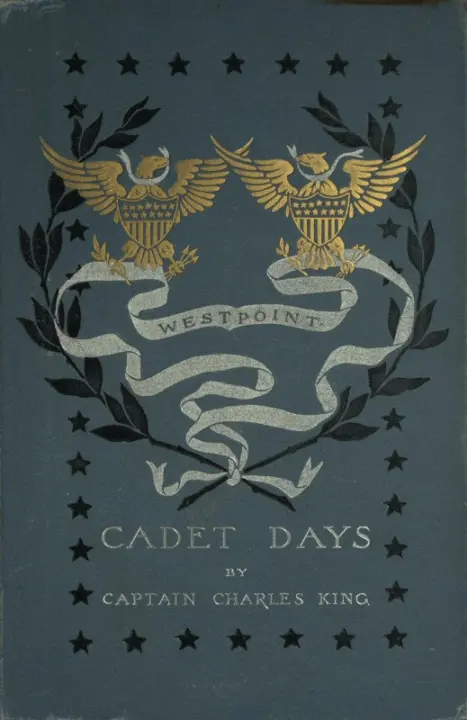
Charles King

Charles King
BEHIND THE BOOK
This eBook is for the use of anyone anywhere in the United States and most other parts of the world at no cost and with almost no restrictions whatsoever. You may copy it, give it away or re-use it under the terms of the Project Gutenberg License included with this eBook or online at www.gutenberg.org. If you are not located in the United States, you will have to check the laws of the country where you are located before using this eBook. Read the source licence.
The original source file, including credits and licence, is retained by this library. Request an original-format copy at no charge. Please include the book title and Project Gutenberg identifier #21345.
KEEP YOUR CURIOSITY GOING
Coulson Kernahan

Maurice Baring
Frances Wright
Cécile Tormay

Frederic Jesup Stimson

W. H. P. (William Henry Pope) Jarvis