
Last letters from the living dead man
David Patterson (Spirit) Hatch
THE CLASSIC COLLECTION · 1900
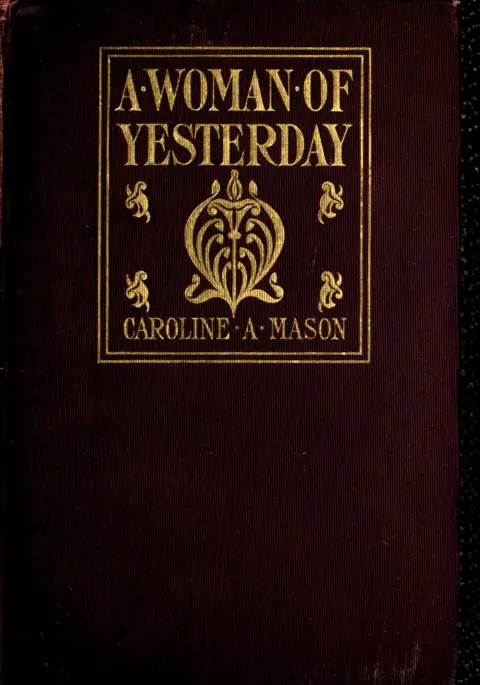
"A Woman of Yesterday" by Caroline Atwater Mason is a novel written in the late 19th century. The story centers around Anna Mallison, a reflective and earnest young woman whose life is interwoven with themes of religious devotion, personal sacrifice, and the quest for identity. Set against the backdrop of a small Vermont village in 1869, Anna prepares for a significant moment in her life—the day she will be received into the church, which she sees as a pivotal transition marking the end of her childhood and the beginning of a more solemn and self-examining adult life. The opening portion introduces Anna as she quietly navigates her surroundings, revealing her internal struggles and aspirations. She is depicted as thoughtful and somewhat conflicted about her place in the world, particularly in the face of her father's stern yet loving guidance. The narrative provides glimpses into her character development as she grapples with the expectations of religion, her love for poetry, and the emotional legacy of her father's former passion for literature, which he abandoned for a religious life. As Anna prepares for her church admission, she contemplates the weight of her choices and the spiritual conflict that fuels her journey toward self-discovery and commitment to serving others.
Introduction adapted from the source catalogue; source summaries may be automatically generated.
Free to read · English · 100,253 words · No account needed
MAKE TIME FOR A GOOD BOOK
On by default. Untick to stop anonymous reading totals. Each page counts after 10 seconds in view. How this works.
Anonymous counting is on unless you have switched it off.
“Yes, it is hard,” Gregory repeated, his eyes resting on her face with that sympathetic response to her thought which, she was startled to find, could still stir the old warm tremor in her heart; “but I can wait, can’t you? You can if you believe, as we are bound to believe, in a ‘divine event toward which the whole creation moves.’ I believe, I thank God, also, that, unworthy and powerless as I am in this marred soul and destroyed body of me, I can still hope, still work, still greet the unseen and expect the impossible.”
They talked long, and Anna rose at last to go.
“Oh, you will be leaving now!” John Gregory cried, as if he had forgotten that she did not belong to Fraternia.
“Yes,” Anna said gently, “I am to return to Spalding in an hour for the night, and I start home from there in the morning.”
“Yes,” he said, “that is right. You must go;” but with the thought all colour left his face, and his breath came hard and fast. She saw the physical change in him then. She had hardly seen it before.
“Can I help you? Can I bring you anything you need?” she asked quickly.
He pointed to a glass on the mantel, and said, smiling faintly:—
“It is so new to make others wait on me. It is not quite easy to lie here and submit to be served,—even by you, Benigna.”
As she brought him the glass, the simple act of service bore with it a peculiar power of suggestion and produced upon Anna herself an effect far beyond its apparent importance; for, as she thus served Gregory in his helplessness, a wave of yearning compassion and pure womanly tenderness broke over her heart. He would lie here for years, perhaps, prostrate, defeated, suffering, and she who had so loved him would go her way and leave him alone and uncomforted! Could it be right?
Before the imperious power of this question all other motives lost their
significance.
Gregory had recovered from the sharpest effect of his agitation, and raised his eyes again, full of patient and quiet sorrow.
“Tell me,” she cried low and breathlessly, “shall I stay? I said I wished only to go where was most need of me. Is it here? Oh, I trust you wholly now, John Gregory! If you need my service, I will serve you while we both live.”
Then, as they faced each other with looks of solemn question, Anna saw into the depth of the man’s strong spirit, and she was prepared for what would follow.
Your reading position is saved on this browser. Take it to another device with a library code. Reading pages adapt to text, rather than matching a printed edition.
BEHIND THE BOOK
This eBook is for the use of anyone anywhere in the United States and most other parts of the world at no cost and with almost no restrictions whatsoever. You may copy it, give it away or re-use it under the terms of the Project Gutenberg License included with this eBook or online at www.gutenberg.org. If you are not located in the United States, you will have to check the laws of the country where you are located before using this eBook. Read the source licence.
The original source file, including credits and licence, is retained by this library. Request an original-format copy at no charge. Please include the book title and Project Gutenberg identifier #63526.
KEEP YOUR CURIOSITY GOING
David Patterson (Spirit) Hatch

David Patterson (Spirit) Hatch

David Patterson (Spirit) Hatch
Cécile Tormay

Moritz Busch
Coulson Kernahan