
Last letters from the living dead man
David Patterson (Spirit) Hatch
THE CLASSIC COLLECTION · 1900
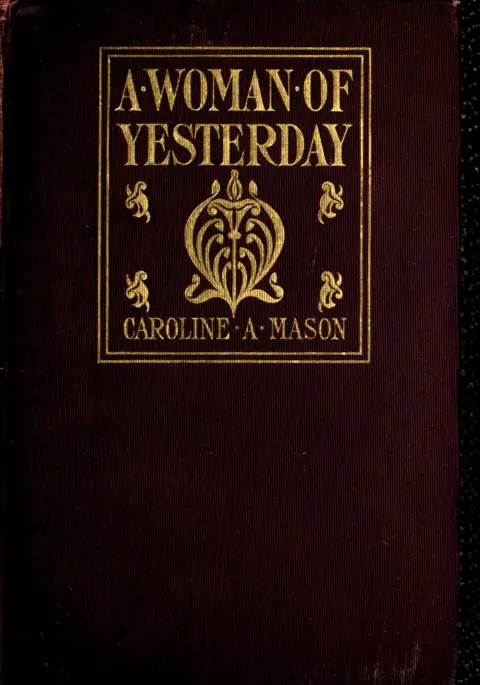
"A Woman of Yesterday" by Caroline Atwater Mason is a novel written in the late 19th century. The story centers around Anna Mallison, a reflective and earnest young woman whose life is interwoven with themes of religious devotion, personal sacrifice, and the quest for identity. Set against the backdrop of a small Vermont village in 1869, Anna prepares for a significant moment in her life—the day she will be received into the church, which she sees as a pivotal transition marking the end of her childhood and the beginning of a more solemn and self-examining adult life. The opening portion introduces Anna as she quietly navigates her surroundings, revealing her internal struggles and aspirations. She is depicted as thoughtful and somewhat conflicted about her place in the world, particularly in the face of her father's stern yet loving guidance. The narrative provides glimpses into her character development as she grapples with the expectations of religion, her love for poetry, and the emotional legacy of her father's former passion for literature, which he abandoned for a religious life. As Anna prepares for her church admission, she contemplates the weight of her choices and the spiritual conflict that fuels her journey toward self-discovery and commitment to serving others.
Introduction adapted from the source catalogue; source summaries may be automatically generated.
Free to read · English · 100,253 words · No account needed
MAKE TIME FOR A GOOD BOOK
On by default. Untick to stop anonymous reading totals. Each page counts after 10 seconds in view. How this works.
Anonymous counting is on unless you have switched it off.
I took the power in my hand
And went against the world;
’Twas not so much as David had,
But I was twice as bold.
I aimed my pebble, but myself
Was all the one that fell.
Was it Goliath was too large,
Or only I too small?
—EMILY DICKINSON.
We all have need of that prayer of the Breton mariner, “Save us, O God! Thine ocean is so large and our little boats are so small.”—FARRAR.
“Trunks checked for Utopia! Direct passenger route without change of cars! Ye gods, it doth amaze me!”
Thus Professor Ward, with a sardonic and yet discomfited smile, standing in the studio of his friend Pierce Everett, in Fulham. The room was in the disorder of a radical breaking up; packing boxes standing about and litter strewn everywhere.
Everett in his shirt sleeves was piling on a table a mass of draperies which he had taken from the wall. He was covered with dust, but his face was full of joyous excitement.
“Yes, my good friend—straight for Utopia now!
“‘Get on board, chil’en,
Get on board, chil’en,
For there’s room for many a more.’”
Everett trolled out the old negro chorus with hilarious enjoyment.
“Quos Deus vult perdere—” began Ward, grimly.
“Oh, we’re all mad, you know. We are simply not so mad as the rest of you,” interrupted Everett, gayly. “We have intervals of sanity, and are taking advantage of one of them to get out of the mad-house, leaving you other fellows to keep up your unprofitable strife with phantoms by yourselves, while we actually—yes, we even dare to believe it—live. Think of that, Ward, if you have the imagination!” Ward shook his head. “No, you haven’t; that is so. If you had, you could not have listened to Gregory unmoved.”
“Confound Gregory,” muttered Ward. “What did you ever get the man here for, turning our world upside down!”
“That has been the occupation of seers and prophets from the beginning, I believe,” retorted Everett, carelessly.
“Seers and prophets!” cried Ward, angrily, “that is what I can stand least of all. This posing as a kind of nineteenth century John the Baptist strikes me as exquisitely ridiculous.”
Everett’s eyes flashed dangerously, but he made no rejoinder.
“I saw your John the Baptist this morning in the Central Station buying his railway ticket and morning paper like any other average man. The locusts and wild honey were not in evidence.”
“No, he doesn’t take nourishment habitually in railway stations,” put in
Everett, coolly.
Your reading position is saved on this browser. Take it to another device with a library code. Reading pages adapt to text, rather than matching a printed edition.
BEHIND THE BOOK
This eBook is for the use of anyone anywhere in the United States and most other parts of the world at no cost and with almost no restrictions whatsoever. You may copy it, give it away or re-use it under the terms of the Project Gutenberg License included with this eBook or online at www.gutenberg.org. If you are not located in the United States, you will have to check the laws of the country where you are located before using this eBook. Read the source licence.
The original source file, including credits and licence, is retained by this library. Request an original-format copy at no charge. Please include the book title and Project Gutenberg identifier #63526.
KEEP YOUR CURIOSITY GOING
David Patterson (Spirit) Hatch

David Patterson (Spirit) Hatch

David Patterson (Spirit) Hatch
Cécile Tormay

Moritz Busch
Coulson Kernahan