
Last letters from the living dead man
David Patterson (Spirit) Hatch
THE CLASSIC COLLECTION · 1900
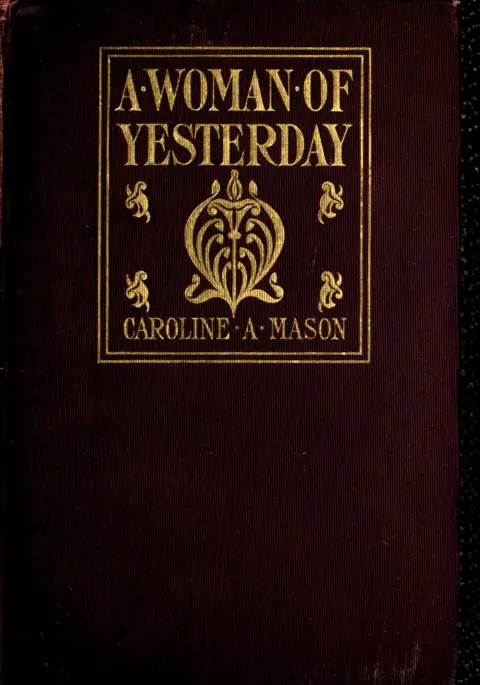
"A Woman of Yesterday" by Caroline Atwater Mason is a novel written in the late 19th century. The story centers around Anna Mallison, a reflective and earnest young woman whose life is interwoven with themes of religious devotion, personal sacrifice, and the quest for identity. Set against the backdrop of a small Vermont village in 1869, Anna prepares for a significant moment in her life—the day she will be received into the church, which she sees as a pivotal transition marking the end of her childhood and the beginning of a more solemn and self-examining adult life. The opening portion introduces Anna as she quietly navigates her surroundings, revealing her internal struggles and aspirations. She is depicted as thoughtful and somewhat conflicted about her place in the world, particularly in the face of her father's stern yet loving guidance. The narrative provides glimpses into her character development as she grapples with the expectations of religion, her love for poetry, and the emotional legacy of her father's former passion for literature, which he abandoned for a religious life. As Anna prepares for her church admission, she contemplates the weight of her choices and the spiritual conflict that fuels her journey toward self-discovery and commitment to serving others.
Introduction adapted from the source catalogue; source summaries may be automatically generated.
Free to read · English · 100,253 words · No account needed
MAKE TIME FOR A GOOD BOOK
On by default. Untick to stop anonymous reading totals. Each page counts after 10 seconds in view. How this works.
Anonymous counting is on unless you have switched it off.
“Having it in his power,” Gregory continued, with the same incisive deliberation, “to extricate us from our whole present difficulty himself, with the utmost ease, he yet jogs about the country after a comfortable fashion, presenting the subject publicly as occasion offers, and sends me back such letters as this.”
Lifting the sheet in his hand, Gregory read from it:—
“I held a meeting last night in Grand Rapids, to which I have been working up carefully for over a week through the press, etc. The attendance was fair, and the people listened well. I regret, however, to be obliged to report that the practical results of the meeting were not all that we could have wished—” and dropping the letter, Gregory added:—
“And so on, copiously, through nearly four pages of matchless ambiguity and polite phrases, which could all have been condensed to the usual sum total of his reports; thus far, nothing!”
“Still, Mr. Gregory, we must remember that he did pretty well for the
first few weeks.”
“Yes,” said Gregory, nodding a short assent, “while he was covering the field which was ready for harvest—seeing the men already committed to the cause. We can evidently expect nothing more from him. What kind of a speaker is he, Everett?”
“Good, really very good as a special pleader. He had very fair success when he was missionary secretary.”
“I wonder at it,” murmured Gregory,—“a mild, prudent little man like that with his perpetual fears and scruples; I cannot fancy his ever letting himself go.”
Everett, unwontedly sober and silent, worked on. Gregory paced the room for a little while. He wanted to ask Everett how Keith’s marriage with a woman like Anna could ever have come about, but he could not bring himself to frame the question, and presently left the studio.
Hanging about the door below, Gregory found Barnabas Rosenblatt, apparently waiting to speak with him.
“Hello!” said Gregory, not unkindly, but shortly. “Do you want me?”
“Well, shust a minit, if Herr Gregory vas not too busy,” and the little Jew shuffled along by Gregory’s side until they reached the door of the cabin.
Gregory brought his visitor in and gave him a chair, then stirred up a smouldering fire and threw on a piece of pine, which, flaring up into a sudden blaze, made other light unnecessary. The reflection of the yellow flames played weirdly over the walls, and Barnabas seemed unable to withdraw his eyes from the picture above the chimney.
“Our lady,” he said simply, nodding across at Gregory, and closing his
eyes impressively.
“Well, Barnabas, what is it you want?” asked his host.
Your reading position is saved on this browser. Take it to another device with a library code. Reading pages adapt to text, rather than matching a printed edition.
BEHIND THE BOOK
This eBook is for the use of anyone anywhere in the United States and most other parts of the world at no cost and with almost no restrictions whatsoever. You may copy it, give it away or re-use it under the terms of the Project Gutenberg License included with this eBook or online at www.gutenberg.org. If you are not located in the United States, you will have to check the laws of the country where you are located before using this eBook. Read the source licence.
The original source file, including credits and licence, is retained by this library. Request an original-format copy at no charge. Please include the book title and Project Gutenberg identifier #63526.
KEEP YOUR CURIOSITY GOING
David Patterson (Spirit) Hatch

David Patterson (Spirit) Hatch

David Patterson (Spirit) Hatch
Cécile Tormay

Moritz Busch
Coulson Kernahan