
Last letters from the living dead man
David Patterson (Spirit) Hatch
THE CLASSIC COLLECTION · 1900
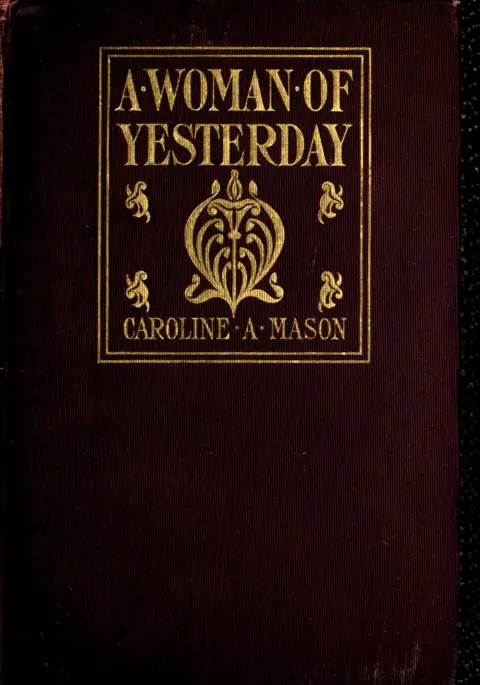
"A Woman of Yesterday" by Caroline Atwater Mason is a novel written in the late 19th century. The story centers around Anna Mallison, a reflective and earnest young woman whose life is interwoven with themes of religious devotion, personal sacrifice, and the quest for identity. Set against the backdrop of a small Vermont village in 1869, Anna prepares for a significant moment in her life—the day she will be received into the church, which she sees as a pivotal transition marking the end of her childhood and the beginning of a more solemn and self-examining adult life. The opening portion introduces Anna as she quietly navigates her surroundings, revealing her internal struggles and aspirations. She is depicted as thoughtful and somewhat conflicted about her place in the world, particularly in the face of her father's stern yet loving guidance. The narrative provides glimpses into her character development as she grapples with the expectations of religion, her love for poetry, and the emotional legacy of her father's former passion for literature, which he abandoned for a religious life. As Anna prepares for her church admission, she contemplates the weight of her choices and the spiritual conflict that fuels her journey toward self-discovery and commitment to serving others.
Introduction adapted from the source catalogue; source summaries may be automatically generated.
Free to read · English · 100,253 words · No account needed
MAKE TIME FOR A GOOD BOOK
On by default. Untick to stop anonymous reading totals. Each page counts after 10 seconds in view. How this works.
Anonymous counting is on unless you have switched it off.
Turning about, thus facing the great congregation, Anna, who had never before spoken in a public gathering of any sort, however small, said in a voice which was clear and distinct, though not loud:—
“I wish to offer myself to this society to go, if they will send me, to some heathen people, to tell them that Christ has died to save them. I am ready to go at once, if it is thought best.”
The gravity and simplicity, and absence of self-consciousness, of the girl’s words and bearing, and the profound sympathy of the people who saw and heard her, combined to produce an overpowering impression. As the meeting broke up, women were weeping all over the house, and sturdy unemotional men were deeply moved.
Anna, seeing that many would surround her and speak their sympathy or give their praise, which she dreaded and feared to hear, turned with swift steps to the door nearest her, and so escaped into the outer darkness of the night, no one following.
But, as she hurried with light steps across the village green and reached the parsonage gate, she found Mally waiting to waylay her.
“Oh, Anna,” she cried, and her tears flowed fast, “you will go away from me, from all of us! How can you put this great distance between us?”
“How can I do anything else, Mally?” Anna answered softly. “It is what I have been waiting for; I think I was never truly happy until to-night. All my life before I have been unsatisfied, and something has ached and hurt whenever I stopped to feel it.”
“And to-night you are really happy?” cried her friend, half enviously, and yet by no means drawn to devote herself to the medley of crocodiles, dark-skinned babies, and cars of Juggernaut, which signified India to her mind.
“Oh, at last!” Anna exclaimed, and with a long breath of relief. “Will it not bring peace, Mally, to know that I am surely doing His will? It will be like pure sunshine after living in a fog these past years.”
“Then weren’t you really happy when you were converted and joined the church?” asked Mally, naïvely.
“Partly. But just to be happy because you are saved yourself—why, it does not last. And you know, dear, we could never find anybody’s soul to work for here in Haran; at least, we didn’t know how,” and Anna became silent, the vision of one solitary outcast coming before her, with whom she had been forbidden even to speak. But Mally refused to be comforted thus, and went her way with many tears.
Your reading position is saved on this browser. Take it to another device with a library code. Reading pages adapt to text, rather than matching a printed edition.
BEHIND THE BOOK
This eBook is for the use of anyone anywhere in the United States and most other parts of the world at no cost and with almost no restrictions whatsoever. You may copy it, give it away or re-use it under the terms of the Project Gutenberg License included with this eBook or online at www.gutenberg.org. If you are not located in the United States, you will have to check the laws of the country where you are located before using this eBook. Read the source licence.
The original source file, including credits and licence, is retained by this library. Request an original-format copy at no charge. Please include the book title and Project Gutenberg identifier #63526.
KEEP YOUR CURIOSITY GOING
David Patterson (Spirit) Hatch

David Patterson (Spirit) Hatch

David Patterson (Spirit) Hatch
Cécile Tormay

Moritz Busch
Coulson Kernahan