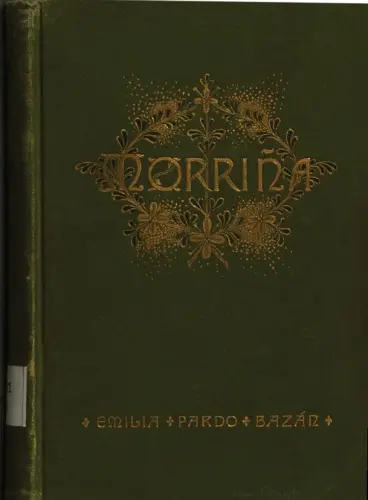
Morriña (Homesickness)
Emilia, condesa de Pardo Bazán
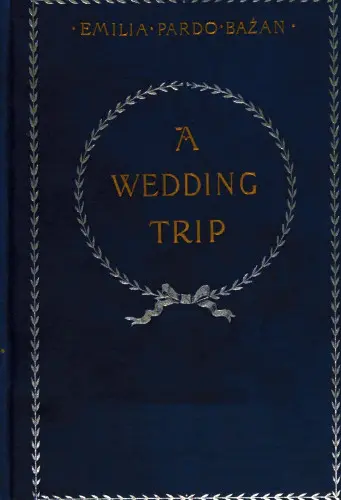
THE CLASSIC COLLECTION · 1891
"A Wedding Trip" by Emilia Pardo Bazán is a novel likely written in the late 19th century. The story revolves around Lucía, a young bride, as she embarks on her journey with her husband, Aurelio Miranda, after a marriage marked by various social dynamics and familial connections. The narrative explores themes of class, relationships, and the expectations surrounding marriage, especially for young women in that era. The opening of the story vividly sets the scene for Lucía's wedding day, illustrating the contrasting social backgrounds of the bride and groom, alongside the emotional farewells exchanged with family. We see Lucía, a figure of robust youth and grace, feeling the weight of her new position while expressing innocence and apprehension about the transition into married life. The departure at the railway station captures a poignant moment of change, with Lucía's tears juxtaposed against her excitement for the adventures ahead. As the couple sets off towards France, the narrative hints at the complexities of their relationship and the challenges that lie ahead, establishing tension about Lucía's path as she navigates her new life.
Introduction adapted from the source catalogue; source summaries may be automatically generated.
Free to read · English · 77,016 words · No account needed
MAKE TIME FOR A GOOD BOOK
On by default. Untick to stop anonymous reading totals. Each page counts after 10 seconds in view. How this works.
Anonymous counting is on unless you have switched it off.
“Shall I, Señorito Ignacio?”
Artegui shrugged his shoulders. Sardiola, taking this for a sign of
assent, launched forth:
“The young lady looks as if she were never out of temper, and you--you are always as if you had just received a beating. In that you would not be a very good match for each other.”
Lucía burst into a laugh and looked at Artegui, who smiled indulgently, which encouraged her to laugh still more. The breakfast proceeded in the same cordial manner, animated by Sardiola’s chatter and by the infantile delight of Lucía. On their return to the cars the waiter accompanied them to the very door of the compartment and, had Lucía been owner of the arms of Artegui, she would have thrown them around Sardiola’s neck when the latter repeated, raising his eyes to heaven, and in the tone in which one prays, when one prays in earnest:
“The Virgin of Begoña be with you, Señorito--God grant that you may find Doña Armanda well--command me as if I were a dog, your dog. Remember that I am here at your service.”
“Thank you,” said Artegui, assuming once more his habitual look of
gloomy reserve.
The train started and Sardiola remained standing on the platform waving an adieu with his napkin, without changing his attitude, until the smoke of the engine had vanished on the horizon. Lucía looked at Artegui and questions crowded to her lips.
“That poor man is greatly attached to you,” she said at last.
“I was so unfortunate as to render him a service at one time,” answered Ignacio, “and since then----”
“Hear that! and you call that a misfortune. Well, then, you have been very unfortunate ever since this morning, for you have rendered me a hundred services already.”
Artegui smiled again as he looked at the young girl.
“The misfortune does not consist,” he said, “in rendering a service, but in the recipient showing so much gratitude.”
“Well, then, I too suffer from the same disease as Sardiola, and I am not ashamed of it,” declared Lucía; “you shall see by and by.”
“Bah! all that is wanting is that I should have people grateful to me without cause,” responded Artegui, in the same festive tone. “It is not so bad when there is some motive for gratitude, as in the case of that poor Sardiola.”
“What did you do for him?” asked Lucía, unable to keep her inquisitive
lips closed.
“Not much. I cured him of a wound--a rather serious one.”
“The wound that left that scar on his cheek?”
“Yes.”
“Are you a doctor?”
Your reading position is saved on this browser. Take it to another device with a library code. Reading pages adapt to text, rather than matching a printed edition.
Emilia, condesa de Pardo Bazán
Emilia, condesa de Pardo Bazán
BEHIND THE BOOK
This eBook is for the use of anyone anywhere in the United States and most other parts of the world at no cost and with almost no restrictions whatsoever. You may copy it, give it away or re-use it under the terms of the Project Gutenberg License included with this eBook or online at www.gutenberg.org. If you are not located in the United States, you will have to check the laws of the country where you are located before using this eBook. Read the source licence.
The original source file, including credits and licence, is retained by this library. Request an original-format copy at no charge. Please include the book title and Project Gutenberg identifier #54577.
KEEP YOUR CURIOSITY GOING
Coulson Kernahan

Maurice Baring
Frances Wright
Cécile Tormay

Frederic Jesup Stimson

W. H. P. (William Henry Pope) Jarvis