THE CLASSIC COLLECTION✦Letters from a Landscape PainterCLASSIC FREE BOOKS
Letters from a Landscape Painter
Charles Lanman
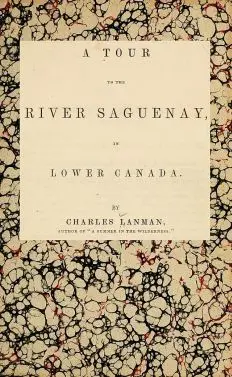
THE CLASSIC COLLECTION · 1848
"A Tour to the River Saguenay, in Lower Canada" by Charles Lanman is a travel narrative written in the mid-19th century. This non-fiction work chronicles Lanman's personal journey through the picturesque landscapes of Canada, particularly focusing on the beauty of the Catskill Mountains and beyond. It encompasses themes of nature, fishing, and the varied experiences he encounters along his travels, offering insights into the wilderness and its inhabitants. The opening of the narrative sets the stage for Lanman's adventures in the Catskill Mountains as he awakens determined to indulge his passion for fishing. He describes the mountains’ grandeur, shares poetic reflections on their solitude and beauty, and introduces his companion, Peter Hummel, a seasoned hunter and fisher. Through vivid imagery, the reader is drawn into Lanman's seemingly romantic journey as they navigate rugged terrains, encounter thrilling thunderstorms, and share moments of camaraderie while pursuing the art of fishing. This introductory portion hints at the blend of natural beauty and personal exploration that characterizes the rest of the work, positioning it as an enticing read for those fascinated by travel and the great outdoors.
Introduction adapted from the source catalogue; source summaries may be automatically generated.
Free to read · English · 68,193 words · No account needed
MAKE TIME FOR A GOOD BOOK
On by default. Untick to stop anonymous reading totals. Each page counts after 10 seconds in view. How this works.
Anonymous counting is on unless you have switched it off.
“Knowledge, indeed!” replied the hermit philosopher; “all that I possess, you might easily hide in the bowl of an acorn. I do know enough to cast my eyes heavenward, when crushed by misfortune, but the same knowledge was possessed by the worm upon which I accidentally trod this morning. What is man, at his best estate, but a worm? But this is not answering your question. My only reason for not selling this property is, that I cannot find a purchaser. Most gladly would I jump at the chance, and then I would mingle with my fellow-men, and endeavor to be of them. Travellers, who sometimes pass through this region, tell me that my property is worth $5000; I know it to be worth at least that amount, but I should be glad to sell it for $3000, and that, too, on a credit of ten years. The interest would, indeed, be a meagre income, but I have schooled myself in the ways of poverty; and though it once cost me $2000 to carry me through a single year, I can tell you that my expenses for the last five years have not averaged more than twenty dollars, which I have had to obtain as best I could. But you must not misunderstand me. The little clearing which surrounds my rookery, contains six acres, and as I cultivate them with all diligence, they keep me from actual starvation.”
“But it strikes me, my dear sir, that you ask rather an extravagant price for your uncultivated land?” I asked this question with a view of obtaining some information in reference to the valley of the Aroostook, and was not disappointed. The reply of my friend was as follows:
“I can convince you that you are mistaken. In the first place, the water privilege which my land covers, is acknowledged to be the most valuable on the Aroostook, and I may add that it is abundantly fertile. And then think of the valley, at the very threshold of which I am located! It is one of the most beautiful and luxuriant in this northern wilderness; and the only thing against it, though I say it that should not, is the fact that nearly five miles of its outlet belongs to the English government, while the remainder belongs to the United States. The whole of it ought to be yours; but if it were, I would not live here a year; I am near enough to you now; directly on the boundary line between your country and mine. The Aroostook, I verily believe, is one of the most important branches of the St. John. Its general course is easterly, but it is exceedingly serpentine, and according to some of your best surveyors, drains upwards of a million acres of the best soil in Maine. Above my place, there is hardly a spot that might not be navigated by a small steamboat, and I believe the time is not far distant when your enterprising Yankees will have a score of boats employed here, in carrying their grain to market. Before that time comes, however, you must dig a canal or build a railroad around my beautiful water-fall, which, I am sure, could be done for $20,000. An extensive lumbering business is now carried on in the valley, but its future prosperity must depend upon its agriculture. Already are its shores dotted with well-cultivated farms, and every year is adding to their number, and the rural beauty of those already in existence. The soil of this valley is rich, and composed principally of what is called alluvial (not interval) land, together with the quality known as upland. In many portions, however, you will find some of the most charming intervals in the world. The trees of this region are similar to those of your northern States. The staple crop of the Aroostook farmer is wheat. Owing to the shortness of our seasons, corn does not arrive at perfection, and its cultivation is neglected. Rye, barley, and oats, all flourish here, but much more buckwheat is raised than any other grain besides wheat. Grasses flourish here in great perfection, and the farmer of Aroostook will yet send to market immense quantities of cattle. As to the climate, it is not so severe as is generally supposed. Snow falls early, and continues late, which prevents the ground from freezing very deep. And when summer comes, as you may testify, the weather is sufficiently warm for every necessary purpose. Now, sir, do you not think I have made out a clear case?” I answered in the affirmative, and thanked him for the information he had given me. Like Oliver Twist, however, I was anxious for “more,” and therefore endeavored to start him on another subject. In this laudable effort I fully succeeded, and by merely expressing the opinion that he must lead a very lonely life in this remote wilderness.
Your reading position is saved on this browser. Take it to another device with a library code. Reading pages adapt to text, rather than matching a printed edition.
Charles Lanman
Charles Lanman
Charles Lanman
Charles Lanman
BEHIND THE BOOK
This eBook is for the use of anyone anywhere in the United States and most other parts of the world at no cost and with almost no restrictions whatsoever. You may copy it, give it away or re-use it under the terms of the Project Gutenberg License included with this eBook or online at www.gutenberg.org. If you are not located in the United States, you will have to check the laws of the country where you are located before using this eBook. Read the source licence.
The original source file, including credits and licence, is retained by this library. Request an original-format copy at no charge. Please include the book title and Project Gutenberg identifier #48358.
KEEP YOUR CURIOSITY GOING
Wilfrid Scawen Blunt
Wilfrid Scawen Blunt

E. W. (Edgar Watson) Howe
Francis Greenleaf Allinson & Anne C. E. (Anne Crosby Emery) Allinson
Cyrenus Cole

John Martineau