THE CLASSIC COLLECTION✦Letters from a Landscape PainterCLASSIC FREE BOOKS
Letters from a Landscape Painter
Charles Lanman
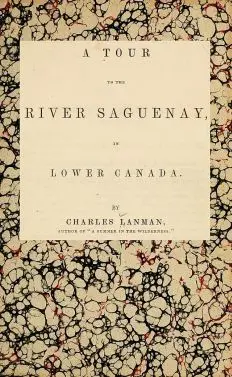
THE CLASSIC COLLECTION · 1848
"A Tour to the River Saguenay, in Lower Canada" by Charles Lanman is a travel narrative written in the mid-19th century. This non-fiction work chronicles Lanman's personal journey through the picturesque landscapes of Canada, particularly focusing on the beauty of the Catskill Mountains and beyond. It encompasses themes of nature, fishing, and the varied experiences he encounters along his travels, offering insights into the wilderness and its inhabitants. The opening of the narrative sets the stage for Lanman's adventures in the Catskill Mountains as he awakens determined to indulge his passion for fishing. He describes the mountains’ grandeur, shares poetic reflections on their solitude and beauty, and introduces his companion, Peter Hummel, a seasoned hunter and fisher. Through vivid imagery, the reader is drawn into Lanman's seemingly romantic journey as they navigate rugged terrains, encounter thrilling thunderstorms, and share moments of camaraderie while pursuing the art of fishing. This introductory portion hints at the blend of natural beauty and personal exploration that characterizes the rest of the work, positioning it as an enticing read for those fascinated by travel and the great outdoors.
Introduction adapted from the source catalogue; source summaries may be automatically generated.
Free to read · English · 68,193 words · No account needed
MAKE TIME FOR A GOOD BOOK
On by default. Untick to stop anonymous reading totals. Each page counts after 10 seconds in view. How this works.
Anonymous counting is on unless you have switched it off.
I was on my way down the river St. John, in New Brunswick, and having heard that the Aroostook (one of its principal tributaries), was famous for its salmon and a picturesque water-fall, I had taken up my quarters at a tavern near the mouth of that stream, with a view of throwing the fly for a few days, and adding to my stock of sketches. I arrived at this place in the forenoon, and after depositing my luggage in an upper room, and ordering a dinner, I proceeded to arrange my tackle and pencils for an afternoon expedition. This preparatory business I performed in the sitting-room of the tavern, where there happened to be seated at the time, and reading the New York Albion, an oddly-dressed, but gentlemanly-looking man. In form, he was tall and slender, appeared to be about fifty years of age, and there was such an air of refinement in his appearance and manners that he attracted my particular attention. I said nothing, however, and quietly continued my snelling operations, until summoned to dinner. While at the table, I sent for the landlord to inquire about the stranger whom I had noticed, and his reply was as follows:—“His name is Robert Egger; he is a strange but good man, and lives the life of a recluse; his house is above the fall, on the Aroostook, and about four miles from here. He has been in this part of the country for many years, but I seldom see him at my house, excepting when he wants to read the news, put a letter in the office, or purchase a bag of flour.”
With this intelligence I was quite delighted, for I fancied that I had discovered a character, which eventually proved to be the case. On returning to the room where the stranger was seated, I introduced myself by offering him a cigar; and while fixing my rod, asked him a few questions about the surrounding country. His replies proved him to be an intelligent man, and as he happened to express himself a lover of the “gentle art,” I offered him the use of some fishing tackle, and invited him to accompany me. He refused my offer, but accepted my invitation, and we started for the Aroostook. He officiated as my guide; and when we approached the river, which was from two to five feet deep, about one hundred yards wide, very rapid, and filled with bridge piers in ruin, we jumped into a Frenchman’s canoe, and were landed on the northern shore. Here we came into a road which passed directly along the bank of the river; this we followed for one mile, until we arrived at a flouring-mill, located at the mouth of a large and very beautiful brook, where the road made a sudden turn towards the north. Directly opposite the mill, on the Aroostook side, was a narrow and rapid rift, where, my friend told me, I was sure to hook a salmon. I did not like the appearance of the place, but took his advice and waded in. I tried my luck for some thirty minutes, but could not tempt a single fish. This, my friend did not understand; he said there were salmon there, and thought that the fault was mine. I knew what he wanted, and therefore handed him my rod, that he might try his fortune. He fished for nearly half an hour, and then broke the fly-tip of my rod. As I was cherishing an earnest desire to take at least one salmon, under the fall, which I thought the only likely place to succeed, and towards which I had set my face, this little accident made me exceedingly nervous. My friend attempted to console me by remarking, that, as it was getting to be toward evening, we had better return to the tavern, and take a fresh start in the morning. But this proposition did not suit me at all, and I promptly said so. “Just as you please,” replied my companion, and so we repaired the rod, and continued up the river. Very rapid, with many and deep pools, was this portion of the stream; and our course along the shore, over logs and fallen trees, through tangled underbrush, and around rocky points—was attended with every imaginable difficulty, and so continued for at least two miles. On coming in sight of the fall, however, I was more than amply repaid for all my trouble, by the prospect which there presented itself. It was, perhaps, one hour before sunset, and there was a delightful atmosphere resting upon the landscape. Directly before me, in the extreme distance, and immediately under the crimson sun, was a narrow rocky gorge, through which foamed the waters of the Aroostook, over a precipice of some thirty feet; and just below the fall, rose a perpendicular rock to the height of nearly a hundred feet, dividing the stream into two channels. The entire middle distance of the prospect was composed of a broad and almost circular basin of very deep and dark water, skirted mostly with a rocky shore, while directly across the surface of this pool, winding down the stream, was a line of foam, distinguishing the main channel; while the foreground of this picture consisted of a gravelly beach, two bark wigwams, several canoes, and some half dozen Indians, who were enjoying their evening meal by the side of an expiring fire.
Your reading position is saved on this browser. Take it to another device with a library code. Reading pages adapt to text, rather than matching a printed edition.
Charles Lanman
Charles Lanman
Charles Lanman
Charles Lanman
BEHIND THE BOOK
This eBook is for the use of anyone anywhere in the United States and most other parts of the world at no cost and with almost no restrictions whatsoever. You may copy it, give it away or re-use it under the terms of the Project Gutenberg License included with this eBook or online at www.gutenberg.org. If you are not located in the United States, you will have to check the laws of the country where you are located before using this eBook. Read the source licence.
The original source file, including credits and licence, is retained by this library. Request an original-format copy at no charge. Please include the book title and Project Gutenberg identifier #48358.
KEEP YOUR CURIOSITY GOING
Wilfrid Scawen Blunt
Wilfrid Scawen Blunt

E. W. (Edgar Watson) Howe
Francis Greenleaf Allinson & Anne C. E. (Anne Crosby Emery) Allinson
Cyrenus Cole

John Martineau