THE CLASSIC COLLECTION✦Letters from a Landscape PainterCLASSIC FREE BOOKS
Letters from a Landscape Painter
Charles Lanman
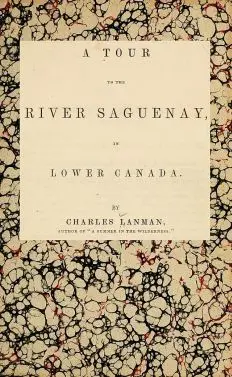
THE CLASSIC COLLECTION · 1848
"A Tour to the River Saguenay, in Lower Canada" by Charles Lanman is a travel narrative written in the mid-19th century. This non-fiction work chronicles Lanman's personal journey through the picturesque landscapes of Canada, particularly focusing on the beauty of the Catskill Mountains and beyond. It encompasses themes of nature, fishing, and the varied experiences he encounters along his travels, offering insights into the wilderness and its inhabitants. The opening of the narrative sets the stage for Lanman's adventures in the Catskill Mountains as he awakens determined to indulge his passion for fishing. He describes the mountains’ grandeur, shares poetic reflections on their solitude and beauty, and introduces his companion, Peter Hummel, a seasoned hunter and fisher. Through vivid imagery, the reader is drawn into Lanman's seemingly romantic journey as they navigate rugged terrains, encounter thrilling thunderstorms, and share moments of camaraderie while pursuing the art of fishing. This introductory portion hints at the blend of natural beauty and personal exploration that characterizes the rest of the work, positioning it as an enticing read for those fascinated by travel and the great outdoors.
Introduction adapted from the source catalogue; source summaries may be automatically generated.
Free to read · English · 68,193 words · No account needed
MAKE TIME FOR A GOOD BOOK
On by default. Untick to stop anonymous reading totals. Each page counts after 10 seconds in view. How this works.
Anonymous counting is on unless you have switched it off.
Another river, in this region, which affords good salmon fishing, is the Esquemain. It empties into the St. Lawrence, about twenty miles east of Saguenay. It is a cold, clear and rapid stream, abounding in rapids and deep pools. At its mouth is located a saw-mill, but its water-works are so managed as not to interfere with the salmon. The fish of this stream ascend to a great distance, and, though rather small, are exceedingly abundant. The best fishing in the river is at the foot of the water-fall, which forms a sheet of foam, about one mile above the mouth. My Quebec friend accompanied me to this place, and though we only threw the fly about six hours, (three in the evening and three in the morning,) yet we killed thirteen salmon, without losing a single line, and with the loss of only three flies. Owing to the bushy shores of the stream, we were compelled to fish standing upon boulders, located in its centre; and whenever we hooked a fish, there was no alternative but to plunge into the current, and trust to fortune. For some unaccountable reason, (of course, it could not have been our fault,) we lost more than half of those we hooked. But it was worth a moderate fortune to see the magnificent leaps which the fish performed, not only when they took the fly, but when they attempted to escape. There was not one individual that did not give us a race of at least half a mile. The largest taken, during this expedition, was killed by my companion, and caused more trouble than all his other prizes. Not only did the fellow attempt to clear himself by stemming the foam of a rapid, and rubbing his nose against a rock, to break the hook, but he also swept himself completely round a large boulder, poked his head into a net, and ran, with the speed of lightning to the extreme end of his line. It took my friend forty minutes to land this salmon, and I assure you he was particularly pleased when he found that his fish weighed one pound more than the largest I had taken. The fact was our rods were almost precisely alike, in length and strength, and as two countries were represented in our persons, the strife between us was quite desperate. I will acknowledge that the Canada gentleman took the largest salmon, but the States angler took them in the greatest number. Notwithstanding all the fine sport that we enjoyed on the Esquemain, I am compelled to state that it was more than counterbalanced by the sufferings we endured from the black fly and musquetoe. The black fly is about half as large as the common house fly, and, though it bites you only in the day time, they are as abundant in the air as the sand upon the sea shore, and venomous to an uncommon degree. The musquetoe of this region is an uncommonly gaunt, long-legged, and hungry creature, and his howl is peculiarly horrible. We had been almost devoured by the black flies, during the afternoon, and as soon as darkness came, we secured a couple of beds in a Frenchman’s house, and, as we tumbled in, congratulated ourselves upon a little comfortable repose. It was an exceedingly sultry night, and though we were both in a complete fever, from the fly poison circulating in our veins, the heat excelled the fever, and our bodies were literally in a melting condition. We endeavored to find relief by lying upon the bare floor, with no covering but a single sheet, and this arrangement might have answered, had it not been for the flood of musquetoes which poured into the room, as one of us happened to open a window to obtain fresh air. Every spot on our bodies which the flies had left untouched, was immediately settled upon by these devils in miniature. They pierced the very sheets that covered us, and sucked away at our blood without any mercy. Unwilling to depart this life without one effort more to save it, we then dressed ourselves, and sauntered into the open air. We made our way towards a pile of lumber, near the saw-mill, and without a particle of covering, endeavored to obtain a little sleep; but the insect hounds soon found us out, and we bolted for another place. Our course now lay towards the rude bridge which spans the Esquemain, just above the mill. Our intentions at the time, though not uttered aloud, I verily believe were of a fearful character. On reaching the bridge, however, a refreshing breeze sprung up, and we enjoyed a brief respite from our savage enemies. We now congratulated each other upon our good fortune, and had just concluded to be quite happy, when we discovered a number of Indians on the river, spearing salmon by torch light, and, as it was after midnight, and the heathens were spearing on our fishing ground, we mournfully concluded that our morning’s sport was at an end. But while in the very midst of this agreeable mood of mind, a lot of skylarking musquetoes discovered our retreat, and we were again besieged. We now endeavored to find relief on board the boat which had brought us from the Saguenay; and here it was that we spent the two last hours of that most miserable night. Though not exactly in a fitting condition to throw the fly with any degree of comfort, we made an effort after salmon in the morning, and succeeded in killing a portion of the thirteen already mentioned. That we enjoyed the good breakfast which we had prepared for our especial benefit, and that we departed from Esquemain as soon as possible, are facts which I consider self-evident.
Your reading position is saved on this browser. Take it to another device with a library code. Reading pages adapt to text, rather than matching a printed edition.
Charles Lanman
Charles Lanman
Charles Lanman
Charles Lanman
BEHIND THE BOOK
This eBook is for the use of anyone anywhere in the United States and most other parts of the world at no cost and with almost no restrictions whatsoever. You may copy it, give it away or re-use it under the terms of the Project Gutenberg License included with this eBook or online at www.gutenberg.org. If you are not located in the United States, you will have to check the laws of the country where you are located before using this eBook. Read the source licence.
The original source file, including credits and licence, is retained by this library. Request an original-format copy at no charge. Please include the book title and Project Gutenberg identifier #48358.
KEEP YOUR CURIOSITY GOING
Wilfrid Scawen Blunt
Wilfrid Scawen Blunt

E. W. (Edgar Watson) Howe
Francis Greenleaf Allinson & Anne C. E. (Anne Crosby Emery) Allinson
Cyrenus Cole

John Martineau