THE CLASSIC COLLECTION✦My diaries, being a personal narrative of events 1888-1914, Part 2 (1900-1914)CLASSIC FREE BOOKS
My diaries, being a personal narrative of events 1888-1914, Part 2 (1900-1914)
Wilfrid Scawen Blunt
THE CLASSIC COLLECTION · 1877
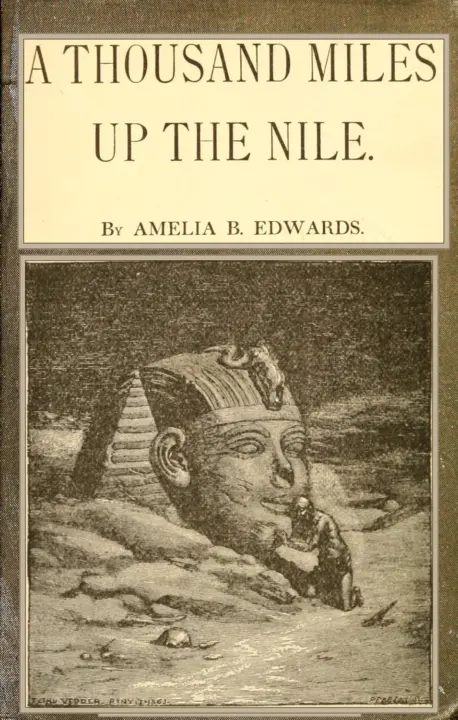
"A Thousand Miles Up the Nile" by Amelia B. Edwards is a travel narrative and exploration account written in the late 19th century. The book chronicles the author’s journey up the Nile River in Egypt, vividly depicting the landscapes, cultures, and historic sites encountered along the way. The narrative likely focuses on the experiences of the author and her companion as they delve into the wonders of ancient Egypt, blending personal anecdotes with observations about the local customs and historical significance of the sites they visit. The opening of the book sets the stage for a grand adventure, starting with the author's arrival in Cairo and the bustling atmosphere of Shepheard’s Hotel, where travelers from various backgrounds converge. The initial chapters describe the author's impressions of the rich culture, vibrant bazaars, and monumental landmarks like the Great Pyramid. Through detailed descriptions and personal reflections, Edwards captures the essence of Egyptian life, highlighting the contrast between modern travelers and the timelessness of the ancient world. The narrative promises a journey that combines historical insights with the excitement of exploration along the legendary Nile.
Introduction adapted from the source catalogue; source summaries may be automatically generated.
Free to read · English · 188,295 words · No account needed
MAKE TIME FOR A GOOD BOOK
On by default. Untick to stop anonymous reading totals. Each page counts after 10 seconds in view. How this works.
Anonymous counting is on unless you have switched it off.
The gods most commonly represented upon the monuments are Phtah, Knum, Ra, Amen-Ra, Khem, Osiris, Nefer Atum or Tum, Thoth, Seb, Set, Khons, Horus, Maut, Neith, Isis, Nut, Hathor and Bast. They are distinguished by the following attributes:
Phtah or Ptah--In form a mummy, holding the emblem called by some the Nilometer, by others the emblem of stability. Called “the Father of the Beginning, the Creator of the Egg of the Sun and Moon.” Chief deity of Memphis.
Kneph, Knum or Knouphis--Ram-headed. Called the maker of gods and men; the soul of the gods. Chief deity of Elephantine and the cataracts.
Ra--Hawk-headed, and crowned with the sun-disk encircled by an asp. The divine disposer and organizer of the world. Adored throughout Egypt.
Amen-Ra--Of human form, crowned with a flat-topped cap and two long straight plumes; clothed in the schenti; his flesh sometimes painted blue. There are various forms of this god (see foot note p. 310), but he is most generally described as King of the Gods. Chief deity of Thebes.
Khem--Of human form, mummified; wears head-dress of Amen-Ra; his right hand uplifted, holding the flail. The god of productiveness and generation. Chief deity of Khemmis, or Ekhmeen. Is identified in later times with Amen, and called Amen-Khem.
Osiris--Of human form, mummified, crowned with a miter, and holding the flail and crook. Called the Good Being; the Lord above all; the One Lord. Was the god of the lower world; judge of the dead; and representative of the sun below the horizon. Adored throughout Egypt. Local deity of Abydus.
Nefer Atum--Human-headed, and crowned with the pschent. This god represented the setting sun, or the sun descending to light the lower world. Local deity of Heliopolis.
Thoth--In form a man, ibis-headed, generally depicted with the pen and palette of a scribe. Was the god of the moon, and of letters. Local deity of Sesoon, or Hermopolis.
Seb--The “Father of the Gods,” and deity of terrestrial vegetation. In form a man with a goose upon his head.
Set--Represented by a symbolic animal, with a muzzle and ears like a jackal, the body of an ass, and an upright tail, like the tail of a lion. Was originally a warlike god, and became in later times the symbol of evil and the enemy of Osiris.
Khons--Hawk-headed, crowned with the sun disk and horns. Is
represented sometimes as a youth with the side-lock, standing on a
crocodile.
Your reading position is saved on this browser. Take it to another device with a library code. Reading pages adapt to text, rather than matching a printed edition.
BEHIND THE BOOK
This eBook is for the use of anyone anywhere in the United States and most other parts of the world at no cost and with almost no restrictions whatsoever. You may copy it, give it away or re-use it under the terms of the Project Gutenberg License included with this eBook or online at www.gutenberg.org. If you are not located in the United States, you will have to check the laws of the country where you are located before using this eBook. Read the source licence.
The original source file, including credits and licence, is retained by this library. Request an original-format copy at no charge. Please include the book title and Project Gutenberg identifier #70565.
KEEP YOUR CURIOSITY GOING
Wilfrid Scawen Blunt
Wilfrid Scawen Blunt

E. W. (Edgar Watson) Howe
Cécile Tormay

Moritz Busch
John L. Ransom