THE CLASSIC COLLECTION✦My diaries, being a personal narrative of events 1888-1914, Part 2 (1900-1914)CLASSIC FREE BOOKS
My diaries, being a personal narrative of events 1888-1914, Part 2 (1900-1914)
Wilfrid Scawen Blunt
THE CLASSIC COLLECTION · 1877
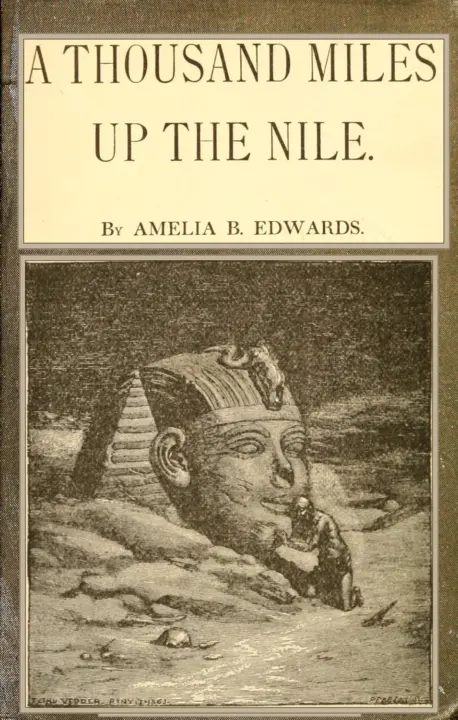
"A Thousand Miles Up the Nile" by Amelia B. Edwards is a travel narrative and exploration account written in the late 19th century. The book chronicles the author’s journey up the Nile River in Egypt, vividly depicting the landscapes, cultures, and historic sites encountered along the way. The narrative likely focuses on the experiences of the author and her companion as they delve into the wonders of ancient Egypt, blending personal anecdotes with observations about the local customs and historical significance of the sites they visit. The opening of the book sets the stage for a grand adventure, starting with the author's arrival in Cairo and the bustling atmosphere of Shepheard’s Hotel, where travelers from various backgrounds converge. The initial chapters describe the author's impressions of the rich culture, vibrant bazaars, and monumental landmarks like the Great Pyramid. Through detailed descriptions and personal reflections, Edwards captures the essence of Egyptian life, highlighting the contrast between modern travelers and the timelessness of the ancient world. The narrative promises a journey that combines historical insights with the excitement of exploration along the legendary Nile.
Introduction adapted from the source catalogue; source summaries may be automatically generated.
Free to read · English · 188,295 words · No account needed
MAKE TIME FOR A GOOD BOOK
On by default. Untick to stop anonymous reading totals. Each page counts after 10 seconds in view. How this works.
Anonymous counting is on unless you have switched it off.
SIR:--It may interest your readers to learn that at the south side of the great Temple of Abou Simbel, I found the entrance to a painted chamber rock-cut, and measuring twenty-one feet two and one-half inches by fourteen feet eight inches, and twelve feet high to the spring of the arch, elaborately sculptured and painted in the best style of the best period of Égyptian art, bearing the portraits of Rameses the Great and his cartouches, and in a state of the highest preservation. This chamber is preceded by the ruins of a vaulted atrium, in sundried brickwork, and adjoins the remains of what would appear to be a massive wall or pylon, which contains a staircase terminating in an arched doorway leading to the vaulted atrium before mentioned.
The doorway of the painted chamber, the staircase and the arch, were all buried in sand and débris. The chamber appears to have been covered and lost sight of since a very early period, being wholly free from mutilation, and from the scribbling of travelers, ancient and modern.
The staircase was not opened until the 18th, and the bones of a woman and child, with two small cinerary urns, were there discovered by a gentleman of our party, buried in the sand. This was doubtless a subsequent interment. Whether this painted chamber is the inner sanctuary of a small temple, or part of a tomb, or only a speos, like the well-known grottos at Ibrim, is a question for future excavators to determine. I have the honor to be, sir, yours, etc.,
KOROSKO, NUBIA, Feb. 16, 1874.
“The deities of ancient Egypt consist of celestial, terrestrial and infernal gods, and of many inferior personages, either representatives of the greater gods or else attendants upon them. Most of the gods were connected with the sun, and represented that luminary in its passage through the upper hemisphere or Heaven and the lower hemisphere or Hades. To the deities of the solar cycle belonged the great gods of Thebes and Heliopolis. In the local worship of Egypt the deities were arranged in local triads; thus, at Memphis, Ptah, his wife Merienptah, and their son Nefer Atum, formed a triad, to which was sometimes added the goddess Bast or Bubastis. At Abydus the local triad was Osiris, Isis and Horus, with Nephthys; at Thebes, Amen-Ra or Ammon, Mut and Chons, with Neith; at Elephantine, Kneph, Anuka, Seti and Hak. In most instances the names of the gods are Egyptian; thus, Ptah meant ‘the opener;’ Amen, ‘the concealed;’ Ra, ‘the sun’ or ‘day;’ Athor, ‘the house of Horus;’ but some few, especially of later times, were introduced from Semitic sources, as Bal or Baal, Astaruta or Astarte, Khen or Kium, Respu or Reseph. Besides the principal gods, several or parhedral gods, sometimes personifications of the faculties, senses, and other objects, are introduced into the religious system, and genii, spirits, or personified souls of deities formed part of the same. At a period subsequent to their first introduction the gods were divided into three orders. The first or highest comprised eight deities, who were different in the Memphian and Theban systems. They were supposed to have reigned over Egypt before the time of mortals. The eight gods of the first order at Memphis were: 1, Ptah; 2, Shu; 3, Tefnu; 4, Seb; 5, Nut; 6, Osiris; 7, Isis and Horus; 8, Athor. Those of Thebes were: 1, Amen-Ra; 2, Mentu; 3, Atum; 4, Shu and Tefnu; 5, Seb; 6, Osiris; 7, Set and Nephthys; 8, Horus and Athor. The gods of the second order were twelve in number, but the name of one only, an Egyptian Hercules, has been preserved. The third order is stated to have comprised Osiris, who, it will be seen, belonged to the first order.”--“Guide to the First and Second Egyptian Rooms; Brit. Musæ.” S. Birch, 1874.
Your reading position is saved on this browser. Take it to another device with a library code. Reading pages adapt to text, rather than matching a printed edition.
BEHIND THE BOOK
This eBook is for the use of anyone anywhere in the United States and most other parts of the world at no cost and with almost no restrictions whatsoever. You may copy it, give it away or re-use it under the terms of the Project Gutenberg License included with this eBook or online at www.gutenberg.org. If you are not located in the United States, you will have to check the laws of the country where you are located before using this eBook. Read the source licence.
The original source file, including credits and licence, is retained by this library. Request an original-format copy at no charge. Please include the book title and Project Gutenberg identifier #70565.
KEEP YOUR CURIOSITY GOING
Wilfrid Scawen Blunt
Wilfrid Scawen Blunt

E. W. (Edgar Watson) Howe
Cécile Tormay

Moritz Busch
John L. Ransom